Tepezcohuite bark is a botanical material associated with Mimosa tenuiflora, a thorny tree or shrub native to parts of Mexico and tropical America. The name tepezcohuite is particularly familiar in Mexico, where the plant has a long history in traditional topical preparations. Elsewhere, the same species may be discussed under the name Mimosa hostilis, an older botanical synonym.
For readers encountering these names on botanical labels, the important questions are simple: What plant is being described? Which part of the plant is supplied? And how do traditional accounts differ from modern evidence?
What Is Tepezcohuite?
Tepezcohuite is a common name used in Mexico for Mimosa tenuiflora, a member of the legume family, Fabaceae. The species is also widely referred to as Mimosa hostilis in botanical commerce and older writing. These names are not different grades of bark: they refer to the same botanical species.
The plant is known for its finely divided leaves, small flowers and protective thorns. It grows in warm environments and is discussed in botanical literature for its capacity to establish itself in disturbed landscapes. Common names vary across regions and languages, which is why a scientific name is useful when comparing descriptions.
Tepezcohuite, Mimosa Tenuiflora and Mimosa Hostilis: Are They the Same?
In the context of this species, yes. Mimosa tenuiflora is the botanical name generally accepted today, while Mimosa hostilis is a commonly encountered synonym. Tepezcohuite is a regional common name, not a separate species.
Other common names include jurema preta in Brazil. Because common names can be applied inconsistently, shoppers and researchers should check the botanical identification rather than relying on a single marketing term. For more background, read our comparison of Mimosa tenuiflora and Mimosa hostilis.
Where Does Tepezcohuite Grow?
Mimosa tenuiflora occurs in Mexico and parts of Central and South America. Local growing conditions, harvesting practices and processing methods can influence how dried bark looks and feels. A geographic label alone does not establish authenticity, quality or responsible sourcing.
For a broader introduction to the living plant, explore our Mimosa tenuiflora tree guide.
Which Part of the Tree Is Called Tepezcohuite Bark?
The word bark describes protective tissues on woody plants, but it does not by itself tell you whether a product comes from the trunk, branches or roots. Tepezcohuite preparations described in traditional topical contexts often involve bark, while products marketed as Mimosa hostilis root bark specifically identify the root as their source.
Those distinctions matter. Root bark, stem bark and processed botanical powders should not automatically be treated as interchangeable. When reading a product description, look for the scientific name, plant part, texture, origin and handling information.
Traditional Uses of Tepezcohuite Bark
Tepezcohuite is closely associated with Mexican traditional skin-care practices. Historical and ethnobotanical accounts describe bark-based preparations applied to the skin, and the plant became especially well known in discussions of traditional approaches to damaged skin and burns.
That history is worth understanding on its own terms. Traditional use documents cultural practice; it does not prove that a particular retail powder treats burns, infections, wounds or other medical conditions. Laboratory findings about plant compounds also cannot be assumed to establish safety or effectiveness in people.
Anyone dealing with a burn, open wound or persistent skin condition should seek appropriate medical care rather than substitute untested raw bark preparations for treatment.
Why Is Tepezcohuite Discussed in Skincare?
Interest in tepezcohuite partly reflects the plant’s traditional reputation and partly the chemistry of its bark. Researchers have examined constituents such as tannins and other plant-derived compounds. However, the presence of a compound in bark does not establish the performance of a finished skincare formula.
For cosmetics, factors such as extraction, concentration, formulation, contamination control and skin tolerance all matter. Raw botanical material is not equivalent to a tested cosmetic product. Our skincare formulation compatibility guide explains why ingredients must be evaluated in context.
What Does Tepezcohuite Bark Look Like?
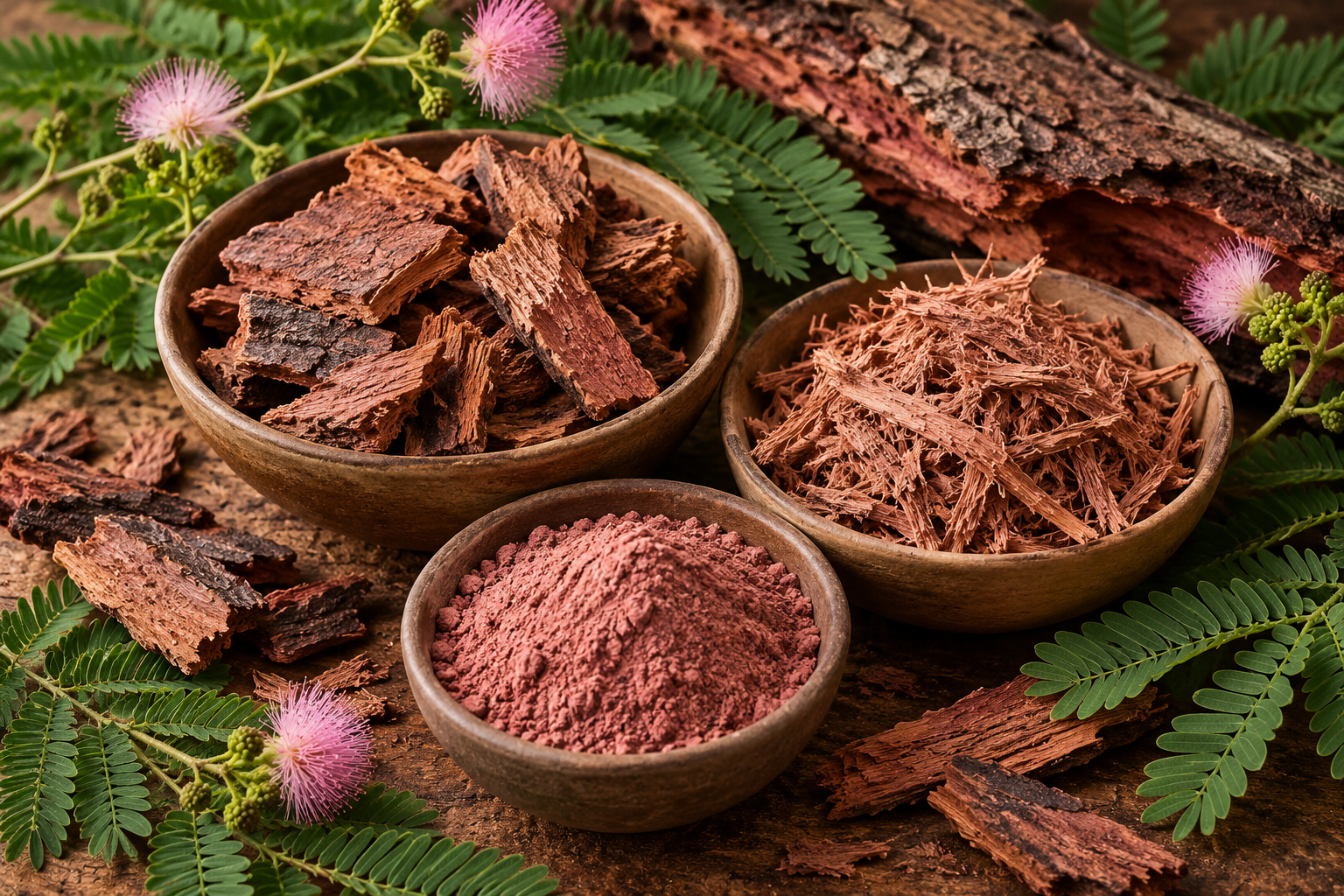
Dried bark materials may appear as irregular pieces, coarse shreds or fine powder. Their appearance depends on the plant part and processing method. Color alone is not a reliable way to authenticate a botanical species, and a fine powder can be especially difficult to identify by sight.
For a visual and terminology overview, visit our mimosa root bark reference. It explains the differences between chunks, shredded material and powder.
How Tepezcohuite Relates to Mimosa Root Bark Products
Tepezcohuite and Mimosa tenuiflora refer to the same species, but product listings may describe different plant parts and textures. A listing for mimosa tenuiflora root bark powder identifies both the botanical material and its powdered form; mhrb powder is a common shorthand for that type of listing. Neither phrase, by itself, confirms how the material was sourced or processed.
Other listings specify mimosa hostilis shredded root bark or root bark chunks. These labels describe physical form, not separate species. Comparing plant part, texture and origin is more informative than assuming one format is inherently better.
For independent botanical verification, the Royal Botanic Gardens, Kew’s Plants of the World Online lists Mimosa tenuiflora as the accepted species and Mimosa hostilis as a synonym.
How to Read a Tepezcohuite Product Label
- Botanical name: Look for Mimosa tenuiflora or the synonym Mimosa hostilis.
- Plant part: Check whether the material is root bark, stem bark or another component.
- Form: Identify whether the product is sold as chunks, shreds, powder or a formulated extract.
- Origin and handling: Prefer clear, specific sourcing and storage information over unsupported purity or performance claims.
- Intended use: Do not assume that a raw botanical material has been evaluated for medical or cosmetic application.
Frequently Asked Questions
Is tepezcohuite the same as Mimosa hostilis?
Tepezcohuite commonly refers to Mimosa tenuiflora, a species also known by the botanical synonym Mimosa hostilis. Check the full botanical identification and plant part on a product label.
Is tepezcohuite always root bark?
No. The common name identifies a plant, not necessarily a specific plant part. A product labeled root bark should say so explicitly.
Is tepezcohuite bark the same as tepezcohuite cream?
No. Bark is a raw botanical material; a cream is a formulated product with additional ingredients and its own safety and quality considerations.
Does traditional use mean tepezcohuite is medically proven?
No. Traditional use and clinical evidence answer different questions. Medical claims require appropriate human evidence for the specific preparation and condition.
Understanding the Name Behind the Bark
Tepezcohuite connects a regional botanical name with the wider story of Mimosa tenuiflora. Understanding its identity, geography, plant parts and traditional context makes it easier to read botanical descriptions accurately—without confusing historical use with demonstrated medical benefit.