If you’ve spent time researching mimosa tenuiflora root bark, you’ve probably noticed that the plant is sometimes referred to as mimosa hostilis. This often leads to confusion among people trying to understand whether these names refer to two different plants or the same species.
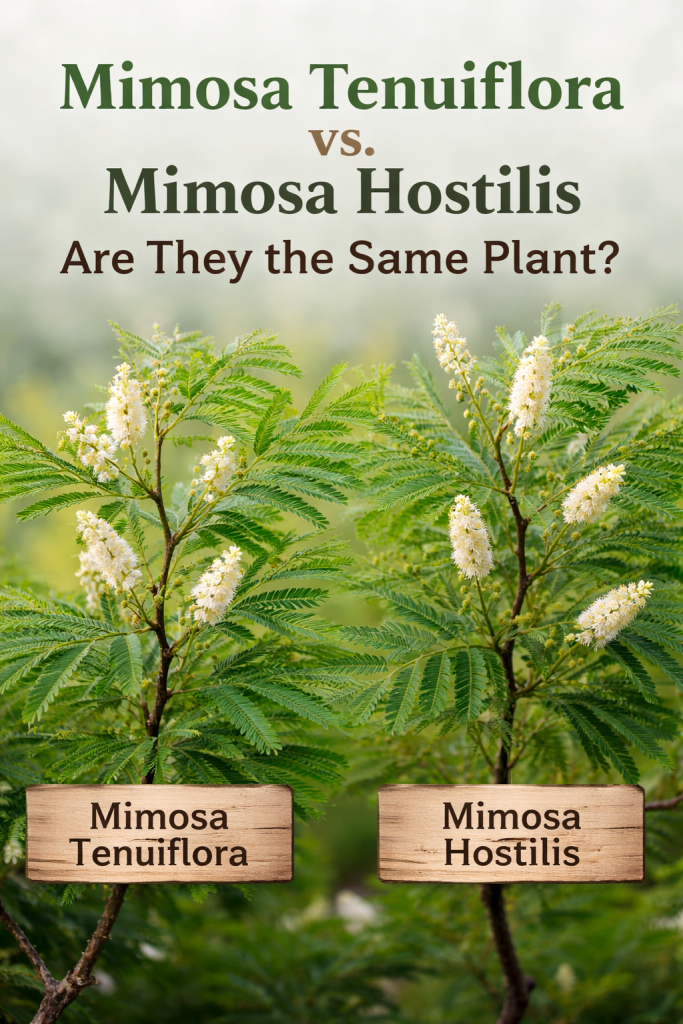
In reality, mimosa tenuiflora and mimosa hostilis are two names that are commonly used to describe the same botanical species. Understanding why both names exist requires a quick look at the plant’s scientific classification and how botanical naming conventions evolve over time.
Learning the difference between these names can help you better understand the plant itself and make more informed decisions when purchasing mimosa tenuiflora root bark.
The Scientific Name of Mimosa Tenuiflora
The currently accepted scientific name for the species is mimosa tenuiflora. In botanical classification systems, the scientific name of a plant can sometimes change as researchers learn more about its taxonomy and relationships to other species.
Historically, the plant was widely referred to as mimosa hostilis, and that name is still commonly used today in many communities and publications.
Because of this, both names continue to appear in discussions about the plant, even though mimosa tenuiflora is now considered the more accurate scientific designation.
Why the Name Mimosa Hostilis Is Still Used
Even though mimosa tenuiflora is the accepted scientific name today, the term mimosa hostilis remains extremely common.
There are a few reasons for this.
First, the name mimosa hostilis was used for many years before the updated classification became widely adopted. As a result, older scientific papers, botanical references, and traditional knowledge sources still use the hostilis name.
Second, many suppliers, researchers, and communities have simply continued using the familiar terminology. Over time, both names became widely recognized as referring to the same plant.
For practical purposes, when you see mimosa tenuiflora or mimosa hostilis mentioned, they are almost always referring to the same species.
Where Mimosa Tenuiflora Grows
The mimosa tenuiflora tree is native to regions of Mexico, Central America, and parts of South America. It thrives in dry tropical environments and is particularly well adapted to arid climates.
The tree itself is recognizable by its fern-like leaves, thorny branches, and clusters of fragrant white flowers. In natural environments, mimosa tenuiflora can grow as a shrub or a small tree depending on soil conditions and rainfall.
Because of its resilience, the species is often found growing in challenging environments where many other plants struggle to survive.
The Inner Root Bark of the Tree
The part of the plant most commonly discussed is the inner root bark of the mimosa tenuiflora tree.
This bark layer contains a rich concentration of natural plant compounds, tannins, and pigments. Because of this, the root bark has long been used in a variety of traditional and modern botanical applications.
Today, the bark is often processed into several different textures including powdered root bark, shredded bark, and larger bark chunks.
Each format offers different advantages depending on how the material is intended to be used.
Why Mexican Mimosa Tenuiflora Is Often Preferred
Many botanical suppliers focus specifically on Mexican mimosa tenuiflora root bark, which is widely regarded as one of the highest quality sources of the plant.
The environmental conditions in parts of Mexico provide ideal growing conditions for the species, allowing the trees to develop strong root systems and dense inner bark layers.
Because of this, Mexican mimosa tenuiflora root bark is often favored by artisans and botanical enthusiasts looking for consistent material quality.
Common Uses for Mimosa Tenuiflora Root Bark
Mimosa tenuiflora root bark has been used in a wide range of botanical applications.
Some of the most common include:
• natural soap making formulations
• botanical skincare experiments
• plant-based fabric dyeing
• natural pigment extraction
• traditional botanical preparations
The bark’s rich reddish-purple color makes it particularly popular among natural dye artists and soap makers who prefer plant-derived colorants.
Powder vs Shredded Mimosa Root Bark
Mimosa tenuiflora root bark is typically available in several different forms.
Powdered root bark is finely ground and easy to incorporate into formulations. Shredded bark maintains a fibrous structure while still being relatively easy to prepare. Chunked bark offers the most intact form of the natural bark and is often preferred for long-term storage or custom processing.
Choosing the right format depends largely on how the bark will be used.
Final Thoughts
Although the names mimosa tenuiflora and mimosa hostilis can appear confusing at first, they ultimately refer to the same remarkable plant species. The difference is primarily a matter of scientific naming history rather than two separate plants.
Understanding this distinction helps clarify many of the discussions surrounding mimosa root bark and allows people to better navigate the wide range of information available about the species.
Whether referred to as mimosa tenuiflora or mimosa hostilis, the plant remains one of the most fascinating botanical species used in natural crafting, dyeing, and formulation practices today.