Mimosa root bark is a botanical material sold in several physical forms and described by several related names. This reference explains common terminology, how root bark differs from other parts of a tree, and what buyers can expect from chunks, shredded bark, and powder. It is designed as a quick-reference guide rather than a product listing.
What Is Root Bark?
Root bark is the outer bark tissue associated with a plant’s roots, rather than its trunk, branches, or leaves. The term identifies a plant part; it does not by itself establish the botanical species, origin, age, or quality of the material. In botanical commerce, accurate labeling matters because visually similar dried plant materials can be difficult to identify from appearance alone.
When researching mimosa tree root bark, look for the botanical name as well as the common name. A listing that says only “mimosa bark” may not clearly identify which plant is being offered. Product descriptions should also distinguish root bark from stem bark and explain the material’s physical form.
Mimosa Tenuiflora, Mimosa Hostilis, and Jurema Preta
Mimosa tenuiflora is the accepted botanical name commonly associated with material also marketed under the name Mimosa hostilis. “Jurema preta” is another common name encountered in discussions of this plant. These names can appear in botanical articles, supplier catalogs, and searches for root bark, but the common name alone is not a substitute for reliable species identification.
For a more detailed explanation of the naming history, see our Jurema preta and Mimosa tenuiflora guide. If you are comparing plants, our botanical identification article covers the terminology in greater depth.
What Does Mimosa Root Bark Look Like?
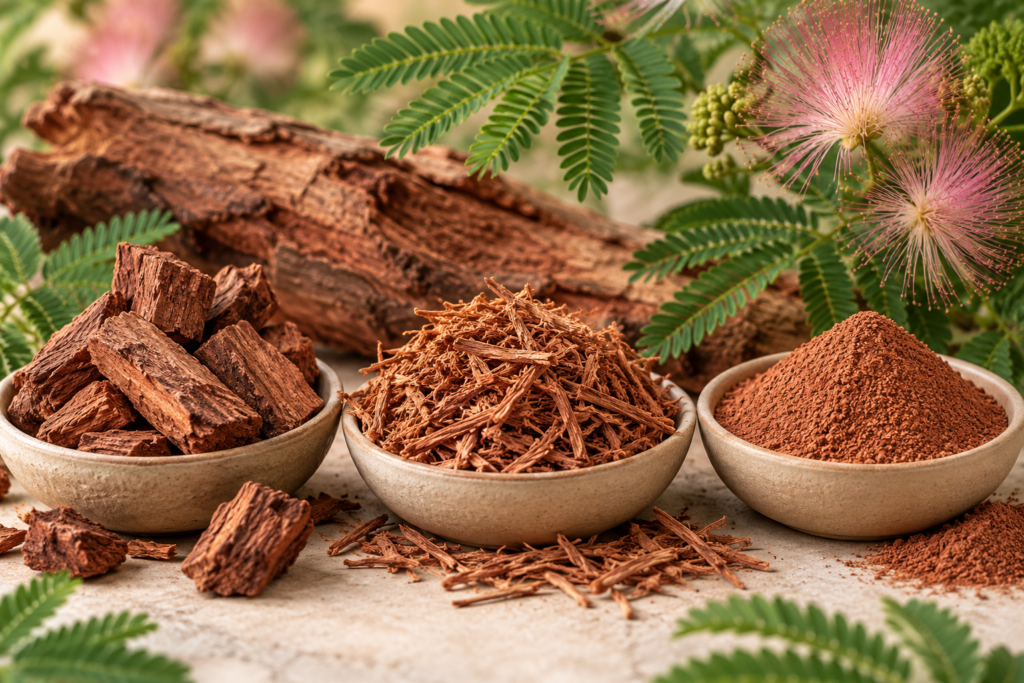
Dried root bark can vary in color, thickness, particle size, and surface texture. Differences may reflect natural variation, drying, cutting, and milling. Appearance alone cannot verify a species or establish a universal quality grade. Product photographs can help communicate the approximate texture and size of the material, but should be considered alongside the supplier’s description.
Our article on why Mimosa hostilis root bark color varies explains why color should not be treated as a single definitive quality test.
Root Bark Forms: Chunks, Shredded, and Powder
Chunks
Chunks are larger pieces of dried bark. They preserve a coarse, irregular shape and make the original physical structure easier to observe. The size of individual pieces can vary. See our root bark chunks collection for the available weight options.
Shredded bark
Shredded bark consists of smaller strands and fragments rather than large pieces or a uniform fine powder. Its fibrous texture is visually distinct from milled material. Explore the shredded root bark collection to compare sizes.
Powder
Powder is bark that has been milled into smaller particles. Fineness and consistency may differ depending on the milling process, so the word “powder” does not guarantee a specific particle size. See the root bark powder collection for individual product details.
For a side-by-side discussion of these distinctions, read why root bark is sold in different forms and our powder-versus-shredded comparison.
How to Read a Root Bark Product Description
A useful listing should identify the botanical name, the plant part, the physical form, and the quantity offered. It should also make it easy to understand whether a product contains chunks, shredded fragments, or milled powder. Descriptions that rely on vague terms such as “premium” without explaining the material provide less useful information than specific details about form and packaging.
Weight is another important distinction: a 100 g listing and a 1 kg listing describe different quantities, not necessarily different botanical grades. Buyers comparing sizes should consider the stated net weight and the product’s texture rather than relying on a photograph alone.
Storage and Handling Basics
Like many dried botanical materials, root bark is best kept in clean, dry, appropriately sealed packaging away from excessive moisture and direct sunlight. Store it according to the seller’s guidance and inspect packaging before long-term storage. For more information, visit our root bark storage guide.
Frequently Asked Questions
Is mimosa tree root bark the same as Mimosa tenuiflora root bark?
Not necessarily. “Mimosa tree” can be used loosely for different plants. A precise botanical name is more informative than a broad common-name description.
Are shredded bark and powdered bark different species?
No. “Shredded” and “powdered” describe physical processing and texture, not botanical species. Always check the species identification separately.
Does darker root bark automatically mean better quality?
No. Color can vary for several reasons and should not be used as a stand-alone test of authenticity or quality.
Where can I compare available root bark forms?
Visit The Tenuiflora Shop’s collection overview to compare powder, shredded bark, and chunks, or follow the individual collection links above.