When researching mimosa tenuiflora root bark, you’ll quickly notice that products from different suppliers rarely look identical. Some appear darker or lighter, some have a finer texture, and others are sold as chunks, shredded bark, or powder. These differences often leave buyers wondering whether one product is genuinely higher quality than another.
The reality is that high-quality mimosa tenuiflora root bark is determined by much more than appearance alone. Quality is influenced by how the bark is harvested, processed, stored, and handled before it reaches the customer. Understanding these factors can help you compare suppliers with greater confidence and avoid relying on common myths or misleading assumptions.
In this guide, we’ll explore the characteristics that contribute to premium mimosa tenuiflora root bark, explain why natural variation is expected, and discuss what buyers should evaluate before making a purchase.
What Does “High Quality” Actually Mean?
High quality doesn’t simply mean a product looks darker, smells stronger, or costs more.
Instead, quality is usually the result of several factors working together, including:
- Careful harvesting
- Proper drying
- Clean processing
- Consistent texture
- Responsible storage
- Transparent supplier practices
These factors help create a product that is consistent, clean, and well prepared for long-term storage.
Because mimosa tenuiflora root bark is a natural botanical material, no two batches will ever be perfectly identical. Small variations are normal and should be expected.
Why Natural Variation Is Normal
One misconception among first-time buyers is that every batch should look exactly the same.
In reality, natural botanical materials vary because of differences in:
- Climate
- Rainfall
- Soil conditions
- Harvest season
- Drying methods
- Processing techniques
These variables influence appearance without necessarily affecting overall quality.
Responsible suppliers understand these natural differences and focus on maintaining consistency through careful processing rather than trying to make every batch appear identical.
Does Color Determine Quality?
One of the first things buyers notice is color.
While color can provide useful information, it should never be used as the only indicator of high-quality mimosa tenuiflora root bark.
Several factors can influence color, including:
- Drying conditions
- Natural age of the bark
- Harvest timing
- Processing methods
- Lighting in product photography
Because of these variables, slight differences between batches are completely normal.
Instead of asking:
“Which color is best?”
buyers should ask:
“Does the supplier consistently provide clean, well-processed material?”
Consistency tells a much more complete story than color alone.
Why Texture Matters
Texture is another characteristic buyers frequently evaluate.
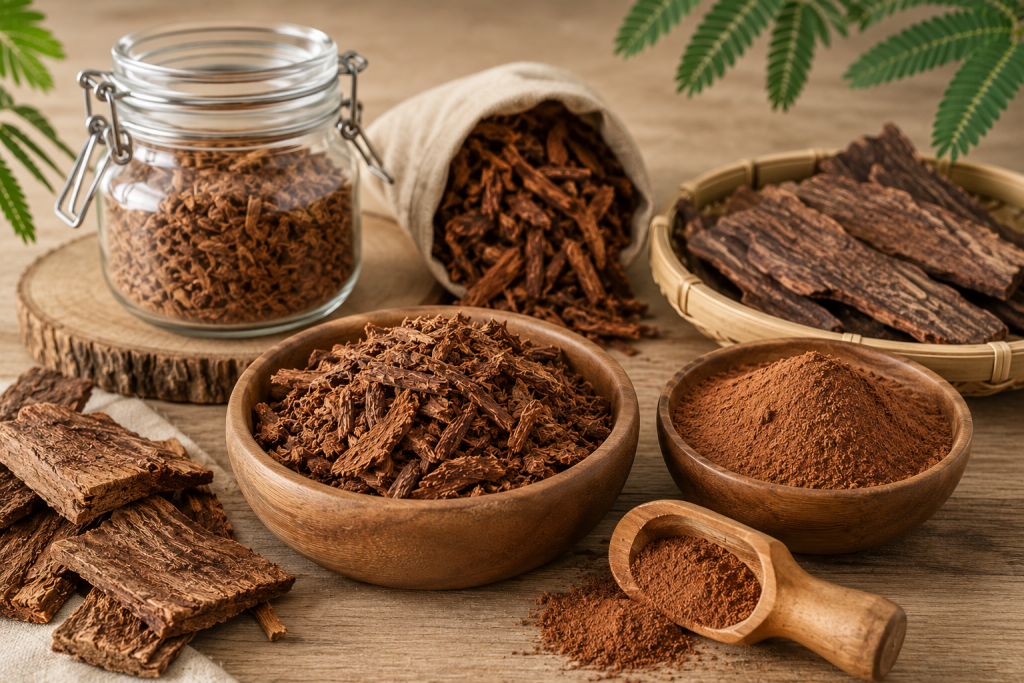
Today, mimosa tenuiflora root bark is commonly available in three forms:
Powder
Powder offers a fine, uniform texture that many customers appreciate for its convenience and consistency.
Because it has already been processed into a fine material, powder is often chosen by buyers who prefer minimal preparation.
You can browse our available powder, shredded, and chunk options in our complete shop collection:
Shredded Bark
Shredded bark provides a balance between convenience and minimal processing.
Many returning customers appreciate shredded bark because it retains more of its natural structure while remaining easy to store and handle.
Chunked Bark
Chunks represent the least processed form.
Some buyers specifically prefer chunked bark because they appreciate its larger natural pieces and minimal additional processing.
Importantly, texture alone does not determine quality.
Powder is not automatically higher quality than chunks, nor are chunks automatically better than shredded bark.
The best texture depends entirely on individual preferences and intended use.
Freshness Begins Before Storage
Freshness doesn’t begin when the customer receives the product.
It begins much earlier.
Proper harvesting, drying, and packaging all influence how well mimosa tenuiflora root bark maintains its condition over time.
Fresh botanical materials are typically:
- Thoroughly dried
- Properly packaged
- Protected from unnecessary moisture
- Stored under stable conditions
Even the highest-quality bark benefits from proper storage after delivery.
Why Processing Plays Such an Important Role
Processing is one of the biggest factors separating average products from premium botanical materials.
Every stage matters.
Harvesting
Careful harvesting helps preserve the integrity of the bark before any additional processing begins.
Responsible harvesting practices also help minimize unnecessary contamination.
Cleaning
After harvesting, excess plant material and debris are removed.
Clean processing helps produce a more consistent finished product.
Drying
Drying is one of the most important stages.
Proper drying reduces excess moisture while helping prepare the bark for long-term storage.
Because moisture is one of the biggest concerns with botanical materials, this stage deserves careful attention.
Grinding
When producing powder, grinding should create a consistent texture without introducing unnecessary contamination or inconsistency.
Uniform particle size often reflects careful processing practices.
If you’d like to learn more about the complete journey from harvested bark to finished product, our processing guide explores each stage in greater detail: https://tenuiflorashop.com/how-is-mimosa-tenuiflora-root-bark-processed/
Supplier Transparency Is One of the Strongest Quality Indicators
Many buyers spend considerable time comparing product photos.
While appearance certainly matters, supplier transparency often provides even greater insight.
Reliable suppliers typically provide:
- Clear product descriptions
- Multiple product photographs
- Educational articles
- Detailed sizing information
- Honest discussions about natural variation
Transparency helps buyers understand exactly what they are purchasing instead of relying solely on marketing language.
Suppliers willing to educate customers generally inspire greater confidence than those offering only brief product descriptions.
Why Quality Can Vary Between Suppliers
Although mimosa tenuiflora root bark comes from the same plant species, the finished product can vary considerably between suppliers.
Differences may result from:
- Harvesting standards
- Drying procedures
- Storage methods
- Quality control
- Packaging practices
- Overall consistency
This is one reason experienced buyers often evaluate suppliers just as carefully as the botanical material itself.
Our complete guide on supplier quality explains why these differences occur and what buyers should look for when comparing products:
Storage and Packaging Matter More Than Many Buyers Realize
Even the highest-quality mimosa tenuiflora root bark benefits from proper storage after processing.
Once the bark has been harvested, cleaned, dried, and packaged, maintaining stable storage conditions helps preserve its overall consistency.
Quality packaging helps protect botanical materials from:
- Excess humidity
- Environmental contaminants
- Unnecessary exposure to air
- Physical damage during shipping
Many reputable suppliers package their products with long-term storage in mind, helping buyers receive botanical materials in the same condition they left the facility.
After receiving your order, simple storage practices—such as keeping the bark in a cool, dry place inside a sealed container—can help maintain consistency over time.
Don’t Judge Quality by Price Alone
Another common misconception is that expensive products are automatically better.
While premium mimosa tenuiflora root bark may sometimes cost more because of sourcing standards or additional quality control, price alone does not determine quality.
Instead of focusing exclusively on cost, buyers should evaluate:
- Supplier reputation
- Product consistency
- Educational resources
- Customer reviews
- Transparency
- Processing standards
A supplier who openly explains their products and quality standards often provides far more value than one who relies only on marketing claims.
Product Photography Can Be Misleading
Photos are helpful, but they should never be the only factor influencing a purchase.
Lighting, camera settings, editing, and screen calibration can all affect how mimosa tenuiflora root bark appears online.
Two photographs of the same batch can look noticeably different depending on:
- Natural lighting
- Studio lighting
- White balance
- Camera angle
- Image editing
Because of this, buyers should view photographs as one piece of information rather than definitive proof of quality.
Customer Reviews Help Tell the Bigger Story
Reviews often reveal patterns that individual product photos cannot.
When evaluating mimosa tenuiflora root bark, look for recurring comments about:
- Consistency
- Packaging
- Shipping reliability
- Customer service
- Product quality
- Repeat purchases
One review rarely tells the whole story.
However, dozens of consistent reviews often provide valuable insight into a supplier’s overall standards.
Questions Worth Asking Before Purchasing
Experienced buyers often ask more detailed questions than first-time customers.
Examples include:
- How is the bark processed?
- Is the product available in multiple textures?
- How is it packaged?
- Does the supplier provide educational information?
- Are multiple product photos available?
- Are storage recommendations provided?
These questions often reveal far more about quality than appearance alone.
Common Myths About Mimosa Tenuiflora Root Bark Quality
Myth 1: Darker Bark Is Always Better
Reality:
Color naturally varies.
Harvest timing, drying conditions, and lighting all influence appearance.
Color should always be considered alongside processing, consistency, and supplier transparency.
Myth 2: Powder Is Automatically Higher Quality
Reality:
Powder simply represents one processing option.
Chunked, shredded, and powdered bark can all be high-quality botanical materials when carefully harvested and processed.
Texture reflects preparation—not necessarily quality.
Myth 3: Every Batch Should Look Identical
Reality:
Natural botanical materials always exhibit some variation.
Responsible suppliers aim for consistency while acknowledging seasonal and environmental differences.
Myth 4: All Suppliers Sell the Same Product
Reality:
Harvesting methods, drying techniques, packaging, quality control, and customer support can vary significantly from one supplier to another.
These differences often explain why buyers experience varying levels of consistency between suppliers.
Quality Starts Long Before the Product Is Sold
By the time mimosa tenuiflora root bark reaches a customer, countless decisions have already influenced its final condition.
These include:
- Responsible harvesting
- Careful cleaning
- Proper drying
- Consistent processing
- Thoughtful packaging
- Appropriate storage
Each stage contributes to the overall quality of the finished botanical material.
For buyers, understanding this journey makes it easier to evaluate products based on meaningful characteristics rather than marketing claims.
Learning More About Botanical Quality
The importance of careful handling and quality control extends well beyond Mimosa tenuiflora.
The Missouri Botanical Garden provides educational information about plant biology, preservation, and botanical science that helps explain why environmental conditions and processing influence plant materials.
https://www.missouribotanicalgarden.org
Likewise, the Food and Agriculture Organization of the United Nations (FAO) publishes extensive educational resources covering sustainable agriculture, post-harvest handling, and plant production practices around the world.
These organizations discuss botanical materials broadly, but many of the same quality principles apply to responsibly processed dried plant products.
Frequently Asked Questions
What makes mimosa tenuiflora root bark high quality?
High-quality mimosa tenuiflora root bark is typically characterized by careful harvesting, proper drying, consistent processing, responsible storage, and transparent supplier practices.
Does darker color mean better quality?
Not necessarily.
Color varies naturally and should be evaluated alongside texture, consistency, processing methods, and supplier reputation.
Which texture is considered the highest quality?
Powder, shredded bark, and chunks can all represent premium botanical materials.
The best option depends on personal preference rather than inherent quality.
Why do products vary between suppliers?
Differences in harvesting, drying, processing, quality control, packaging, and storage all contribute to natural variation between suppliers.
How important is supplier transparency?
Supplier transparency is one of the strongest indicators of professionalism.
Educational resources, clear product descriptions, multiple photographs, and honest communication often help buyers make more informed decisions.
Can storage affect quality?
Yes.
Proper storage helps preserve the consistency and condition of botanical materials after purchase.
Cool, dry environments and airtight containers are generally recommended.
Disclaimer
This article is provided for informational and educational purposes only. It is not intended to diagnose, treat, cure, or prevent any disease or provide medical, legal, or professional advice. Information presented here is intended to help readers better understand botanical materials, quality considerations, and general purchasing factors.
Final Thoughts
Determining the quality of mimosa tenuiflora root bark involves much more than comparing photographs or searching for the lowest price.
High-quality botanical materials are the result of responsible harvesting, careful processing, thorough drying, appropriate storage, and transparent supplier practices. While natural variation is expected with any plant-based product, buyers who understand these factors are better equipped to evaluate suppliers and make confident purchasing decisions.
Rather than focusing on a single characteristic such as color or texture, consider the complete picture. Supplier transparency, educational resources, consistent processing, and responsible packaging all contribute to the overall quality of mimosa tenuiflora root bark. By approaching botanical products with a broader understanding of what truly influences quality, buyers can make more informed decisions and better appreciate the craftsmanship and care that go into producing premium botanical materials.