If you’ve spent any time researching Mimosa tenuiflora root bark, you’ve probably noticed that products can vary significantly in appearance, texture, and overall quality. Some materials are rich in color and finely processed, while others appear inconsistent or overly fibrous.
This often leads to an important question:
How is Mimosa tenuiflora root bark processed?
The answer is more important than many buyers realize. The way Mimosa tenuiflora root bark is harvested, cleaned, dried, and processed plays a major role in its appearance, consistency, storage life, and overall quality.
Whether you’re researching botanical materials, comparing suppliers, or simply trying to understand what happens before a product reaches your door, understanding Mimosa tenuiflora root bark processing can help you make more informed decisions.
In this guide, we’ll walk through each stage of the process, from harvesting to powder production, and explain why processing methods matter.
What Is Mimosa Tenuiflora Root Bark?
Mimosa tenuiflora is a tree native to regions of Mexico, Central America, and parts of South America. The inner root bark has a long history of traditional use and is widely recognized for its natural dyeing properties and use in botanical formulations.
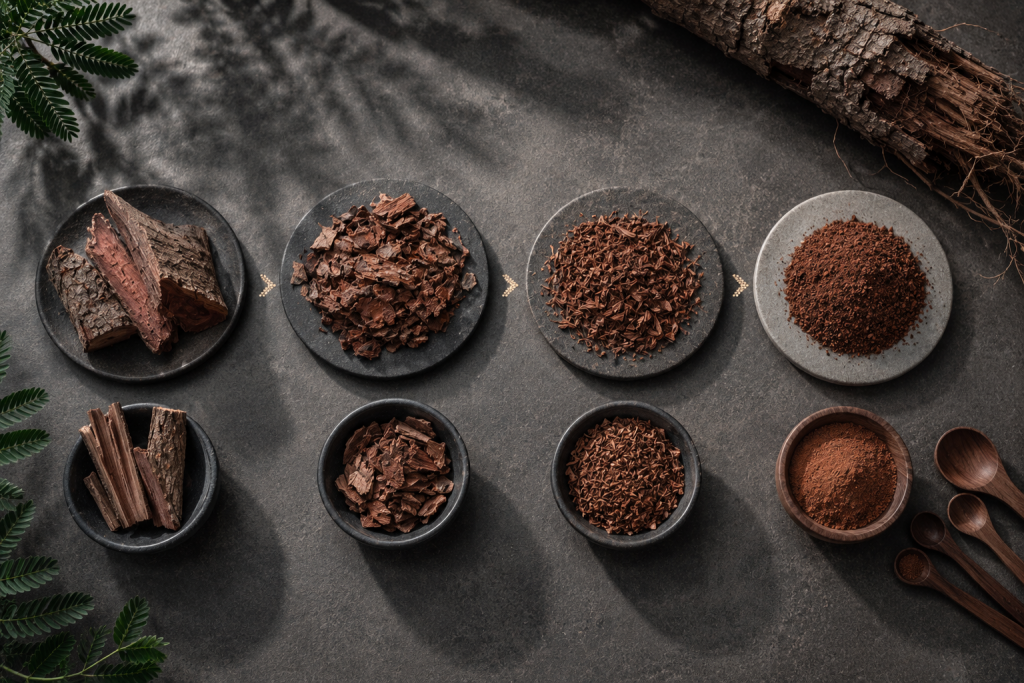
Today, Mimosa tenuiflora root bark is commonly sold in three primary forms:
- Chunked bark
- Shredded bark
- Powdered bark
Although these forms look very different, they all begin with the same raw botanical material.
The difference lies in how the bark is processed after harvesting.
Why Processing Matters
Many people focus on where Mimosa tenuiflora is sourced, but processing is equally important.
Proper processing helps preserve:
- Consistency
- Color
- Texture
- Cleanliness
- Storage stability
Poor processing can result in:
- Excessive debris
- Uneven texture
- Inconsistent color
- Lower-quality finished material
This is one reason why buyers often notice differences between suppliers. If you’re interested in learning more about quality differences, our guide on why MHRB quality varies between suppliers explores this topic in greater detail:
Step 1: Harvesting the Root Bark
The first stage of Mimosa tenuiflora root bark processing begins with harvesting.
Harvesting practices can vary depending on the region and supplier. Responsible harvesting focuses on obtaining usable root bark while minimizing unnecessary waste.
Once harvested, the bark must be separated and prepared for further processing.
This stage is important because the quality of the starting material directly affects the quality of the final product.
Step 2: Separating the Inner Root Bark
One of the most important stages of Mimosa tenuiflora root bark processing is separating the inner root bark from the outer bark.
The inner root bark is generally the most sought-after portion because it provides:
- Rich coloration
- Consistent texture
- Better processing characteristics
Outer bark tends to be:
- More fibrous
- Lighter in color
- Less uniform
High-quality suppliers spend additional time ensuring that usable inner root bark is properly separated before further processing.
This step has a major impact on consistency and appearance.
Step 3: Cleaning the Material
After separation, the bark is typically cleaned to remove unwanted material.
This may include:
- Soil
- Dust
- Organic debris
- Excess plant matter
Proper cleaning helps improve the overall quality of the finished product and reduces contamination.
Buyers often overlook this stage, but thorough cleaning contributes significantly to consistency.
Step 4: Drying the Root Bark
Once cleaned, Mimosa tenuiflora root bark must be dried.
Drying is one of the most critical parts of the process.
Proper drying helps:
- Reduce moisture content
- Improve storage life
- Preserve appearance
- Prepare material for further processing
Improper drying can lead to:
- Mold risk
- Color degradation
- Uneven texture
- Reduced shelf stability
Because of this, experienced suppliers carefully control drying conditions.
How Drying Affects Quality
Drying does more than simply remove moisture.
It can influence:
- Color retention
- Consistency
- Processing efficiency
- Long-term storage potential
Well-dried material is typically easier to process into shredded or powdered forms.
This is one reason quality-focused suppliers place significant emphasis on drying procedures.
Step 5: Producing Chunked Bark
After drying, some material is sold in chunked form.
Chunked bark is the least processed option available.
Benefits of chunked bark include:
- Long storage life
- Minimal processing
- Greater control over preparation
Many buyers appreciate chunked bark because it remains closer to its original harvested form.
Step 6: Producing Shredded Bark
Shredded bark undergoes additional processing.
The dried bark is broken down into smaller pieces, creating a more manageable texture while preserving much of the bark’s natural structure.
Shredded bark offers a balance between:
- Convenience
- Storage stability
- Processing flexibility
Many buyers consider shredded bark a middle-ground option between chunks and powder.
Step 7: Producing Powdered Bark
Powder production involves grinding dried root bark into a fine texture.
This additional processing creates a product that is:
- Consistent
- Easy to handle
- Convenient for formulations
Because powdered bark requires additional processing steps, it is often more labor-intensive to produce than chunked or shredded material.
If you’re interested in exploring powdered Mimosa tenuiflora root bark, you can browse our collection here: https://tenuiflorashop.com/shop-2/mhrb-powder/mhrb-powder-1kg/
Why Powder Quality Can Vary
Not all powder is processed the same way.
Factors that can influence powdered bark include:
- Grinding equipment
- Particle size consistency
- Starting material quality
- Cleaning procedures
This is one reason powder from different suppliers may look noticeably different.
Quality Control During Processing
Reliable suppliers often implement quality control measures throughout processing.
These measures may include:
- Material inspection
- Cleaning verification
- Consistency checks
- Batch reviews
Quality control helps ensure that finished products maintain consistent standards over time.
For buyers, consistency is often one of the strongest indicators of a reliable supplier.
How Processing Affects Appearance
One of the most visible effects of processing is appearance.
Factors such as:
- Drying methods
- Bark separation
- Grinding procedures
can all influence:
- Color
- Texture
- Uniformity
Buyers frequently use these visual characteristics as one way to evaluate quality.
Common Misconceptions About Mimosa Tenuiflora Root Bark Processing
All Bark Is Processed the Same Way
Not true.
Processing methods vary significantly between suppliers.
Powder Is Always Better Than Shredded Bark
Not necessarily.
Each form serves different needs and preferences.
Appearance Doesn’t Matter
Appearance alone doesn’t determine quality, but it can provide useful clues about processing consistency.
More Processing Means Better Quality
Additional processing does not automatically mean higher quality.
The quality of the original material remains extremely important.
Choosing a Supplier That Prioritizes Processing Quality
When comparing suppliers, consider:
- Transparency
- Consistency
- Product information
- Customer feedback
Reliable suppliers typically provide clear information about their products and maintain consistent standards across batches.
You can find additional educational resources and botanical guides here:
https://tenuiflorashop.com/blog
Botanical Processing Standards and Why They Matter
The processing methods used for botanical materials can have a significant impact on consistency, appearance, storage stability, and overall quality. Factors such as drying conditions, cleaning procedures, and handling practices all influence the final product that reaches the customer.
Organizations focused on plant science and botanical research often emphasize the importance of proper harvesting and post-harvest handling when working with plant materials. According to the Missouri Botanical Garden, environmental conditions, plant maturity, and processing methods can all affect the characteristics of botanical products.
This is one reason why buyers often notice differences between suppliers. Even when the same species is being sold, variations in harvesting, drying, and processing can result in noticeable differences in color, texture, and consistency.
For buyers researching Mimosa tenuiflora root bark, understanding how processing affects quality can make it easier to evaluate suppliers and choose products that meet their expectations.
Frequently Asked Questions
How is Mimosa tenuiflora root bark processed?
Mimosa tenuiflora root bark processing typically includes harvesting, separating inner root bark, cleaning, drying, and optionally producing shredded or powdered forms.
Why is drying important?
Drying helps improve storage life, preserve consistency, and prepare the material for further processing.
Does processing affect quality?
Yes. Processing methods can influence texture, appearance, cleanliness, and overall consistency.
Why does powder look different between suppliers?
Differences in sourcing, drying, cleaning, and grinding methods can all affect appearance.
Is chunked, shredded, or powdered bark better?
Each form has advantages. The best choice depends on your needs, preferences, and intended application.
Disclaimer
This article is provided for informational and educational purposes only. It is not intended to diagnose, treat, cure, or prevent any disease, nor should it be interpreted as medical, legal, or professional advice. Always research local regulations and consult qualified professionals when appropriate.
Final Thoughts
Understanding how Mimosa tenuiflora root bark is processed provides valuable insight into the differences buyers often see between suppliers.
From harvesting and cleaning to drying and grinding, each stage plays an important role in determining the appearance, consistency, and overall quality of the finished product.
By learning more about Mimosa tenuiflora root bark processing, buyers can make more informed decisions and better understand what separates high-quality material from inconsistent alternatives.