When researching mimosa tenuiflora root bark, one of the most overlooked aspects of quality is freshness. Buyers often compare color, texture, price, and supplier reputation, but freshness plays an equally important role in the overall condition of any botanical material.
Freshness is not determined by a single factor. Instead, it is the result of every stage in the supply chain—from harvesting and drying to packaging, storage, and shipping. A supplier who pays careful attention to each of these steps is far more likely to provide a consistent, high-quality product than one who focuses only on appearance.
Whether you’re purchasing premium mimosa tenuiflora root bark for the first time or you’re an experienced buyer comparing suppliers, understanding what influences freshness can help you make more informed purchasing decisions.
In this guide, we’ll explain why freshness matters, what affects it throughout the production process, and what buyers should look for when evaluating authentic mimosa tenuiflora root bark.
What Does “Freshness” Mean?
When discussing botanical materials, freshness doesn’t necessarily refer to how recently a plant was harvested.
Instead, freshness describes how well the botanical material has been preserved from harvest until it reaches the customer.
Fresh mimosa tenuiflora root bark has typically been:
- Harvested responsibly
- Properly cleaned
- Thoroughly dried
- Carefully stored
- Packaged to reduce unnecessary exposure to moisture and air
Every step contributes to preserving the natural characteristics of the bark over time.
Freshness should be viewed as a reflection of the entire handling process rather than simply the harvest date.
Why Freshness Matters
Freshness affects much more than appearance.
It also reflects the level of care taken throughout harvesting, processing, storage, and fulfillment.
When buyers search for mimosa tenuiflora root bark for sale, they’re often comparing products that appear similar on the surface. However, differences in freshness can result from variations in supplier practices long before the product is packaged.
Freshness is often associated with:
- Better overall consistency
- Cleaner presentation
- Stable storage conditions
- More reliable handling
- Greater confidence in supplier standards
Because botanical materials are natural products, maintaining freshness requires attention throughout the entire supply chain—not just at the final packaging stage.
It All Starts With Responsible Harvesting
Quality begins long before a customer places an order.
Harvesting is the first stage where freshness can either be preserved or compromised.
Careful harvesting helps ensure that the desired portion of the plant is collected responsibly while minimizing unnecessary exposure to environmental conditions that may affect the bark before processing begins.
Although buyers rarely witness this stage themselves, responsible harvesting practices form the foundation for every premium botanical product that follows.
Proper Cleaning Helps Preserve Quality
Once harvested, the bark is typically cleaned to remove unwanted debris and excess plant material.
Clean processing serves two important purposes.
First, it prepares the bark for drying.
Second, it helps produce a more consistent finished product.
Suppliers who emphasize careful cleaning often produce botanical materials that appear more uniform and professionally prepared.
Cleaning alone doesn’t determine freshness, but it represents another important step in maintaining quality throughout production.
Drying Is One of the Most Important Steps
Among all stages in the production process, drying has one of the greatest influences on long-term freshness.
Freshly harvested bark naturally contains moisture.
If that moisture isn’t reduced appropriately before storage, maintaining long-term consistency becomes much more difficult.
Proper drying helps:
- Reduce excess moisture
- Improve storage stability
- Prepare the bark for packaging
- Support long-term preservation
Drying should be thorough but carefully controlled.
The goal is to prepare the botanical material for storage while maintaining its natural characteristics.
Understanding how this process works can also help explain why quality varies between suppliers.
If you’re interested in learning more about evaluating authenticity, our guide on 5 Signs You’re Buying Authentic Mimosa Hostilis Root Bark explores many of the quality indicators experienced buyers often consider before making a purchase:
Processing Plays a Larger Role Than Many Buyers Realize
Many customers assume freshness depends entirely on storage.
In reality, processing has a tremendous impact long before storage even begins.
Processing may include:
- Sorting
- Cleaning
- Drying
- Preparing different textures
- Packaging
Each stage influences how well the finished product can be preserved over time.
Consistent processing often produces botanical materials that remain easier to store while maintaining their overall condition.
This is one reason experienced buyers frequently evaluate supplier standards alongside price.
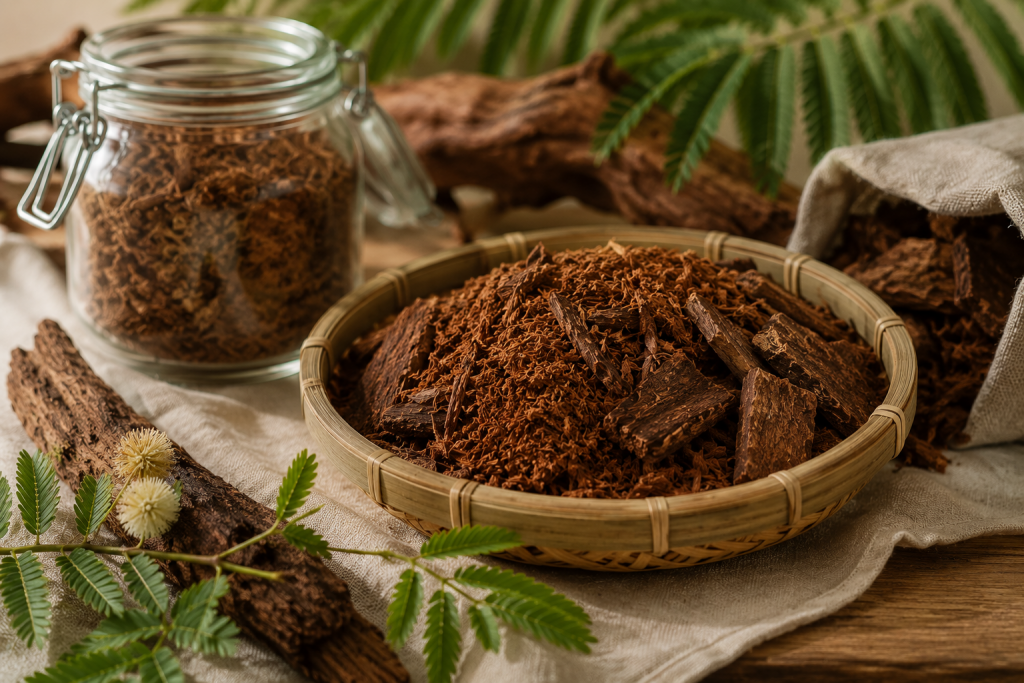
Does Texture Affect Freshness?
A common question among buyers is whether powder, shredded bark, or chunks remain fresh differently.
Although each texture shares the same basic storage principles, their characteristics differ slightly.
Powder
Because powder has significantly greater surface area, it may absorb environmental moisture more quickly if left exposed after opening.
For this reason, airtight storage becomes especially important.
If you’re exploring different powder options, you can browse our Mimosa Hostilis Root Bark Powder collection to compare available sizes and textures:
Mimosa Hostilis Root Bark Powder collection
Shredded Bark
Shredded bark offers a balance between convenience and minimal processing.
Many buyers appreciate shredded bark because it stores easily while retaining more of its natural structure than powder.
Chunked Bark
Chunked bark contains the largest individual pieces.
Some buyers prefer chunks because they expose less surface area and remain minimally processed before use.
Importantly, none of these textures is inherently fresher than another.
Freshness depends far more on harvesting, drying, packaging, and storage than on texture alone.
Storage Before You Buy Matters Too
Freshness isn’t determined only by what happens after the customer receives the product.
Supplier storage practices also play an essential role.
Quality-focused suppliers typically store mimosa tenuiflora bark under stable conditions that help protect it from:
- Excess humidity
- Temperature fluctuations
- Direct sunlight
- Environmental contaminants
Maintaining proper storage before shipping helps ensure customers receive botanical materials in excellent condition.
This often separates professional suppliers from those who pay less attention to quality control.
Packaging Helps Preserve Freshness During Shipping
Even carefully processed bark can be affected if packaging is inadequate.
Protective packaging helps reduce unnecessary exposure during transportation and storage.
Many reputable suppliers choose packaging that helps protect botanical materials while they move through the shipping process.
Quality packaging may help reduce exposure to:
- Moisture
- Air
- Dust
- Physical damage
Although packaging cannot improve a poorly processed product, it plays an important role in preserving freshness after processing has been completed.
For buyers comparing suppliers, thoughtful packaging often reflects broader attention to quality throughout the business.
Freshness and Supplier Reputation Go Hand in Hand
Buyers looking to buy mimosa tenuiflora often focus on pricing first.
However, supplier reputation usually tells a more complete story.
Reliable suppliers typically invest in:
- Educational resources
- Transparent product descriptions
- Consistent photography
- Careful fulfillment
- Customer support
These practices often indicate that the supplier values long-term customer relationships rather than simply making a sale.
When evaluating authentic mimosa tenuiflora root bark, transparency is frequently one of the strongest indicators of professionalism and consistency.
Freshness Doesn’t End at Delivery
Once your order arrives, maintaining freshness becomes the buyer’s responsibility. Even a premium botanical product can be affected by improper storage after delivery.
The good news is that preserving freshness is relatively simple.
For best results, store the bark:
- In a cool, dry location
- Away from direct sunlight
- In an airtight container after opening
- Away from excess humidity and heat
These basic practices help maintain stable conditions and protect the bark from unnecessary environmental exposure.
If you’d like a more detailed look at shelf life and storage, our guide on Can Mimosa Tenuiflora Root Bark Go Bad? explores how proper storage influences long-term condition:
How Buyers Can Evaluate Freshness
Freshness isn’t something you can measure by one characteristic alone.
Instead, experienced buyers often evaluate several indicators together.
Product Information
Quality suppliers usually provide detailed product descriptions rather than relying on vague marketing language.
Look for information about:
- Texture
- Packaging
- Available sizes
- Storage recommendations
- Educational resources
Transparency often reflects confidence in the product itself.
Product Photography
Clear, high-quality photographs can help buyers understand what to expect.
While lighting and camera settings naturally influence appearance, multiple images from different angles often demonstrate greater transparency than a single heavily edited photograph.
Consistency
Natural variation is expected, but products should still demonstrate overall consistency.
Whether you’re purchasing powder, shredded bark, or chunks, the product should appear carefully prepared and professionally packaged.
Supplier Reputation
Educational content, responsive customer support, and consistent information across a website often indicate a supplier focused on long-term customer relationships rather than one-time sales.
Freshness and Authenticity Often Go Together
Although freshness and authenticity are different concepts, they frequently overlap.
Suppliers who prioritize responsible sourcing, careful processing, and proper storage often provide a more consistent customer experience overall.
When researching botanical materials, it’s helpful to evaluate authenticity alongside freshness.
Our guide covering 5 Signs You’re Buying Authentic Mimosa Hostilis Root Bark explains several characteristics experienced buyers commonly look for when comparing suppliers:
While that article focuses on Mimosa hostilis, many of the same principles—such as transparency, consistency, and supplier standards—also apply when evaluating Mimosa tenuiflora.
Why the Scientific Name Matters
When researching botanical materials online, you may notice that the same plant is sometimes referred to by different names.
Today, Mimosa tenuiflora is the widely accepted scientific name recognized by botanical databases such as the Global Biodiversity Information Facility (GBIF).
GBIF maintains taxonomic information and global biodiversity records that help standardize plant identification across scientific communities.
https://www.gbif.org/species/2978287
Understanding the accepted botanical name can make it easier to compare educational resources, supplier information, and scientific references while researching Mimosa root bark.
Common Myths About Freshness
Myth 1: Fresher Always Means Newly Harvested
Not necessarily.
A carefully harvested, properly dried, and professionally stored botanical product may remain in excellent condition long after harvest.
Freshness is determined by preservation—not simply age.
Myth 2: Darker Color Means Fresher Bark
Color alone cannot determine freshness.
Natural variation, drying methods, lighting, and photography all influence appearance.
Instead of relying on color, evaluate supplier transparency and processing standards.
Myth 3: Powder Cannot Stay Fresh
Some buyers assume powdered products lose freshness more quickly.
In reality, powder can remain in excellent condition when properly processed, packaged, and stored in airtight containers after opening.
Many customers choose powder because of its convenience while successfully maintaining long-term storage.
Myth 4: Every Supplier Handles Freshness the Same Way
Supplier practices vary considerably.
Differences in drying, packaging, storage, and fulfillment all influence the condition of the finished product customers receive.
This is one reason many experienced buyers spend time researching suppliers before placing an order.
Questions to Ask Before Purchasing
If you’re comparing suppliers, consider asking questions such as:
- How is the bark processed?
- How is it packaged?
- What storage recommendations are provided?
- Is educational information available?
- Are multiple textures offered?
- Does the supplier explain natural variation?
These questions often reveal far more about product quality than price alone.
If you’re still exploring different options, our guide on Buy Mimosa Hostilis Root Bark Online discusses many of the considerations buyers evaluate before making a purchase.
You can also find answers to many common questions in our Mimosa Hostilis Root Bark FAQs.
Frequently Asked Questions
Why is freshness important when buying Mimosa tenuiflora root bark?
Freshness reflects how well the botanical material has been harvested, processed, dried, packaged, and stored before reaching the customer. Careful handling throughout each stage helps maintain overall consistency.
Does harvest date determine freshness?
Not by itself.
Proper drying, storage, and packaging often have a greater influence on freshness than the harvest date alone.
Can improper storage affect freshness?
Yes.
Exposure to excess moisture, heat, or direct sunlight after purchase can gradually affect the condition of botanical materials. Proper storage helps preserve consistency over time.
Does one texture stay fresher than another?
Powder, shredded bark, and chunks can all remain in excellent condition when properly processed and stored. Texture alone does not determine freshness.
How can I identify a quality supplier?
Look for suppliers that provide detailed product information, educational resources, transparent descriptions, quality packaging, and clear storage recommendations.
Disclaimer
This article is intended for educational and informational purposes only. It does not provide medical, legal, or professional advice and should not be interpreted as a recommendation for any medical or therapeutic use. The information presented is intended to help readers better understand botanical materials, freshness, storage, and purchasing considerations.
Final Thoughts
Freshness is one of the most important—and most misunderstood—aspects of purchasing botanical materials. Rather than being determined by a single characteristic, it reflects the entire journey from harvest to delivery.
Responsible harvesting, careful processing, proper drying, thoughtful packaging, and appropriate storage all contribute to preserving the overall quality of Mimosa bark. Once the product arrives, continued care through proper storage helps maintain those same standards.
For buyers researching fresh Mimosa hostilis root bark, the best approach is to evaluate the complete picture rather than relying on appearance or price alone. Suppliers who emphasize transparency, consistency, educational resources, and responsible handling are often the ones most committed to providing a reliable product and customer experience.