If you’ve recently purchased Mimosa Hostilis root bark or are researching the best way to preserve botanical materials, one of the most common questions you’ll encounter is how to store it properly. While high-quality bark is naturally durable when cared for correctly, improper storage can expose it to excess moisture, fluctuating temperatures, and environmental contaminants that may affect its overall condition over time.
Whether you have Mimosa Hostilis root bark powder, shredded bark, or chunks, understanding a few simple storage principles can help maintain consistency and protect your investment for months—or even years.
In this guide, we’ll explain the best practices for storing Mimosa Hostilis root bark, common mistakes to avoid, and how different textures may benefit from slightly different storage methods.
Why Proper Storage Matters
Like many dried botanical materials, Mimosa Hostilis root bark is best preserved in a stable environment.
Once harvested, cleaned, and dried, the bark can remain in excellent condition for extended periods when protected from excess humidity, direct sunlight, and dramatic temperature fluctuations.
Proper storage helps maintain:
- Consistent texture
- Dry, stable conditions
- Clean appearance
- Long-term usability
- Protection from environmental contaminants
While the bark itself is naturally resilient, poor storage practices may introduce unnecessary moisture or expose the material to conditions that are less than ideal.
Does Every Texture Store the Same Way?
One question buyers often ask is whether storage recommendations differ depending on the texture they purchase.
The good news is that the core principles remain the same, although each form has a few considerations.
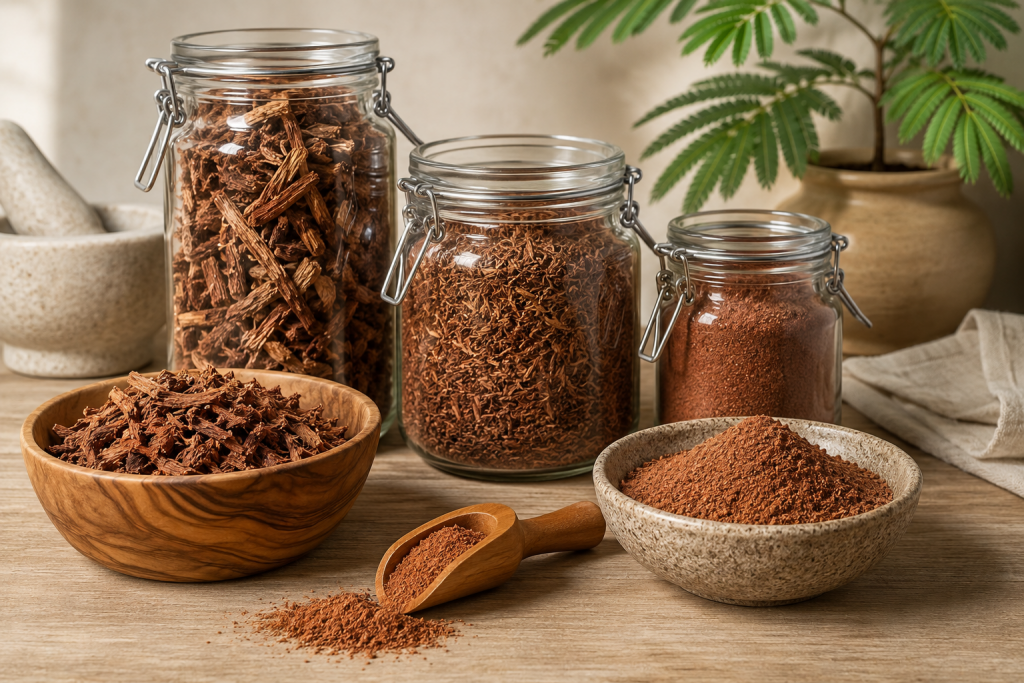
Mimosa Hostilis Root Bark Powder
Because Mimosa Hostilis root bark powder has a much larger surface area than shredded bark or chunks, it can absorb moisture from the surrounding air more quickly if left exposed.
For this reason, powder should always be kept in a tightly sealed container after opening.
If you’re exploring different powder sizes, you can browse our MHRB Powder Collection:
MHRB Powder Collection
Shredded Bark
Shredded bark offers a balance between convenience and minimal processing.
Although it is generally less susceptible to airborne moisture than powder, it should still be stored in sealed packaging to help maintain consistent conditions.
Many buyers appreciate shredded bark because it combines relatively easy storage with a more natural texture.
Chunked Bark
Chunked bark is the least processed option available.
Because the pieces remain larger, they generally expose less surface area to surrounding air.
Many long-term buyers choose chunks specifically because they prefer storing botanical materials in a minimally processed form before preparing them as needed.
Regardless of the texture you choose, proper storage remains one of the most important factors in maintaining quality over time.
The Three Biggest Enemies of Long-Term Storage
When discussing long-term storage, three environmental factors deserve the most attention.
1. Moisture
Moisture is one of the most common concerns when storing dried botanical materials.
Even small amounts of excess humidity can create conditions that are less suitable for long-term storage.
For best results:
- Keep containers tightly sealed.
- Avoid storing bark in damp locations.
- Never leave packaging open unnecessarily.
- Allow containers to remain closed when not in use.
If you live in a humid climate, extra attention to airtight storage becomes even more important.
2. Heat
Heat can gradually affect many natural botanical materials over time.
Although ordinary room temperatures are generally suitable, prolonged exposure to excessive heat should be avoided whenever possible.
Good storage locations include:
- Interior closets
- Cabinets
- Pantry shelves
- Climate-controlled storage areas
Avoid storing Mimosa Hostilis root bark:
- Near ovens
- Beside heaters
- Inside vehicles
- In garages that experience extreme summer temperatures
Keeping temperatures relatively stable is usually more beneficial than frequent fluctuations.
3. Sunlight
Direct sunlight introduces both heat and ultraviolet light.
Although many buyers focus primarily on moisture, prolonged sunlight exposure is another factor worth avoiding.
Whenever possible, store bark:
- Away from windows
- Inside opaque containers
- In cabinets or drawers
- In shaded indoor locations
These simple precautions help create a more stable storage environment.
Choosing the Right Container
After opening the original packaging, many buyers wonder whether transferring the bark into another container is worthwhile.
In many cases, an airtight container provides additional protection.
Popular choices include:
- Glass jars with sealing lids
- Food-grade storage containers
- Heavy-duty resealable bags
- Vacuum-sealed bags for long-term storage
Regardless of the container you choose, cleanliness is important.
Always make sure containers are dry before transferring botanical materials.
Should You Refrigerate Mimosa Hostilis Root Bark?
This is one of the most frequently asked questions.
For most situations, refrigeration is unnecessary.
In fact, repeatedly moving containers between cold and warm environments may increase the likelihood of condensation forming inside the container.
Instead, most buyers achieve excellent long-term storage by keeping Mimosa Hostilis root bark in a cool, dry, indoor location with relatively stable temperatures.
Consistency is generally more important than refrigeration.
Is Freezing Recommended?
Some buyers consider freezing botanical materials for extended storage.
While freezing may seem like an attractive option, temperature changes during thawing can introduce condensation if containers are opened before reaching room temperature.
For most customers, a sealed container stored in a cool, dry environment provides an effective balance between convenience and long-term preservation without introducing unnecessary temperature fluctuations.
Why Original Quality Still Matters
Even the best storage practices cannot improve material that was poorly processed before purchase.
High-quality botanical materials begin with:
- Careful harvesting
- Proper cleaning
- Thorough drying
- Consistent processing
- Responsible handling
If you’re interested in understanding why products vary between suppliers, our guide explores the factors that influence quality and consistency:
Likewise, understanding how bark moves from harvest to finished product helps explain why proper processing plays such an important role in long-term storage and consistency. Our processing guide explores each step in greater detail:
How Long Does Mimosa Hostilis Root Bark Stay Fresh?
One of the most common questions buyers ask is how long Mimosa Hostilis root bark will remain in good condition when stored correctly.
Although there is no universal expiration date for dried botanical materials, properly harvested and thoroughly dried bark can typically remain in excellent condition for an extended period when protected from moisture, heat, and direct sunlight.
Several factors influence long-term freshness, including:
- Initial product quality
- Moisture content
- Storage environment
- Packaging quality
- Frequency of exposure to air
Rather than focusing on a specific timeframe, buyers should prioritize maintaining stable storage conditions from the day the package arrives.
Signs Your Storage Conditions Are Working
Properly stored Mimosa Hostilis root bark should continue to exhibit characteristics similar to when it was first received.
While natural variation between batches is expected, many buyers look for:
- A consistently dry texture
- Clean appearance
- Even coloration
- Minimal clumping (for powder)
- Packaging that remains dry and sealed
Maintaining these conditions is often more important than the exact storage duration.
Common Storage Mistakes
Even high-quality botanical materials can be affected by avoidable storage mistakes.
Here are some of the most common:
Leaving the Package Open
Every time a package is left open unnecessarily, the material is exposed to airborne humidity.
Simply resealing the package immediately after use helps maintain a more stable environment.
Storing Near Heat Sources
Kitchen cabinets located above ovens or near appliances can become surprisingly warm.
Instead, choose storage areas that remain consistently cool throughout the year.
Frequent Temperature Changes
Moving containers repeatedly between cold and warm environments can introduce condensation.
Stable temperatures generally provide better long-term storage conditions.
Using Containers That Are Not Completely Dry
Before transferring Mimosa Hostilis root bark into another container, ensure it is completely clean and dry.
Even small amounts of residual moisture are best avoided.
Exposure to Direct Sunlight
Windowsills and brightly lit shelves may seem convenient, but prolonged exposure to sunlight can gradually increase heat inside containers.
Dark cabinets or pantry shelves are usually a better option.
Storing Bulk Quantities
Customers purchasing multiple kilograms often ask whether storage recommendations change for larger quantities.
Fortunately, the same principles still apply.
For bulk orders:
- Divide larger quantities into smaller sealed containers.
- Open only the container currently being used.
- Keep remaining containers sealed.
- Label containers with the storage date if desired.
This minimizes repeated exposure to air and moisture.
Should You Vacuum Seal Mimosa Hostilis Root Bark?
Vacuum sealing is a popular option among buyers planning long-term storage.
Removing excess air may help create a more stable environment while reducing repeated exposure when properly sealed.
However, vacuum sealing is not essential.
Many customers successfully store Mimosa Hostilis root bark using high-quality airtight containers or heavy-duty resealable bags kept in cool, dry conditions.
The most important factor remains consistency rather than the specific storage method.
Why Packaging Quality Matters
Storage begins before your package even arrives.
Reliable suppliers often prioritize packaging that helps protect botanical materials during shipping and storage.
Good packaging helps reduce unnecessary exposure to:
- Moisture
- Dust
- Environmental contaminants
This is one reason buyers frequently choose suppliers that emphasize careful fulfillment and packaging practices.
If you’re exploring different product sizes and packaging options, you can browse our complete collection here:
Freshness Starts With Proper Processing
Storage is only one part of maintaining quality.
Proper harvesting, cleaning, drying, and processing all contribute to long-term consistency before the product is ever packaged.
Well-processed bark is generally easier to store because it begins with controlled moisture levels and consistent preparation.
Understanding how botanical materials are processed can help buyers better appreciate why supplier standards matter throughout the entire production process.
Botanical Storage Best Practices
The importance of proper storage extends far beyond Mimosa Hostilis root bark.
Organizations such as the Missouri Botanical Garden provide educational information about plant materials, preservation, and botanical science that highlights the importance of appropriate handling and storage throughout a plant’s lifecycle.
https://www.missouribotanicalgarden.org
Similarly, the Food and Agriculture Organization of the United Nations (FAO) publishes educational resources on agricultural products, post-harvest handling, and sustainable management of plant materials around the world.
Although these resources discuss botanical materials more broadly, many of the same storage principles apply to dried plant products intended for long-term preservation.
Frequently Asked Questions
How should Mimosa Hostilis root bark be stored?
Store Mimosa Hostilis root bark in a cool, dry location away from direct sunlight and excess humidity. Airtight containers help maintain stable conditions over time.
Is refrigeration necessary?
For most buyers, refrigeration is unnecessary. Stable room temperatures in a dry indoor environment are generally sufficient.
Can Mimosa Hostilis root bark be frozen?
While some people choose to freeze botanical materials, freezing introduces temperature fluctuations that may create condensation during thawing. For most situations, cool, dry storage is the simpler and more practical option.
Does powdered bark require different storage?
Because Mimosa Hostilis root bark powder has a finer texture and greater surface area, it benefits from airtight storage to minimize exposure to humidity after opening.
Can I store multiple textures together?
It’s generally recommended to store each texture separately in its own sealed container. This makes organization easier and minimizes unnecessary exposure when accessing individual products.
Does storage affect quality?
Proper storage helps preserve the consistency and condition of botanical materials over time. Stable environmental conditions are one of the most important factors in maintaining long-term freshness.
Disclaimer
This article is provided for educational and informational purposes only. It is not intended to diagnose, treat, cure, or prevent any disease or provide medical or legal advice. Storage recommendations are general best practices for dried botanical materials and may vary depending on individual environmental conditions.
Final Thoughts
Knowing how to store Mimosa Hostilis root bark properly is one of the easiest ways to help maintain its consistency and condition over time.
Whether you choose powder, shredded bark, or chunks, the same core principles apply: protect the material from excess moisture, avoid prolonged heat and direct sunlight, and store it in clean, airtight containers whenever possible.
Although storage techniques are important, they work best when paired with high-quality botanical materials from suppliers who prioritize careful harvesting, processing, and packaging. By combining proper storage practices with thoughtful purchasing decisions, buyers can help ensure their Mimosa Hostilis root bark remains well preserved for long-term use.
If you’re still comparing textures or deciding which option best fits your needs, explore our educational guides covering processing methods, texture differences, supplier quality, and our complete selection of Mimosa Hostilis root bark products. Understanding these factors together will help you make more informed decisions and get the most from every purchase.