Introduction
If you’ve been asking what color should high quality mimosa tenuiflora root bark be, you’re not alone.
This is one of the most common questions buyers ask before making a purchase, especially when comparing product photos online. Color is often the first clue people use to judge quality, consistency, and whether they are looking at true inner root bark or lower-grade material.
The short answer?
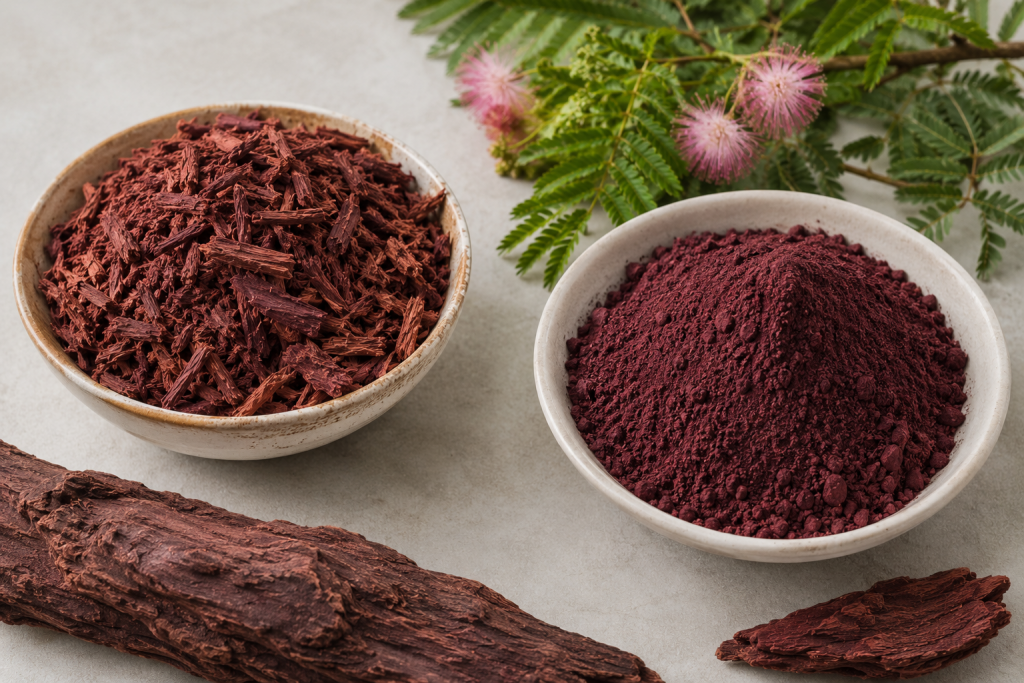
High quality mimosa tenuiflora root bark color is typically a rich reddish-brown to deep purple tone, depending on the form and natural variation of the material.
However, there is more nuance to it than simply looking for the darkest bark possible.
In this guide, we’ll explain what color signals quality, why tones naturally vary, how powder and shredded bark differ visually, and what signs may indicate lower-grade material.
What Color Should High Quality Mimosa Tenuiflora Root Bark Be
When evaluating high quality mimosa tenuiflora root bark color, most well-sourced material tends to fall within a recognizable range.
Typically, high-quality bark appears:
- Deep reddish-brown
- Purple-toned reddish hues
- Rich, earthy burgundy shades
Powdered material often looks darker and more uniform, while shredded bark may display more visible variation due to differences in bark fibers and lighting.
The important thing to understand is that natural variation is normal.
No two harvests are perfectly identical, and slight changes in tone do not automatically indicate poor quality.
Why Color Matters When Evaluating Quality
Color is one of the easiest visual indicators of quality because it often reflects the concentration of natural compounds and the consistency of the material.
High-quality mimosa tenuiflora root bark color generally signals:
- Consistent sourcing
- Careful processing
- Proper bark selection
- Reduced excess woody material
Lower-quality material often appears lighter, duller, or inconsistent in tone.
However, color should always be evaluated alongside texture and processing quality.
What Causes Natural Color Variation
One of the biggest misconceptions is that bark should always look identical.
Several factors can influence the appearance of high quality mimosa tenuiflora root bark color.
Harvest Conditions
Environmental conditions can affect pigmentation, including:
- Soil quality
- Climate conditions
- Seasonal variation
Because this is a natural material, slight shifts are expected.
Processing Method
Different forms naturally look different.
For example:
Powder
Powder often appears:
- Darker
- More saturated in color
- More uniform visually
This happens because grinding creates a more concentrated appearance.
Shredded Bark
Shredded bark tends to show:
- More variation in tone
- Visible fibers
- Slight color inconsistencies
This is completely normal and does not necessarily indicate lower quality.
If you are comparing forms, understanding the visual differences between textures can help you make a more informed decision. You can read more here:
Powder or Shredded Mimosa Tenuiflora?
What Color May Indicate Lower Quality
While variation is normal, there are certain signs that may suggest lower-grade material.
Potential warning signs include:
- Pale tan coloration
- Excessively washed-out appearance
- Large inconsistencies within the same batch
- Excess woody debris or fibrous content
Material that appears extremely light or beige may contain more woody material and less concentrated inner bark.
That said, photos alone are never the full story.
Lighting, editing, and camera settings can dramatically change how bark appears online.
Why Powder and Shredded Bark Look Different
This is where a lot of buyers get confused.
Someone looking at powdered bark may think:
“Why does this look darker than shredded?”
The answer is simple:
The same high quality mimosa tenuiflora root bark color will naturally appear different depending on processing.
Powdered Bark
Powder appears darker because:
- Light reflects differently on fine particles
- Material becomes visually denser
- Pigmentation appears more concentrated
Shredded Bark
Shredded bark appears lighter because:
- Fibers catch light differently
- More surface variation is visible
- Natural inconsistencies become easier to see
Neither automatically means one is higher quality than the other.
Why Consistency Matters More Than Darkness
A common mistake buyers make is assuming:
darker = better
That is not always true.
The better question is:
Is the material consistent?
High-quality bark should show:
- Uniform appearance within the batch
- Rich coloration overall
- Minimal pale filler material
Consistency is often a better indicator than simply chasing the darkest possible product.
How to Evaluate Product Photos Online
When asking what color should high quality mimosa tenuiflora root bark be, many buyers rely heavily on product photos.
Here’s what to look for:
Good Signs
- Consistent color throughout photos
- Natural-looking lighting
- Multiple angles or close-ups
- Clear product texture visibility
Potential Red Flags
- Overly edited images
- Heavy saturation filters
- Inconsistent color across photos
- No close-up detail
Transparency matters.
Reliable suppliers usually show enough detail for customers to evaluate quality visually.
Why Sourcing Still Matters
Even when color looks good, sourcing still plays a major role in overall quality.
Reliable sourcing impacts:
- Batch consistency
- Color reliability
- Processing standards
- Product performance
If you want a deeper understanding of how sourcing affects quality, you can explore the full guide here: The Ultimate Guide to Mimosa Hostilis Root Bark for Soap Making, Skincare & Natural Crafts
Where to Compare Different Forms and Sizes
If you are trying to compare appearances between different formats, browsing multiple product types side by side can help give context to natural variation in high quality mimosa tenuiflora root bark color.
You can explore available options here:
Best Sellers
Frequently Asked Questions
What color should high quality mimosa tenuiflora root bark be
High-quality bark is typically deep reddish-brown to purple-toned depending on the form and natural variation.
Why does powdered bark look darker
Powder appears darker because fine particles create a denser visual appearance and reflect light differently.
Is lighter bark always lower quality
Not always. Slight variation is normal, but excessively pale or washed-out material may indicate lower concentration or excess woody material.
Should shredded bark look the same as powder
No. Shredded bark naturally appears more varied and textured, while powder usually looks darker and more uniform.
How can I compare bark quality online
Look for clear product images, consistency across photos, and transparency in sourcing and product details.
External Insight
For broader information on plant morphology and how natural plant materials vary in color and structure, resources from Missouri Botanical Garden and Royal Botanic Gardens, Kew offer educational insight into plant characteristics and environmental variation.
Final Thoughts
If you’ve been wondering what color should high quality mimosa tenuiflora root bark be, the answer comes down to consistency, richness of tone, and overall material quality rather than simply chasing the darkest appearance.
Natural variation is normal, especially between powdered and shredded forms, but rich reddish and purple tones combined with consistency are often strong indicators of well-processed material.
Understanding what to look for helps you evaluate quality with more confidence and make better purchasing decisions over time.