Introduction
If you’ve been researching botanical materials for soap making, natural dyeing, or skincare, you’ve likely come across the debate around mexican mimosa hostilis inner root bark vs outer bark.
At first glance, they may seem similar, but the difference between inner and outer bark has a direct impact on quality, color, consistency, and overall performance. This is one of the most important distinctions to understand if you want reliable results, especially if you’re creating products for sale.
In this guide, we’ll break down exactly what separates inner root bark from outer bark, how to identify each, and why this distinction matters more than most people realize.
What Is Mexican Mimosa Hostilis Inner Root Bark
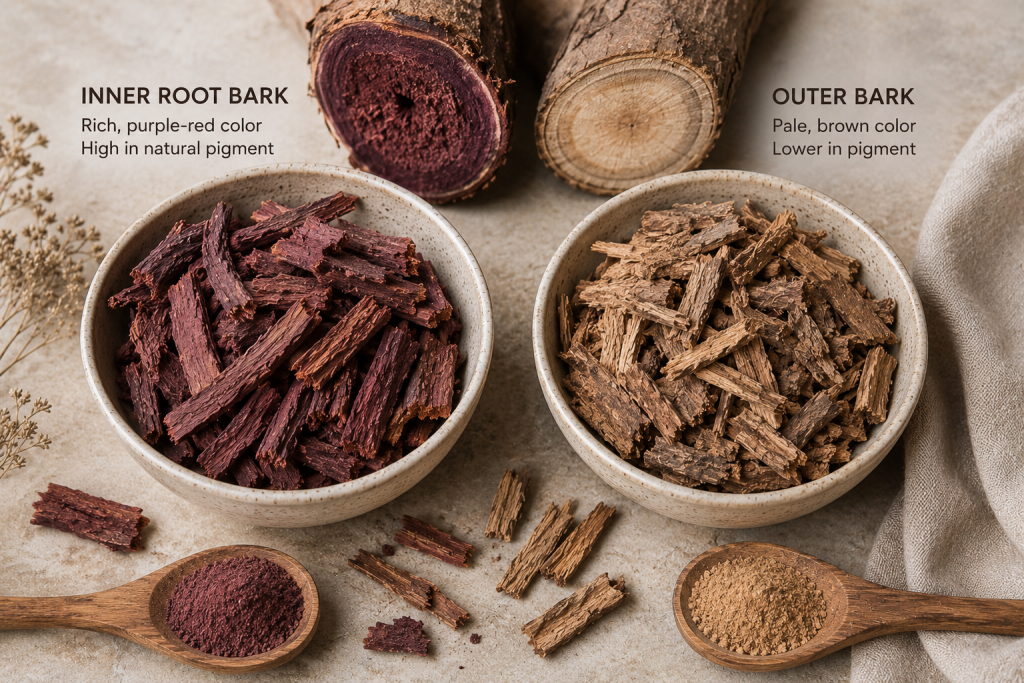
Inner root bark refers to the interior layer of the Mimosa hostilis root. This is the part of the plant that contains the highest concentration of desirable compounds and natural pigments.
High-quality mexican mimosa hostilis inner root bark is known for:
- Deep reddish or purple coloration
- Fine, consistent texture when powdered
- Strong, rich dye potential
- Reliable performance in formulations
This is the material most commonly used by experienced soap makers, dye artists, and product-based businesses.
What Is Outer Bark and Why It’s Different
Outer bark is the protective exterior layer of the root. It serves a completely different function in the plant and does not contain the same concentration of useful material.
Outer bark is typically:
- Lighter in color (tan or dull brown)
- More fibrous and coarse
- Lower in pigment content
- Less consistent in performance
In many cases, lower-quality suppliers will mix outer bark into their product to increase weight and reduce cost.
Mexican Mimosa Hostilis Inner Root Bark vs Outer Bark: Key Differences
Understanding mexican mimosa hostilis inner root bark vs outer bark comes down to a few critical factors.
Color and Appearance
Inner root bark has a rich, vibrant tone that ranges from reddish-brown to deep purple.
Outer bark appears:
- Pale
- Dull
- Lacking depth
If your material looks washed out, there’s a good chance it contains outer bark.
Texture and Processing
Inner root bark:
- Breaks down smoothly
- Produces fine powder
- Extracts evenly
Outer bark:
- Stays fibrous
- Produces inconsistent textures
- Can create gritty or uneven results
Performance in Applications
This is where the difference really shows.
Inner root bark delivers:
- Stronger dye output
- More consistent soap coloration
- Better infusion quality
Outer bark often results in:
- Weak color
- Patchy results
- Reduced effectiveness
Why Inner Root Bark Is Preferred by Professionals
If you’re serious about your results, this isn’t optional.
Using true inner root bark allows you to:
- Maintain consistency across batches
- Achieve deeper, richer tones
- Reduce waste from failed attempts
- Build trust with customers
This is especially important if you’re producing products at scale.
For a full breakdown of how this material performs across different uses, you can reference the complete guide here:
https://tenuiflorashop.com/mimosa-hostilis-root-bark-ultimate-guide/
Growing Demand for High-Quality Botanical Materials
Consumers are becoming more aware of ingredient sourcing and quality.
According to Statista, demand for natural and sustainable materials continues to rise across industries like textiles and personal care.
https://www.statista.com/topics/8200/sustainable-fashion/
This shift means that using higher-quality inputs like inner root bark can directly impact how your products are perceived.
For more information on why high quality mimosa tenuiflora root bark is important, check out our blog.
How to Identify True Inner Root Bark
This is where most people get it wrong.
Look for These Signs
- Deep reddish or purple color
- Minimal light or tan material mixed in
- Fine, consistent powder (if processed)
- Clean, natural scent
Red Flags of Outer Bark or Low-Quality Material
- Pale or beige tones
- Visible woody fibers
- Uneven texture
- Weak color when used
If you see these signs, the product likely contains outer bark or fillers.
Why Powdered Inner Bark Is the Best Option
If you want control and consistency, powder is the move.
Powdered inner root bark:
- Extracts faster
- Distributes evenly
- Produces smoother results
You can explore available options here:
https://tenuiflorashop.com/shop-2
This is especially useful for soap makers and dye artists who need predictable outcomes.
Applications Where Inner Root Bark Makes the Biggest Difference
The gap between inner and outer bark becomes very obvious in real use.
Soap Making
Inner root bark provides:
- Even color distribution
- Rich, natural tones
- Smooth texture
Outer bark can lead to:
- Speckling
- Uneven coloring
- Reduced visual quality
Natural Dyeing
When using mexican mimosa hostilis inner root bark vs outer bark in dyeing, the difference in output is significant.
Inner bark produces:
- Stronger pigment
- More vibrant tones
- Better absorption into natural fibers
Outer bark often results in weak or inconsistent dye baths.
Infusions and Extracts
Inner root bark infuses more effectively into oils and liquids, making it more reliable for consistent formulations.
Learning from Established Dyeing Resources
If you want to refine your technique, it helps to learn from established sources.
Organizations like Maiwa School of Textiles provide guidance on natural dye processes and material handling.
https://maiwa.com/pages/natural-dyes
This can help you get the most out of high-quality inner root bark.
Why This Difference Impacts Your Business
If you’re selling products, this isn’t just about preference.
Using inner root bark instead of mixed or outer bark material allows you to:
- Deliver consistent results
- Reduce customer complaints
- Build repeat business
- Position your brand as premium
Customers may not know the terminology, but they will notice the difference in the final product.
Transparency and Trust
One of the easiest ways to stand out is by being transparent about your materials.
If customers want to learn more about sourcing and standards, you can direct them here:
https://tenuiflorashop.com/about
Clear information builds confidence, especially in a market where quality varies widely.
Final Thoughts
Understanding the difference between mexican mimosa hostilis inner root bark vs outer bark is one of the most important steps you can take if you want consistent, high-quality results.
Inner root bark delivers better color, smoother texture, and more reliable performance across applications like soap making, natural dyeing, and botanical crafts.
If your goal is to create products that stand out and keep customers coming back, starting with the right material is non-negotiable.