Introduction
If you are searching for mimosa tenuiflora bark for sale, you have likely noticed that not all sources offer the same level of quality, consistency, or reliability.
This material is widely used in soap making, natural dyeing, and botanical crafting, but the results you get depend heavily on what you purchase. Differences in sourcing, processing, and composition can significantly impact color, texture, and performance.
In this guide, we break down what to look for before buying, how to compare different options, and how to choose a source that delivers consistent results.
What to Look for When Buying Mimosa Tenuiflora Bark
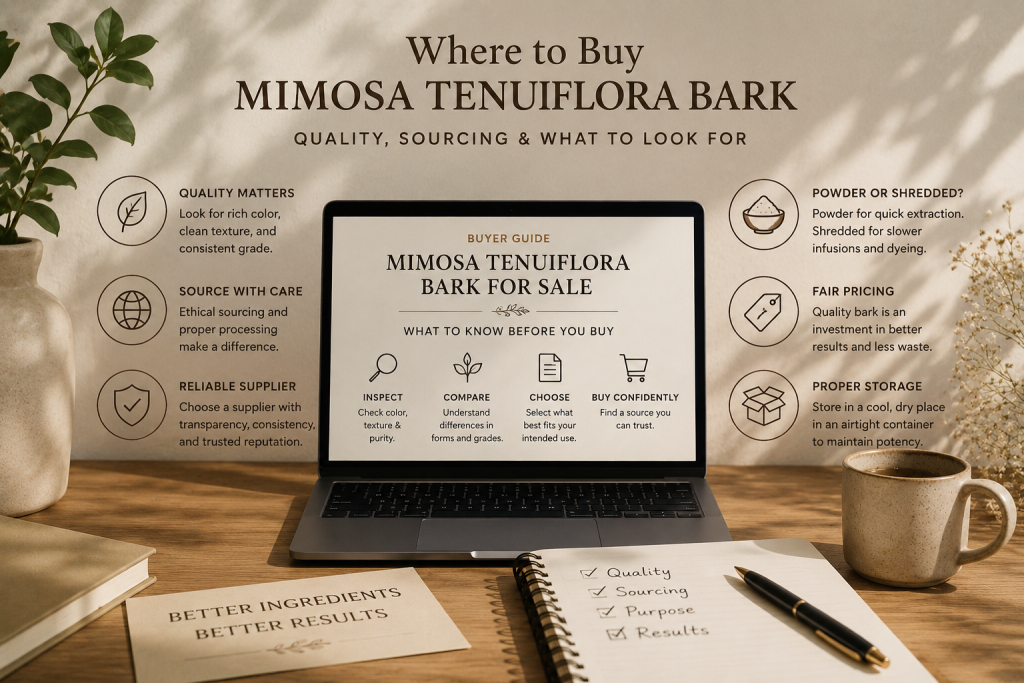
Before choosing where to buy mimosa tenuiflora bark for sale, it is important to understand the key indicators of quality.
Inner Root Bark vs Outer Bark
One of the most important distinctions is whether the material is true inner root bark or contains outer bark.
Inner root bark typically has:
- Deep reddish or purple tones
- Higher pigment concentration
- Better consistency in use
Outer bark often appears:
- Pale or tan
- Fibrous and coarse
- Less effective in dyeing and formulations
If you want a full breakdown of this difference, you can read more here:
https://tenuiflorashop.com/mexican-mimosa-hostilis-inner-root-bark-vs-outer-bark/
Color and Appearance
High-quality mimosa tenuiflora bark should have a rich, vibrant tone. Dull or washed-out material is often a sign of lower-grade sourcing or mixed bark content.
Texture and Processing
Depending on the form, the material should be:
- Fine and consistent (powder)
- Clean and evenly cut (shredded)
- Free of excess debris or fillers
Consistency in texture directly affects how the material performs in real applications.
Why Quality Matters More Than Price
It can be tempting to choose the lowest price when searching for mimosa tenuiflora bark for sale, but lower-cost material often leads to:
- Weak or inconsistent color
- Uneven results in soap or dyeing
- Increased waste from failed batches
Higher-quality material allows for:
- Better consistency
- Stronger results
- More efficient use of product
In the long run, quality tends to be more cost-effective.
Powder vs Shredded: Which Should You Buy
Choosing the right form depends on how you plan to use the material.
Powder
Best for:
- Fast extraction
- Even distribution in soap
- Controlled small-batch work
Shredded Bark
Best for:
- Slower infusion processes
- Natural dye preparation
- Larger batch applications
If you are still deciding which option fits your workflow, you can explore both forms here:
https://tenuiflorashop.com/shop-2
How Sourcing Affects Performance
The origin and handling of mimosa tenuiflora bark play a major role in quality.
Well-sourced material is typically:
- Consistently colored
- Properly processed
- Free of unnecessary filler
Poor sourcing often results in mixed-quality batches that produce unpredictable results.
For a deeper look at sourcing, quality differences, and what to expect, you can reference the full guide here: https://tenuiflorashop.com/mimosa-hostilis-root-bark-ultimate-guide/
Where to Buy Mimosa Tenuiflora Bark for Sale
When evaluating where to buy mimosa tenuiflora bark for sale, it is important to choose a source that prioritizes:
- Consistent quality
- Transparent sourcing
- Reliable processing standards
Access to different forms and sizes also allows you to choose the right option for your specific use, whether you are experimenting with small batches or producing at scale.
If you are ready to explore available options, you can browse here:
https://tenuiflorashop.com/shop-2
Understanding Market Demand for Natural Materials
Interest in plant-based materials continues to grow across multiple industries.
According to Statista, demand for sustainable and natural materials is increasing in both personal care and textile sectors.
https://www.statista.com/topics/8200/sustainable-fashion/
This growing demand has made it even more important to source high-quality material that meets both performance and customer expectations.
How to Avoid Low-Quality Suppliers
Not every listing for mimosa tenuiflora bark for sale meets the same standards.
Warning Signs
- Extremely low pricing compared to market average
- Lack of clear product photos or descriptions
- No mention of inner root bark
- Inconsistent color in images
Choosing a reliable source helps avoid these issues and ensures better results.
Best Practices After Purchase
Once you have selected your material, proper handling and storage will help maintain its quality.
Store it:
- In airtight containers
- Away from heat and moisture
- In a cool, dry environment
Proper storage preserves color strength and consistency over time.
Final Thoughts
Finding high-quality mimosa tenuiflora bark for sale comes down to understanding what to look for and choosing a source that prioritizes consistency and transparency.
For additional context on working with plant-based materials, resources from Fibershed and Smithsonian Institution offer useful background on natural fibers and traditional dye practices. Understanding how natural materials interact with different fibers and environments can help improve consistency and overall results when working with mimosa tenuiflora bark.
The difference between inner and outer bark, processing methods, and overall sourcing standards all play a role in how the material performs in real-world applications.
If your goal is to achieve reliable, high-quality results, starting with the right material is one of the most important decisions you can make.