Searching for mimosa root bark for sale online can quickly become overwhelming. A simple search returns dozens of suppliers, each claiming to offer premium products, fast shipping, or exceptional quality. Yet despite similar descriptions, not every supplier follows the same harvesting, processing, packaging, or quality control standards.
For buyers, that raises an important question:
How can you tell whether you’re purchasing high-quality Mimosa root bark from a reliable supplier?
The answer goes far beyond comparing prices or looking at product photos. Experienced buyers often evaluate supplier transparency, product consistency, educational resources, packaging, and customer support before making a purchase.
Whether you’re buying for the first time or comparing suppliers after previous orders, understanding what separates one product from another can help you make a more informed decision.
In this guide, we’ll explore what buyers should know before purchasing mimosa root bark for sale, explain the characteristics of premium botanical materials, and discuss the questions worth asking before placing an order.
What Is Mimosa Root Bark?
The phrase “mimosa root bark for sale” is commonly used online when referring to products made from Mimosa tenuiflora, a botanical species recognized in scientific literature and international plant databases.
Depending on the supplier, you’ll also see the plant referred to by its scientific name or by related botanical terminology. Understanding these naming conventions can make it easier to compare suppliers, educational resources, and product descriptions.
Because botanical materials naturally vary, product appearance, texture, and packaging may differ between suppliers while still referring to the same plant species.
Why Buyers Should Look Beyond Price
One of the biggest mistakes first-time buyers make is assuming the least expensive product automatically represents the best value.
Price is certainly an important consideration, but it rarely tells the entire story.
Several factors influence overall value, including:
- Harvesting standards
- Processing methods
- Drying procedures
- Storage practices
- Packaging quality
- Customer support
- Supplier transparency
A supplier investing in careful preparation and customer education may charge slightly more than one providing little information, but those additional standards often contribute to a more consistent buying experience.
What Makes Premium Mimosa Root Bark?
Many websites advertise premium Mimosa Hostilis root bark for sale, but relatively few explain what that actually means.
Quality is usually the result of multiple factors working together rather than one individual characteristic.
High-quality botanical materials generally begin with:
Responsible Harvesting
Quality starts long before a product is packaged.
Careful harvesting helps preserve the integrity of the botanical material while reducing unnecessary contamination before processing begins.
Although customers rarely see this stage, harvesting practices influence everything that follows.
Thorough Cleaning
After harvesting, excess debris and unwanted plant material are removed.
Consistent cleaning helps prepare the bark for drying while contributing to a more uniform finished product.
Professional suppliers recognize that careful preparation is an important part of overall quality control.
Proper Drying
Drying is one of the most important stages in preparing botanical materials.
Freshly harvested bark naturally contains moisture.
Careful drying helps reduce excess moisture before packaging while preparing the product for long-term storage.
Because moisture plays such an important role in preserving botanical materials, suppliers who prioritize proper drying often produce more consistent products.
Consistent Processing
Processing transforms harvested bark into the various textures available to customers.
The goal isn’t simply changing appearance.
It’s producing a clean, consistent product while maintaining careful quality standards throughout the process.
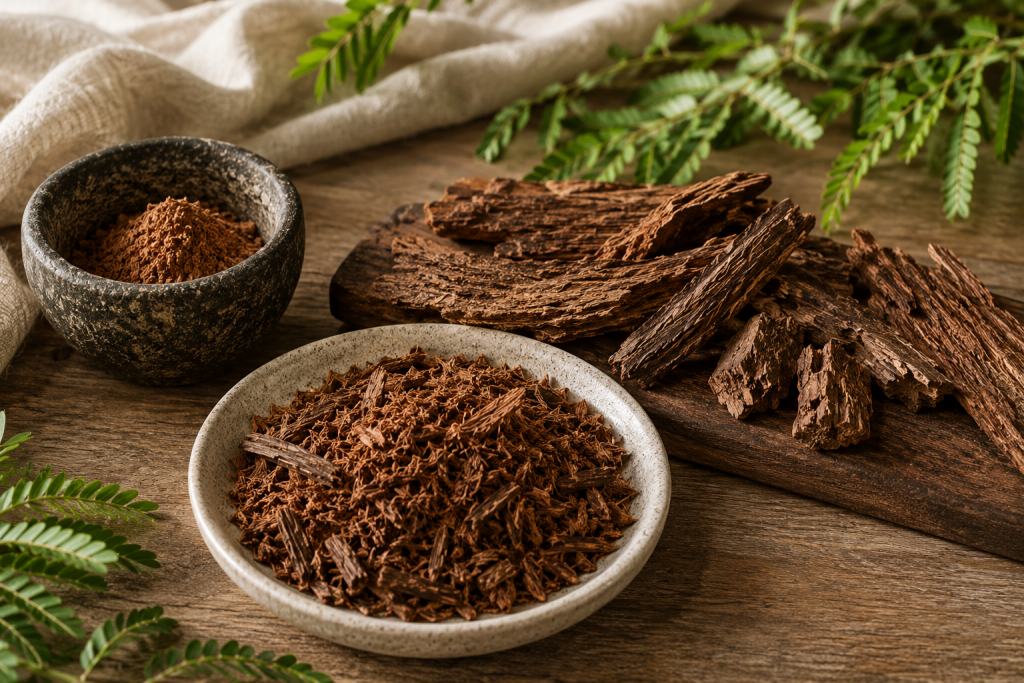
Powder, Shredded, or Chunks?
One question many buyers ask before purchasing mimosa root bark for sale is which texture to choose.
Each option offers its own advantages.
Powder
Powder provides a fine, uniform texture that many buyers appreciate for its consistency and convenience.
Because it has already been processed into a fine material, powder is often selected by customers who prefer a ready-to-use texture.
If you’re interested in comparing available sizes, our Mimosa Hostilis Root Bark Powder collection provides additional information about one of the most popular product formats.
Shredded Bark
Shredded bark strikes a balance between convenience and minimal processing.
Many repeat customers appreciate its versatility while still retaining more of the bark’s natural structure.
Chunked Bark
Chunks are the least processed option available.
Some buyers prefer chunked bark because larger pieces expose less surface area and maintain a more natural appearance.
Importantly, texture does not determine quality.
Each option can represent high-quality Mimosa Hostilis root bark when harvested, processed, and stored responsibly.
Freshness Matters More Than Most Buyers Realize
Freshness isn’t simply about when the bark was harvested.
Instead, it reflects how well the product has been preserved throughout every stage of production.
Fresh botanical materials benefit from:
- Proper drying
- Stable storage conditions
- Protective packaging
- Careful handling
- Responsible fulfillment
These factors all contribute to maintaining consistency from harvest until delivery.
If you’d like to learn more about why freshness plays such an important role, our complete guide on Why Freshness Matters When Buying Mimosa Tenuiflora Root Bark explores each stage of the process in greater detail.
Supplier Transparency Is One of the Best Indicators of Quality
One characteristic shared by many respected suppliers is transparency.
Rather than relying exclusively on marketing language, transparent suppliers typically provide:
- Detailed product descriptions
- Multiple product photographs
- Educational blog articles
- Frequently asked questions
- Clear policies
- Accessible customer support
This information helps buyers better understand what they’re purchasing before placing an order.
Educational resources also demonstrate that a supplier values informed customers rather than relying solely on advertising.
Signs You’re Buying Authentic Products
Authenticity and quality often go hand in hand.
Responsible suppliers usually explain what customers should evaluate instead of simply claiming their products are “the best.”
Experienced buyers frequently consider:
- Product consistency
- Supplier transparency
- Educational content
- Clear photography
- Honest descriptions
- Packaging standards
If you’d like a more detailed breakdown, our guide covering 5 Signs You’re Buying Authentic Mimosa Hostilis Root Bark explores these characteristics in greater depth:
Questions Every Buyer Should Ask
Before purchasing from any supplier, consider asking:
- How is the bark processed?
- What textures are available?
- How is the product packaged?
- Are storage recommendations provided?
- Does the supplier publish educational information?
- Is customer support easy to reach?
These questions often provide more useful information than price comparisons alone.
Experienced buyers understand that supplier standards frequently determine the overall purchasing experience just as much as the botanical material itself.
Common Mistakes Buyers Make
Even experienced buyers can occasionally overlook important details when comparing suppliers. Fortunately, most common mistakes are easy to avoid once you know what to look for.
Focusing Only on Price
Price is often the first thing shoppers compare, but it rarely tells the complete story.
Lower prices may sometimes reflect differences in:
- Processing standards
- Packaging quality
- Customer support
- Educational resources
- Quality control
Rather than asking, “Which supplier is the cheapest?” consider asking, “Which supplier provides the greatest overall value?”
Assuming Every Supplier Offers the Same Product
Although many websites sell mimosa root bark for sale, supplier practices can differ considerably.
Variations may exist in:
- Harvesting methods
- Drying procedures
- Storage conditions
- Product consistency
- Packaging
- Fulfillment standards
These differences help explain why buying experiences can vary from one supplier to another.
Judging Products Only by Photos
Product photography is useful, but it should never be the only deciding factor.
Lighting, camera settings, editing, and even monitor calibration can influence how botanical materials appear online.
Instead, evaluate photographs alongside:
- Product descriptions
- Educational articles
- Customer reviews
- Supplier transparency
Taken together, these factors provide a much clearer picture than photographs alone.
Ignoring Educational Content
One of the strongest indicators of a trustworthy supplier is a willingness to educate customers.
Businesses that invest time in producing buying guides, storage recommendations, FAQs, and quality articles often demonstrate a long-term commitment to helping customers make informed decisions.
Educational resources also show that a supplier understands the products they offer beyond simply listing them for sale.
Why Reviews Matter
Customer reviews should never be viewed as the only measure of quality, but they can provide valuable insight into the overall buying experience.
Rather than focusing on a single review, look for consistent themes across many customers.
Positive patterns often include comments about:
- Reliable shipping
- Consistent product quality
- Secure packaging
- Responsive customer service
- Accurate product descriptions
Repeated feedback from multiple customers generally provides a more balanced perspective than isolated opinions.
Understanding Botanical Names
While researching mimosa root bark for sale, you may notice different names used across websites and educational resources.
Today, Mimosa tenuiflora is widely recognized as the accepted scientific name by botanical authorities, including the Global Biodiversity Information Facility (GBIF). Understanding botanical taxonomy helps buyers compare information from multiple sources while confirming they are researching the same plant species.
You can learn more about the accepted scientific classification through the Global Biodiversity Information Facility (GBIF):
https://www.gbif.org/species/2978287
Using accepted scientific names can also make it easier to compare educational articles, supplier information, and botanical references from reputable sources.
Storage After Purchase
Choosing a quality supplier is only part of preserving the condition of botanical materials.
Proper storage after delivery also plays an important role.
For best results, store botanical materials:
- In a cool, dry location
- Away from direct sunlight
- Inside airtight containers after opening
- Away from excess humidity
Maintaining stable storage conditions helps preserve consistency over time.
Building Confidence Before You Buy
Buying botanical materials online doesn’t have to be complicated.
The most confident buyers typically spend a few extra minutes evaluating the supplier before completing a purchase.
Simple questions about processing, packaging, storage, and transparency often reveal far more than product photos or marketing language alone.
Taking the time to compare suppliers can help ensure a smoother purchasing experience while increasing confidence in the products you receive.
Frequently Asked Questions
What should I look for when buying mimosa root bark for sale?
Look for suppliers that provide detailed product descriptions, educational resources, transparent policies, quality packaging, and consistent customer support. These factors often indicate a commitment to quality beyond marketing claims.
How do I know if a supplier is trustworthy?
Trustworthy suppliers typically provide multiple product photographs, clear contact information, educational articles, frequently asked questions, and detailed descriptions of their products and processes.
Is higher-priced Mimosa Hostilis root bark always better?
Not necessarily.
Price should be considered alongside processing standards, packaging quality, supplier transparency, customer reviews, and educational resources.
Should I compare several suppliers before buying?
Yes.
Comparing multiple suppliers helps you evaluate differences in product information, customer service, shipping practices, and overall professionalism.
Why are educational resources important?
Educational resources demonstrate that a supplier values informed customers. Buying guides, storage articles, and FAQs often reflect greater transparency and product knowledge.
Does packaging matter?
Yes.
Protective packaging helps preserve botanical materials during shipping and storage while reducing unnecessary exposure to moisture, dust, and environmental conditions.
Disclaimer
This article is intended for educational and informational purposes only. It does not provide medical, legal, or professional advice and should not be interpreted as a recommendation for any medical or therapeutic use. The information presented is designed to help readers make informed purchasing decisions regarding botanical materials.
Final Thoughts
Finding high-quality mimosa root bark for sale involves much more than choosing the lowest price or the first supplier that appears in search results.
The best buying decisions come from evaluating the complete picture. Responsible harvesting, careful processing, proper drying, secure packaging, educational resources, and supplier transparency all contribute to a positive customer experience.
Whether you’re purchasing for the first time or comparing suppliers after previous orders, asking thoughtful questions before buying can help you make a more informed decision. Suppliers who prioritize consistency, customer education, and clear communication are often the ones most committed to providing dependable botanical materials and long-term customer satisfaction.
For buyers who take the time to research before purchasing, the result is greater confidence—not only in the supplier they choose, but also in the quality of the products they receive.