If you’ve spent time researching Mimosa tenuiflora root bark, you’ve probably noticed that it is available in several different textures and forms. Some suppliers offer finely ground powder, while others sell shredded bark or larger chunks.
This naturally raises an important question:
Does texture affect how Mimosa tenuiflora root bark is used?
The short answer is yes.
While the source material may be the same, texture can influence handling, storage, preparation, consistency, and overall user preference. Understanding the differences between textures can help buyers choose the option that best suits their needs while also providing insight into why suppliers offer multiple forms.
In this guide, we’ll explore how Mimosa tenuiflora root bark texture affects use, what separates powder from shredded bark and chunks, and why texture is often one of the most important factors buyers consider when selecting botanical materials.
What Does Texture Mean in Mimosa Tenuiflora Root Bark?
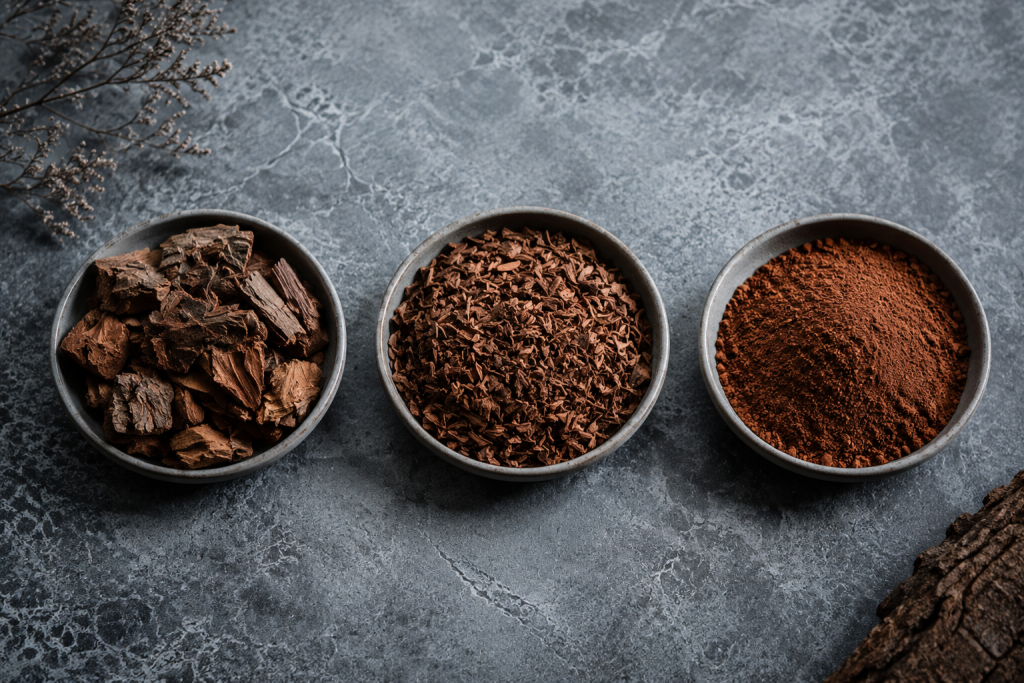
When discussing Mimosa tenuiflora root bark texture, we’re referring to the physical form in which the bark is processed and sold.
The most common textures include:
- Powder
- Shredded bark
- Chunked bark
Each texture originates from the same botanical source but undergoes different levels of processing before reaching the customer.
Although the material itself remains similar, the texture can significantly affect how it is handled and used.
Why Texture Matters
Many buyers initially focus on quality, sourcing, or pricing.
However, Mimosa tenuiflora root bark texture is often equally important.
Texture can influence:
- Ease of handling
- Storage preferences
- Preparation requirements
- Consistency
- Convenience
For some users, texture is simply a matter of preference. For others, it directly affects workflow and practicality.
Powdered Mimosa Tenuiflora Root Bark
Powder is the most finely processed form available.
The bark is cleaned, dried, and ground into a uniform consistency.
Many buyers choose powder because it offers:
- Consistent texture
- Ease of use
- Convenient storage
- Uniform appearance
Because powder requires additional processing, it is often considered the most convenient texture for those who prefer ready-to-use material.
If you’re interested in exploring powdered bark, you can browse our powder collection here:
How Powder Texture Affects Use
One reason powdered Mimosa tenuiflora root bark remains popular is its consistency.
The fine texture allows for:
- Easy measuring
- Uniform blending
- Simplified handling
Many buyers appreciate powder because it eliminates additional preparation steps.
However, some users prefer less processed forms for storage or flexibility.
Shredded Mimosa Tenuiflora Root Bark
Shredded bark sits between chunks and powder.
During processing, dried bark is broken into smaller pieces while retaining much of its natural structure.
Shredded bark is often chosen by buyers who want:
- Greater flexibility
- Moderate processing
- A balance between convenience and control
This texture remains one of the most versatile options available.
How Shredded Texture Affects Use
Shredded bark offers a different experience compared to powder.
Because the pieces remain larger, users often appreciate:
- Easier visual inspection
- Longer storage potential
- More control over preparation
Many experienced buyers consider shredded bark a practical middle-ground option.
Chunked Mimosa Tenuiflora Root Bark
Chunks are the least processed form.
After harvesting, cleaning, and drying, the bark remains in larger pieces.
Chunked bark appeals to buyers who prefer:
- Minimal processing
- Long-term storage
- Greater control over preparation
Because chunks undergo fewer processing steps, they often maintain a more natural appearance.
How Chunk Texture Affects Use
The primary advantage of chunked bark is flexibility.
Some buyers appreciate:
- Extended storage life
- Reduced processing
- Larger, more visible pieces
However, chunks typically require additional preparation compared to powder or shredded bark.
Does One Texture Indicate Better Quality?
One of the most common misconceptions about Mimosa tenuiflora root bark texture is that one form automatically indicates higher quality.
In reality, quality depends more on:
- Sourcing
- Harvesting practices
- Cleaning procedures
- Drying methods
- Processing standards
Texture alone does not determine quality.
High-quality bark can exist in powdered, shredded, or chunked form.
If you’d like to learn more about this topic, our guide on supplier quality provides a deeper explanation: https://tenuiflorashop.com/why-mhrb-quality-varies-between-suppliers/
Texture and Storage Considerations
Storage preferences often influence texture selection.
Generally:
Powder
- Convenient
- Compact
- Ready to use
Shredded Bark
- Balanced option
- Moderate storage life
- Flexible handling
Chunks
- Minimal processing
- Excellent storage potential
- Greater preparation flexibility
The best texture often depends on the buyer’s priorities.
Why Suppliers Offer Multiple Textures
Many buyers wonder why suppliers don’t simply offer one version of Mimosa tenuiflora root bark.
The answer is simple:
Different buyers have different preferences.
Some prioritize convenience.
Others prioritize storage.
Some prefer a balance between both.
Offering multiple textures allows suppliers to serve a wider range of customer needs.
You can compare different textures and available options throughout our shop here:
Common Misconceptions About Texture
Powder Is Always Better
Not necessarily.
Powder offers convenience, but some buyers prefer shredded or chunked bark.
Chunks Are Always Higher Quality
Texture alone does not determine quality.
Processing Automatically Reduces Quality
Proper processing can improve consistency while maintaining quality.
Texture Doesn’t Matter
For many buyers, texture is one of the most important factors when selecting botanical materials.
Botanical Processing and Texture
Texture is created through processing.
Factors such as:
- Drying
- Grinding
- Shredding
- Handling
all influence the final appearance and consistency of botanical materials.
For additional information on botanical processing and plant materials, the Missouri Botanical Garden provides useful educational resources:
https://www.missouribotanicalgarden.org
Similarly, the Food and Agriculture Organization of the United Nations offers information on plant production and handling practices:
These resources help illustrate how processing methods affect botanical products around the world.
Frequently Asked Questions
Does texture affect how Mimosa tenuiflora root bark is used?
Yes. Texture can influence convenience, handling, preparation, storage, and personal preference.
Is powder better than shredded bark?
Neither is universally better. Each texture offers different advantages.
Which texture is easiest to work with?
Many buyers find powder to be the most convenient because it requires no additional preparation.
Which texture stores the longest?
Chunked bark is often preferred by buyers focused on long-term storage.
Does texture affect quality?
Texture alone does not determine quality. Sourcing and processing standards are usually more important.
Disclaimer
This article is provided for educational and informational purposes only. It is not intended to diagnose, treat, cure, or prevent any disease, nor should it be interpreted as medical, legal, or professional advice. Always research products carefully and consult appropriate professionals when necessary.
Final Thoughts
So, does texture affect how Mimosa tenuiflora root bark is used?
Absolutely.
While the underlying botanical material may be similar, texture influences convenience, storage, preparation, and user preference. Powder, shredded bark, and chunks each offer unique advantages, making texture an important consideration when choosing a product.
By understanding how Mimosa tenuiflora root bark texture affects handling and use, buyers can make more informed decisions and select the form that best aligns with their goals.