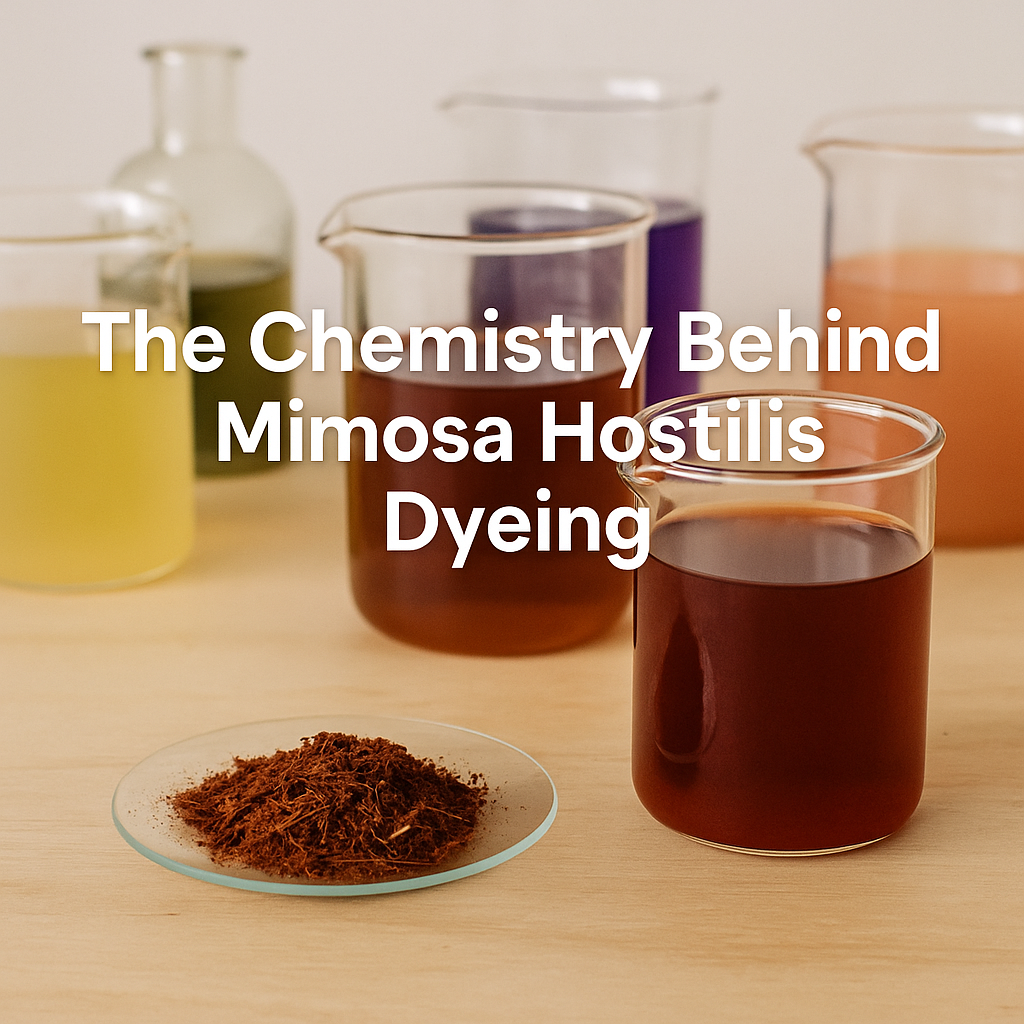
Mimosa Hostilis Root Bark (MHRB), also called Mimosa tenuiflora, has become one of the most respected natural dye materials among artisans who work with plant-based color. Its ability to produce deep purples, reds, browns, and earthy tones has made it a staple for textile artists, soap makers, pigment creators, and botanical craft practitioners.
But while many dye plants are admired for their color, the chemistry behind mimosa hostilis dyeing is genuinely unique. The bark contains an unusually potent combination of tannins, flavonoids, and natural compounds that interact with water, pH, modifiers, mordants, and fabric in ways that set it apart from most dye botanicals.
This guide breaks down why MHRB behaves the way it does — not from a promotional standpoint, but from a scientific, botanical, and dye-chemistry perspective. By the end, you’ll understand the exact mechanisms that allow this bark to create such rich color, why it responds so strongly to heat and acids, and how its plant chemistry interacts with textiles.
Whether you are a hobbyist, an artisan, or a serious dye practitioner, this is the most complete overview of the chemistry behind mimosa hostilis dyeing you will find.
Why Chemistry Matters in Natural Dyeing
Natural dyeing is often described artistically, but behind every shade, there is a chemical process taking place. Plant pigments bind to fabric through:
- tannin-protein bonds
- cellulose-tannin reactions
- pH changes
- molecular size and solubility
- heat extraction
- modifiers such as iron or alum
- oxidation and reduction
Understanding the chemistry behind these interactions helps artisans achieve predictable, repeatable, deeper, and more complex color results.
This is especially true when studying the chemistry behind mimosa hostilis dyeing, because MHRB contains unusually rich chemical structures that respond beautifully to different dyeing methods.
Chemical Composition of Mimosa Hostilis Root Bark
To understand the chemistry behind mimosa hostilis dyeing, we must begin with what the bark contains.
MHRB is chemically dense. Its most dye-relevant compounds include:
1. Condensed Tannins
These make up the bulk of the bark’s dyeing power.
Condensed tannins are:
- water-soluble
- highly reactive
- capable of strong binding with protein and cellulose fibers
- known for producing long-lasting, wash-fast color
2. Flavonoids & Polyphenols
These add:
- pink, purple, and reddish undertones
- antioxidant properties
- additional layers of depth
3. Anthocyanin-like Pigments
Not identical to berry or flower pigments, but structurally similar enough to contribute to:
- brightness in acidic extraction
- darker shifts when modifiers are added
- increased contrast at different pH levels
4. Natural Sugars & Plant Cell Structures
These don’t add color, but help:
- bind pigment residues
- thicken the dye bath
- create smoother dispersion
Collectively, these compounds are what make the chemistry behind mimosa hostilis dyeing so interesting — and so versatile.
Why Mimosa Hostilis Produces Such Dark and Saturated Colors
Most natural dyes fall into one of these categories:
- light tannins (browns and tans)
- moderate tannins with tint (yellowish plants)
- flavonoid-heavy plants (bright but less lightfast)
- anthraquinone dyes (cochineal, madder)
- rare purple-producing plants
MHRB, however, blends multiple categories into one botanical, giving it a uniquely deep color output.
The reason lies in three interacting chemical behaviors:
1. High Tannin Concentration = Strong Fiber Bonding
Tannins are naturally attracted to fiber molecules.
They form hydrogen bonds and, in some cases, covalent bonds with:
- cellulose (cotton, linen, hemp)
- protein fibers (silk, wool)
- semi-synthetic fibers (rayon, modal)
This is why the chemistry behind mimosa hostilis dyeing results in such dramatic color-fastness compared to many plant dyes. The tannins act as both:
- a dye
- and their own mordant
This is extremely rare in plant-based dyeing.
2. Acidic pH Increases Pigment Release
MHRB responds exceptionally well to mild acids.
When the extraction liquid becomes slightly acidic, chemical reactions change the bark’s pigment structure, making it more soluble.
Acidic extraction helps:
- break lignin walls inside the bark
- unlock flavonoid-bound pigments
- brighten red and purple tones
- reduce brown muddying
This is one of the keys to the chemistry behind mimosa hostilis dyeing — pH dramatically shifts color.
3. Iron Modifiers Create Color-Molecule Complexes
Iron (ferrous sulfate or iron water) interacts strongly with tannins.
When tannins meet iron, they create a new compound called iron-tannin complexes, which:
- deepen color
- darken tone
- increase wash-fastness
- produce rich browns, blacks, and purples
This chemical transformation is immediate and is one of the most fascinating aspects of the chemistry behind mimosa hostilis dyeing — a single modifier can completely alter the molecular structure of the color.
Check out this peer-reviewed study on tannin chemistry and extraction:
https://www.ncbi.nlm.nih.gov/pmc/articles/PMC8503083/
How Heat Extraction Impacts MHRB Chemistry
Heat is one of the most influential variables in the dyeing process.
Low to Medium Heat (150–190°F):
- preserves delicate flavonoids
- encourages slow tannin release
- produces clearer reds and purples
High Heat (Boiling):
- breaks down lignins quickly
- leaches out tannins faster
- shifts some pigments toward brown tones
- extracts more woody compounds
This explains why some dyers get light pinks, while others get deep burgundy or brown — heat changes the chemistry.
Understanding the effect of heat is central to understanding the chemistry behind mimosa hostilis dyeing.
The Role of Mordants in MHRB Dye Chemistry
Unlike many plants, MHRB can bond to fibers without a mordant because of its tannin content.
But mordants still play a major role in directing tone:
Alum (Potassium Aluminum Sulfate):
- brightens color
- opens fiber structure
- stabilizes reds
Iron:
- darkens color
- creates gray, charcoal, or blackberry tones
Tannins (Pre-Mordant for Cellulose):
- amplify color intensity
- improve absorption
This interplay is another important part of the chemistry behind mimosa hostilis dyeing:
mordants don’t just “fix” color — they chemically transform it.
How Fabric Type Changes the Chemical Reaction
Different fibers react differently to MHRB chemistry.
Protein Fibers (Silk, Wool):
- bond more easily due to amino acids
- produce richer reds and violets
- take dye faster
- require gentler heat
Cellulose Fibers (Cotton, Linen, Hemp):
- require tannin or alum pre-mordant
- produce stronger browns and violets
- need longer soak times
Semi-Synthetics (Rayon, Bamboo Viscose):
- absorb dye extremely well
- create vivid, saturated colors
This shows the chemistry behind mimosa hostilis dyeing is not only about the bark — it’s also about the fiber’s own molecular structure.
Why MHRB Produces Different Colors Under Different Conditions
One of the most remarkable things about MHRB is how many colors it can produce.
Chemically, this variability comes from interactions between:
- pH
- heat
- fiber type
- modifiers
- extraction time
- tannin concentration
- presence of iron
- age of the bark
This is why MHRB can produce:
- pink
- rose
- burgundy
- purple
- brown
- cocoa
- plum
- charcoal
- near-black
Few plants offer such a wide spectrum — and this is directly related to the chemistry behind mimosa hostilis dyeing.
Why Older Bark Produces Lighter or Browner Colors
As the bark ages:
- flavonoids oxidize
- tannins weaken slightly
- aroma decreases
- pigments release more slowly
- browning enzymes activate
But chemically, the bark is still usable — it just requires more extraction time or higher concentration.
This is completely normal botanical behavior. You might find our article about reasons why your Mimosa Hostilis Root Bark may be brown, check it out here!
Conclusion
Understanding the chemistry behind mimosa hostilis dyeing gives artisans a deeper appreciation of why this botanical material performs so beautifully. Its tannin-rich structure, unique flavonoid profile, pH sensitivity, heat reactivity, and strong fiber-binding chemistry make it one of the most versatile natural dye plants available.
Whether you’re extracting for deep purples, manipulating pH for reds, adding iron for smoky tones, or pre-mordanting cellulose for stronger saturation, every shade you create is the result of predictable, fascinating plant chemistry at work.
When you know the science, you gain more control over the art.