Mimosa tenuiflora is a tropical tree species native to regions of Mexico, Central America, and parts of South America. The plant has attracted increasing interest among botanists, artisans, and people who work with natural plant materials because of the distinctive characteristics of its inner root bark.
While many people are familiar with mimosa root bark itself, fewer are familiar with the tree that produces it. Understanding the mimosa tenuiflora tree—how it grows, where it originates, and how it adapts to different environments—provides valuable context for anyone interested in this botanical species.
The tree is well adapted to dry climates and often grows in landscapes where other plant species struggle. Its resilience and unique structure have made it an important part of the ecosystems where it naturally occurs.
The Mimosa Tenuiflora Plant
Mimosa tenuiflora belongs to the Fabaceae family, commonly known as the legume family. Plants in this family are known for their ability to grow in nutrient-poor soils and form symbiotic relationships with bacteria that help fix nitrogen in the soil.
The mimosa tenuiflora tree typically grows as a small to medium-sized tree, often reaching heights between 4 and 8 meters depending on the climate and soil conditions.
In different regions the plant is known by several names, including:
• mimosa hostilis
• jurema preta
• tepezcohuite
These names reflect the plant’s long history in the regions where it grows naturally.
According to botanical resources such as the Royal Botanic Gardens plant database, mimosa tenuiflora is classified as a tropical species capable of thriving in dry or semi-arid environments.
Leaf Structure and Appearance
One of the easiest ways to recognize the mimosa tenuiflora tree is by its distinctive leaf structure.
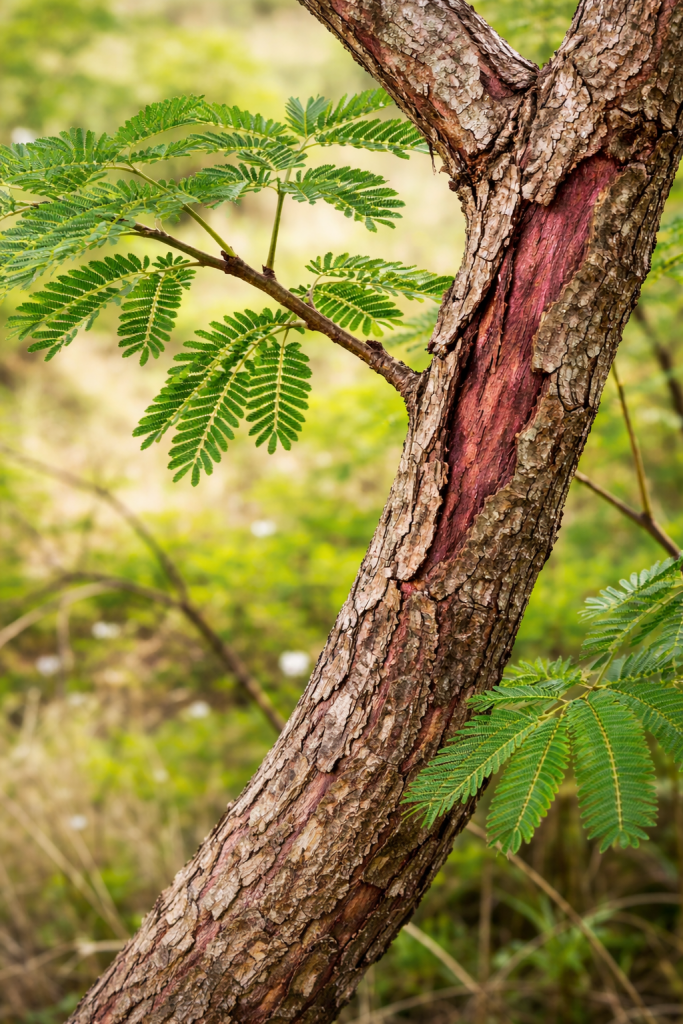
The tree produces compound leaves composed of many small leaflets arranged along thin stems. This structure creates a soft, feathery appearance that resembles fern leaves.
The leaves are typically bright green and delicate in appearance. Because they contain many small leaflets, they provide a large surface area for absorbing sunlight while minimizing water loss.
This leaf structure helps the tree thrive in environments where intense sunlight and dry conditions are common.
Bark Characteristics
The bark of the mimosa tenuiflora tree provides another identifying feature.
The outer bark usually appears gray or brown and often develops natural cracks as the tree matures. This outer layer protects the tree from environmental stress and helps regulate moisture.
Beneath the outer bark lies the inner root bark, which contains the fibrous plant material and pigments that make mimosa root bark recognizable.
The inner bark often displays a reddish or purple coloration, which becomes more visible when the bark is dried and processed.
After harvesting, the inner root bark may be prepared into several textures, including mimosa tenuiflora root bark powder, shredded mimosa root bark, or mimosa root bark chunks, depending on how the material will be used.
(Add internal links on those three phrases.)
Flowers of the Mimosa Tenuiflora Tree
When the mimosa tenuiflora tree flowers, it produces clusters of small, fluffy blossoms.
These flowers are typically pale white or cream-colored and resemble tiny pom-poms. The clusters grow along the branches and create a delicate contrast against the tree’s green leaves.
The flowering stage usually occurs during warmer seasons when environmental conditions support growth and pollination.
Following the flowering stage, the tree produces slender seed pods containing small seeds. These pods help the plant reproduce and spread naturally within its environment.
Root System and Inner Root Bark
One of the most remarkable characteristics of the mimosa tenuiflora tree is its root system.
The plant develops an extensive network of roots that allow it to survive in dry climates where rainfall may be limited. These roots can extend deep into the soil to access moisture during periods of drought.
Because mimosa tenuiflora belongs to the legume family, its roots also support nitrogen-fixing bacteria that improve soil fertility.
The inner root bark develops along these underground roots. This layer of bark contains the fibrous plant material and natural pigments that have drawn attention from botanical enthusiasts.
The structure of the root system plays an important role in the tree’s ability to adapt to difficult growing environments.
Natural Habitat of Mimosa Tenuiflora
Mimosa tenuiflora grows naturally in tropical and subtropical regions.
The tree is most commonly found in:
• southern Mexico
• Brazil
• Central America
• parts of northern South America
These areas provide the warm temperatures and seasonal rainfall patterns that support the tree’s growth.
In many of these regions the plant grows in open landscapes, dry forests, and hillsides where sunlight is abundant.
Growing Conditions
Mimosa tenuiflora is known for its ability to thrive in environments where other trees may struggle.
The species typically grows best in conditions that include:
• warm temperatures
• strong sunlight
• well-drained soils
• seasonal rainfall
Because of its adaptability, the tree can tolerate rocky or sandy soils that provide limited nutrients.
This resilience is one reason mimosa tenuiflora has remained abundant in the regions where it naturally grows.
Mimosa Tenuiflora vs Other Mimosa Species
The mimosa genus contains many different species, some of which share similar leaf and flower structures.
However, several characteristics help distinguish mimosa tenuiflora from related species.
These include differences in bark texture, growth patterns, and geographic distribution. The fibrous inner root bark of mimosa tenuiflora is one feature that sets it apart from other trees in the genus.
Botanists rely on these characteristics when identifying and classifying plant species.
Why the Tree Attracts Botanical Interest
Interest in mimosa tenuiflora has grown significantly as more people explore botanical materials and plant science.
The tree’s ability to thrive in difficult environments, combined with the distinctive characteristics of its bark and root system, makes it an interesting subject for botanical research.
Learning about the mimosa tenuiflora tree helps provide a deeper understanding of the plant itself and the natural environments where it grows.
For those interested in botanical materials and plant identification, the tree offers a fascinating example of how plants adapt and evolve in challenging climates.
Exploring Mimosa Root Bark Products
For readers interested in learning more about the botanical material produced by the mimosa tenuiflora tree, the inner root bark is commonly prepared in several different textures depending on how it will be used. Some people prefer the smooth consistency of mimosa tenuiflora root bark powder, while others choose shredded mimosa root bark for its fibrous structure or mimosa root bark chunks for a more natural, minimally processed form of the bark. Each texture comes from the same plant but offers slightly different characteristics depending on the project or formulation.