
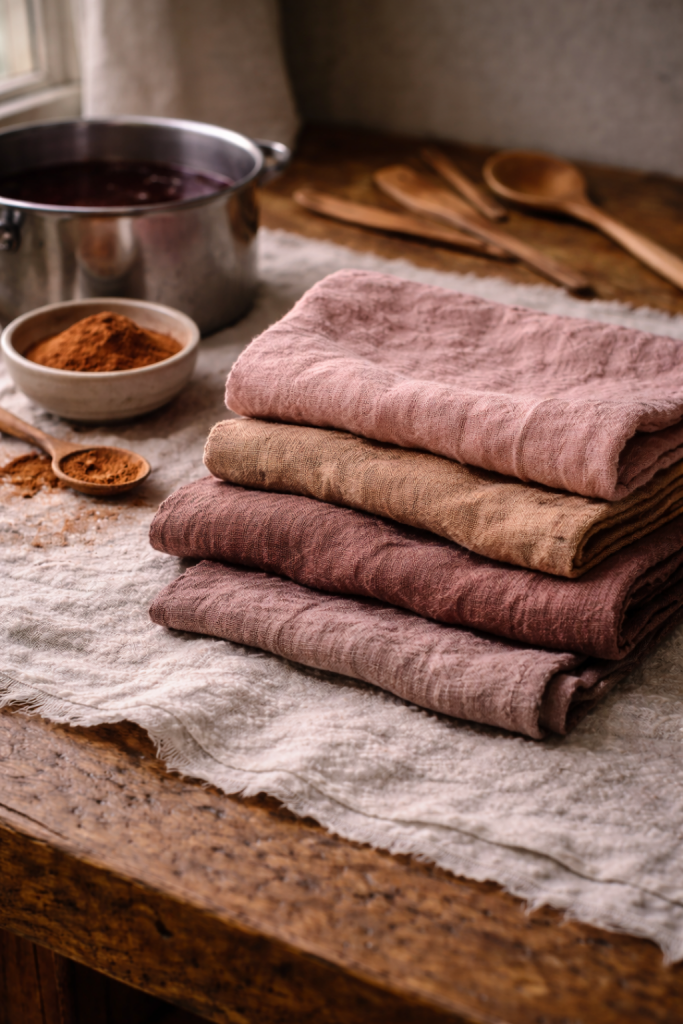
How Fiber Type Changes Color Outcome
If you’re experimenting with natural dyes, you may be wondering: How do Mimosa Hostilis dye results differ on cotton, silk, and wool?
The truth is that Mimosa Hostilis dye results on cotton, silk, and wool can look dramatically different, even when using the same dye bath.
Because Mimosa Hostilis is a tannin-rich botanical, fiber type plays a major role in
- Shade depth
- Purple vs brown tone
- Color saturation
- Wash fastness
- Overall richness
In this guide, we’ll break down exactly what to expect from Mimosa Hostilis on different fibers.
Why Fiber Type Matters in Natural Dyeing
Mimosa tenuiflora, commonly known as Mimosa Hostilis, contains natural tannins. Tannins bind differently to:
- Protein fibers (silk, wool)
- Cellulose fibers (cotton, linen, hemp)
Protein fibers generally absorb Mimosa Hostilis dye more intensely, resulting in deeper purple-brown tones.
👉 Complete Mimosa Hostilis natural dye guide
Mimosa Hostilis Dye Results on Cotton
Cotton is a cellulose fiber, which means it does not bond with tannins as aggressively as protein fibers.
Typical Mimosa Hostilis Dye Results on Cotton:
- Warm brown
- Soft dusty rose
- Muted rose-brown
- Lighter saturation overall
Without mordanting, cotton often appears softer and less vibrant.
To deepen color on cotton:
- Use alum mordant
- Increase dye-to-fiber ratio
- Extend dye bath time
👉 Mordanting Mimosa Hostilis for stronger results
Mimosa Hostilis Dye Results on Silk
Silk is a protein fiber, which absorbs tannin dye beautifully.
Typical Mimosa Hostilis Dye Results on Silk:
- Rich plum
- Burgundy
- Purple-brown
- Greater depth and saturation
Silk often produces the most vibrant and dimensional results when dyeing with Mimosa Hostilis.
Many dyers specifically choose silk to achieve burgundy or purple undertones.
👉 See full Mimosa Hostilis color variations
Mimosa Hostilis Dye Results on Wool
Wool, another protein fiber, produces strong and earthy tones.
Typical Mimosa Hostilis Dye Results on Wool:
- Deep brown
- Smoky plum
- Violet undertones
- Strong saturation
Wool often absorbs more deeply than silk, sometimes resulting in darker overall tones.
Because wool responds well to tannins, Mimosa Hostilis works especially well for:
- Knitwear
- Felt
- Handwoven textiles
Protein vs Cellulose: Side-by-Side Comparison
| Fiber Type | Color Tone | Saturation Level | Purple Undertone |
|---|---|---|---|
| Cotton | Brown/Dusty Rose | Light–Medium | Subtle |
| Silk | Plum/Burgundy | Medium–Deep | Strong |
| Wool | Deep Brown/Violet | Deep | Moderate–Strong |
Protein fibers (silk, wool) consistently yield stronger Mimosa Hostilis dye results than cotton.
Why Does Mimosa Hostilis Look Different on Each Fiber?
Differences occur because:
- Protein fibers contain amino groups that bond more readily with tannins
- Cellulose fibers require mordant support
- Fiber density affects pigment penetration
- Surface texture influences color reflection
This is why two fabrics dyed in the same bath can appear completely different.
How to Reduce Variation Between Fibers
If you want more consistent Mimosa Hostilis dye results across cotton, silk, and wool:
✔ Mordant cellulose fibers
✔ Use consistent dye ratios
✔ Maintain stable pH
✔ Filter dye bath thoroughly
✔ Stir gently but consistently
Which Fiber Produces the Most Vibrant Results?
For the strongest color payoff:
🥇 Silk
🥈 Wool
🥉 Cotton
If your goal is burgundy or deep plum tones, silk typically delivers the richest Mimosa Hostilis natural dye results.
Mimosa Hostilis dye results on cotton, silk, and wool vary significantly based on fiber structure.
- Cotton produces softer brown and dusty rose tones
- Silk produces rich plum and burgundy
- Wool produces deep earthy brown with violet undertones
Because Mimosa Hostilis is a tannin-based natural dye, protein fibers generally yield the most dramatic results.
For best outcomes:
- Choose fiber intentionally
- Adjust dye ratio
- Mordant when needed
- Control pH