When choosing mimosa hostilis root bark, one of the most common questions is whether to buy powdered or shredded root bark. While both come from the same plant, they differ in texture, preparation, and how they are typically used.
In this guide, we break down the key differences between powder and shredded bark so you can choose the best option based on your needs.
For a broader foundation on sourcing, preparation, and best practices, you may want to start with our complete guide to Mimosa Hostilis Root Bark, which breaks down the material in greater detail.
Why Mimosa Hostilis Root Bark Size Matters in Soap Making
Mimosa Hostilis Root Bark releases its natural pigments and tannins at different rates depending on how finely it is processed. Bark size directly affects:
- Extraction speed
- Color intensity
- Ease of straining
- Batch consistency
Using the wrong size can create unnecessary work or lead to disappointing results, especially in cold process soap recipes where precision matters.
Powdered Mimosa Hostilis Root Bark
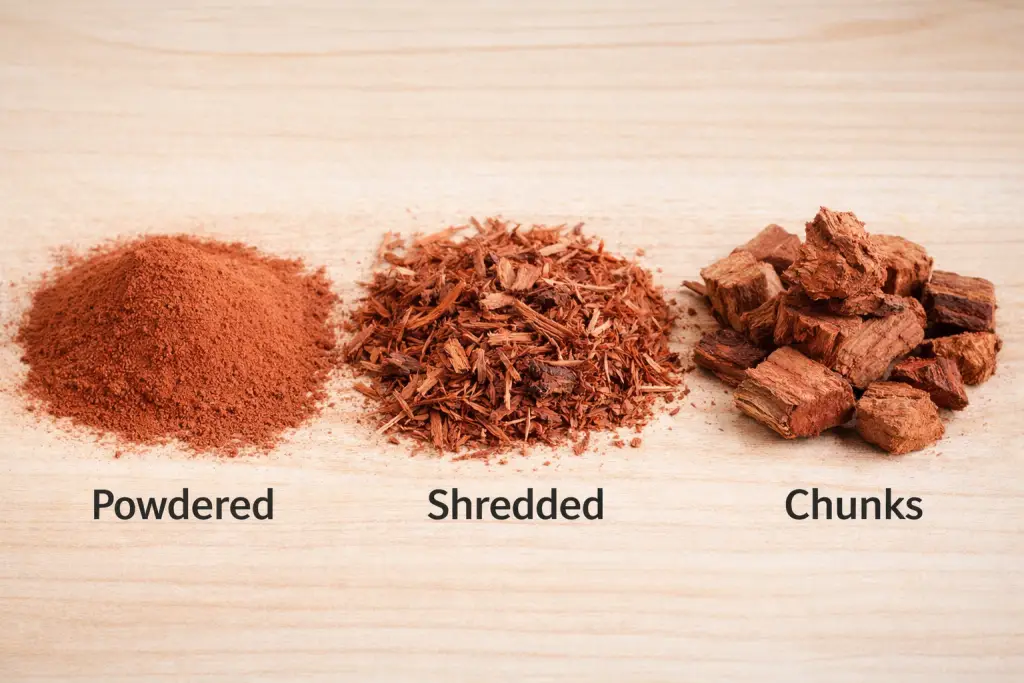
Mimosa hostilis powder is finely ground inner root bark that has been processed into a smooth, consistent texture. This form is often preferred for applications that require easy mixing or blending, as the fine particles allow for more uniform distribution.
Because it is already broken down, powder is generally more convenient to work with and requires less preparation compared to other forms of mimosa hostilis root bark.
Best Uses
- Small to medium soap batches
- Oil infusions
- Makers seeking quick, even color distribution
Pros
- Rapid extraction
- Strong, uniform color
- Ideal for controlled formulations
Cons
- Requires thorough straining
- Can cause sediment if overused
Powdered mimosa tenuiflora root bark is often preferred by experienced soap makers who already have a filtration process in place. It works especially well when infused into carrier oils before being added to soap batter.
If you’re sourcing this form, browse mimosa hostilis for sale options that clearly specify grind consistency and intended use.
Shredded Mimosa Hostilis Root Bark
Shredded mimosa hostilis root bark consists of thin, fibrous strips of the inner bark that have been minimally processed. This form retains more of its natural structure, making it a popular option for those who prefer a less refined material.
Shredded bark may require additional preparation depending on its intended use, but many people value it for its natural texture and versatility.
Best Uses
- Water infusions
- Medium to large batches
- Soap makers who prefer traditional methods
Pros
- Slower, more controlled extraction
- Easier straining than powder
- Flexible for multiple craft applications
Cons
- Longer infusion times
- Slightly softer color intensity
Shredded bark is a solid choice for both beginners and professionals. It provides reliable results without the challenges that sometimes come with powdered material.
Chunked Mimosa Hostilis Root Bark
Mimosa hostilis bark chunks are larger pieces of inner root bark that have been minimally processed. Unlike powdered or shredded forms, chunks retain their original structure and are typically broken down further before use.
This form is often chosen by those who prefer to control the level of processing themselves or want a more raw, unrefined material. While chunks require additional preparation, they offer flexibility and are considered the least processed option.
Best Uses
- Large soap or dye batches
- Long infusion processes
- Projects where sediment control is critical
Pros
- Minimal residue
- Can be reused for extended infusions
- Ideal for bulk work
Cons
- Slow extraction
- Not practical for small batches
Chunks are less common for everyday soap making but can be useful for artisans working at scale or experimenting with extended extraction techniques.
Key Differences
The main differences between mimosa hostilis powder, shredded bark, and chunks come down to texture, processing level, and preparation required.
Powder is finely ground and offers the most convenience, as it is ready to use with little to no preparation. Shredded bark has a fibrous texture and is moderately processed, offering a balance between ease of use and a more natural form. Chunks are the least processed option, consisting of larger pieces that typically require additional preparation before use.
In terms of ease, powder is the simplest to work with, shredded bark may require some handling depending on the application, and chunks require the most preparation but offer the most control over processing. Ultimately, all three come from the same source, and the best choice depends on preference and intended use.
Quick Comparison
- Powder: Fine texture, most processed, easiest to use
- Shredded: Fibrous texture, moderately processed, balanced option
- Chunks: Large pieces, least processed, requires preparation
- Convenience: Powder > Shredded > Chunks
- Processing Level: Chunks < Shredded < Powder
Which Mimosa Hostilis Root Bark Size Is Best for Your Project?
Choosing the right size depends on your workflow and goals.
Beginners
Shredded bark is usually the easiest and most forgiving option.
Small Batches
Powdered bark offers faster results and stronger color when properly filtered.
Large or Experimental Projects
Chunked bark works best when time is not a constraint and clarity is important.
Many soap makers start with shredded bark and later incorporate powder once they’re comfortable refining their process.
Common Mistakes When Choosing Bark Size
- Selecting powder for large batches without adequate filtration
- Using chunks when faster extraction is required
- Overheating infusions, which dull color regardless of bark size
Understanding how bark size interacts with your preparation method helps avoid wasted material and inconsistent outcomes.
How Other Artisans Use Botanical Ingredients
Beyond soap making, botanical materials like Mimosa Hostilis Root Bark are also used in natural dyeing, handmade paper, and small-batch personal care products. Brands such as MyHealthySoap demonstrate how thoughtfully sourced botanical ingredients can be incorporated into handcrafted goods without compromising quality or consistency.
Final Thoughts
Mimosa Hostilis Root Bark is a versatile botanical, but choosing the correct form is essential for achieving consistent soap making results. Powder, shredded, and chunked bark each serve a distinct purpose, and understanding those differences allows makers to work more efficiently and confidently.
For deeper guidance on preparation methods, sourcing standards, and project planning, refer back to our complete guide to Mimosa Hostilis Root Bark. When you’re ready to source materials, explore clearly labeled mimosa hostilis for sale options to ensure consistency across batches.