
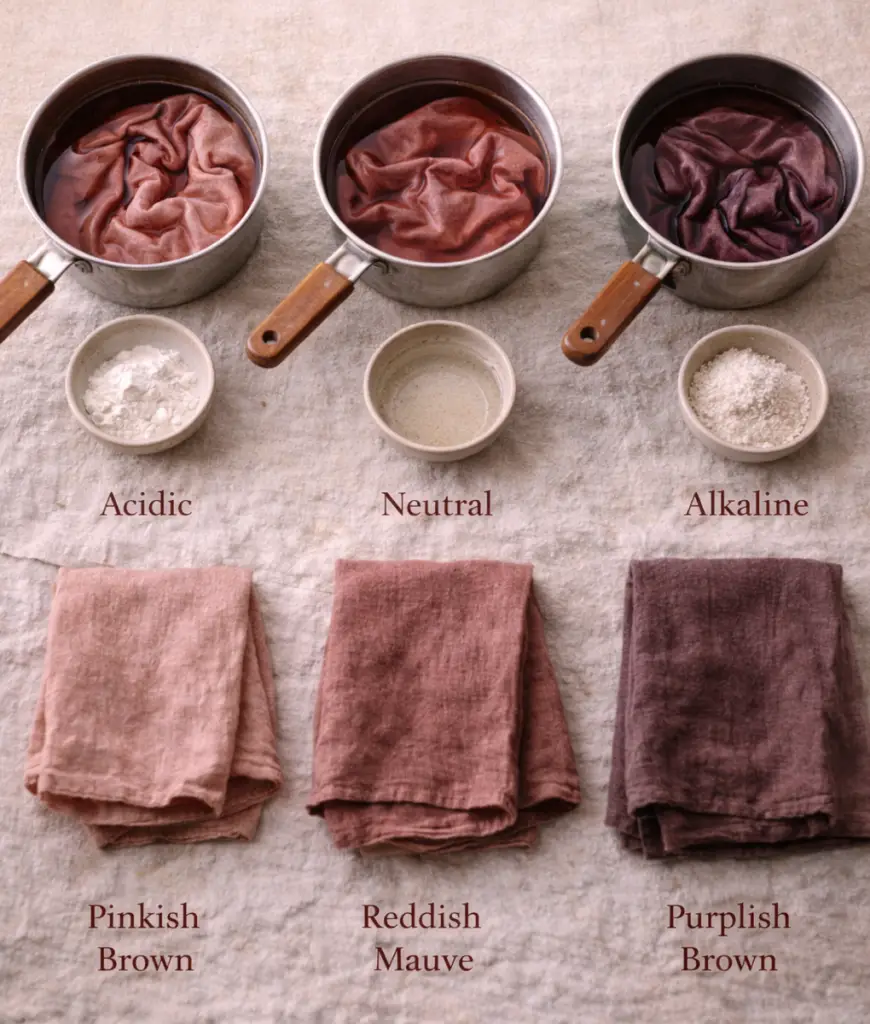
Acidic vs Alkaline Tone Shifts Explained
If you’ve ever dyed fabric with Mimosa Hostilis and noticed unexpected shade differences, you’re not imagining it. How pH changes Mimosa Hostilis dye color is one of the most important variables in natural dyeing.
Because Mimosa Hostilis is a tannin-rich botanical dye, it reacts to acidic and alkaline environments. Even small shifts in pH can alter the final tone from purple-burgundy to warm brown or deeper smoky shades.
In this guide, we’ll explain:
- Why Mimosa Hostilis dye color shifts with pH
- What happens in acidic vs alkaline baths
- The best pH range for consistent results
- How to intentionally modify tone
Why pH Affects Mimosa Hostilis Dye Color
Mimosa tenuiflora contains natural tannins. Tannins are pH-sensitive compounds that change structure slightly depending on acidity or alkalinity.
When dyeing fabric:
- Acidic environments enhance purple undertones
- Neutral baths produce warm brown
- Alkaline shifts deepen and dull the color
Because Mimosa Hostilis is a natural tannin dye, its pigment responds visibly to these changes.
👉 See full Mimosa Hostilis color results
Mimosa Hostilis Dye Color in Acidic Baths
When the dye bath is slightly acidic (pH 4–6):
Typical Results:
- Rich purple-brown
- Plum undertones
- Burgundy tones (especially on silk)
- Increased depth
Many dyers add a small amount of vinegar to maintain a slightly acidic environment.
Acidic conditions often produce the most vibrant Mimosa Hostilis dye color shift.
Mimosa Hostilis Dye Color at Neutral pH
At neutral pH (around 7):
Typical Results:
- Warm brown
- Earthy tan
- Softer rose-brown on cotton
This is often the most stable and predictable result.
Mimosa Hostilis Dye Color in Alkaline Baths
When the bath becomes alkaline (pH 8+):
Typical Results:
- Darker, smokier brown
- Duller tones
- Less visible purple undertones
Alkaline environments may deepen color but reduce vibrancy.
High alkalinity is more common in soap or when using mineral-heavy water.
pH vs Color Shift Reference Chart
| pH Level | Expected Tone | Saturation | Purple Undertone |
|---|---|---|---|
| 4–5 | Rich Plum/Burgundy | Medium–Deep | Strong |
| 6–7 | Warm Brown | Medium | Moderate |
| 8+ | Dark Smoky Brown | Deep | Subtle |
This simplified chart helps predict Mimosa Hostilis dye color variation.
How Fiber Type Interacts with pH
Fiber type amplifies pH impact.
On silk and wool (protein fibers):
- Acidic baths intensify purple tones
- Alkaline shifts deepen brown
On cotton (cellulose fiber):
- Acidic baths enhance dusty rose tones
- Alkaline baths produce flat brown
How to Adjust pH Safely
To create an intentional Mimosa Hostilis dye color shift:
✔ Add small amounts of vinegar for acidity
✔ Test with pH strips
✔ Avoid strong alkaline chemicals
✔ Adjust gradually
Always test small swatches before dyeing the final fabric.
Why Your Mimosa Hostilis Dye Looks Different Each Time
Variation can be caused by:
- Water hardness
- Fiber composition
- Mordant type
- Heat consistency
- pH fluctuation
Because Mimosa Hostilis is a natural dye, slight tone shifts are normal and part of its organic aesthetic.
👉 Complete Mimosa Hostilis dyeing guide
Understanding how pH changes Mimosa Hostilis dye color allows you to control shade outcome intentionally.
- Acidic baths enhance purple and burgundy tones
- Neutral baths produce warm brown
- Alkaline baths deepen and dull color
Small pH adjustments can make a dramatic difference in your final textile result.
With careful monitoring, you can harness Mimosa Hostilis dye color shift to create beautifully layered natural tones.