One of the most common questions beginners and experienced natural dyers alike ask is: how much mimosa hostilis root bark do I need to dye fabric?
Unlike synthetic dyes, plant-based dyes don’t come with a simple “one size fits all” formula. The amount of Mimosa Hostilis Root Bark (MHRB) you need depends on several variables, including fabric type, desired color depth, dye method, and whether the bark is powdered or shredded.
This guide breaks everything down clearly so you can confidently plan your dye projects without wasting material—or ending up with pale results.
Why Dye Ratios Matter in Natural Dyeing
Natural dyes rely on tannins and plant pigments bonding directly with fibers. If too little bark is used, the fabric may dye unevenly or appear washed out. If too much is used, color can deepen beautifully—but efficiency and cost matter.
Understanding how much mimosa hostilis root bark do I need to dye fabric allows you to:
- Achieve consistent color results
- Avoid overdilution
- Scale projects accurately
- Plan bulk dye sessions
- Reduce wasted material
The Standard Rule of Thumb for MHRB Dyeing
A widely accepted baseline in natural dyeing is the Weight of Fiber (WOF) method.
General guideline
- 100% WOF = deep, saturated color
- 50% WOF = medium tones
- 25% WOF = light shades
This means if you are dyeing 100 grams of fabric, you would use:
- 100 grams of MHRB for deep color
- 50 grams for medium color
- 25 grams for pale color
This baseline answers the question how much mimosa hostilis root bark do I need to dye fabric for most standard projects.
How Fabric Type Affects How Much Bark You Need
Not all fabrics absorb dye equally.
Protein fibers (silk, wool)
These fibers bond easily with tannins.
- Require less bark
- Produce richer tones faster
- Often need only 50–75% WOF
Cellulose fibers (cotton, linen, hemp)
These are more stubborn.
- Require more bark
- Benefit from tannin or alum mordants
- Often need 100–150% WOF for deep shades
If you’re working with cotton or linen and wondering how much mimosa hostilis root bark do I need to dye fabric, plan on using more bark than you would for silk or wool.
For more details on preparing cellulose fibers, see:
https://tenuiflorashop.com/how-to-use-mimosa-hostilis-root-bark-for-natural-dyeing/
Powder vs Shredded Bark: Does Quantity Change?
Yes — texture matters.
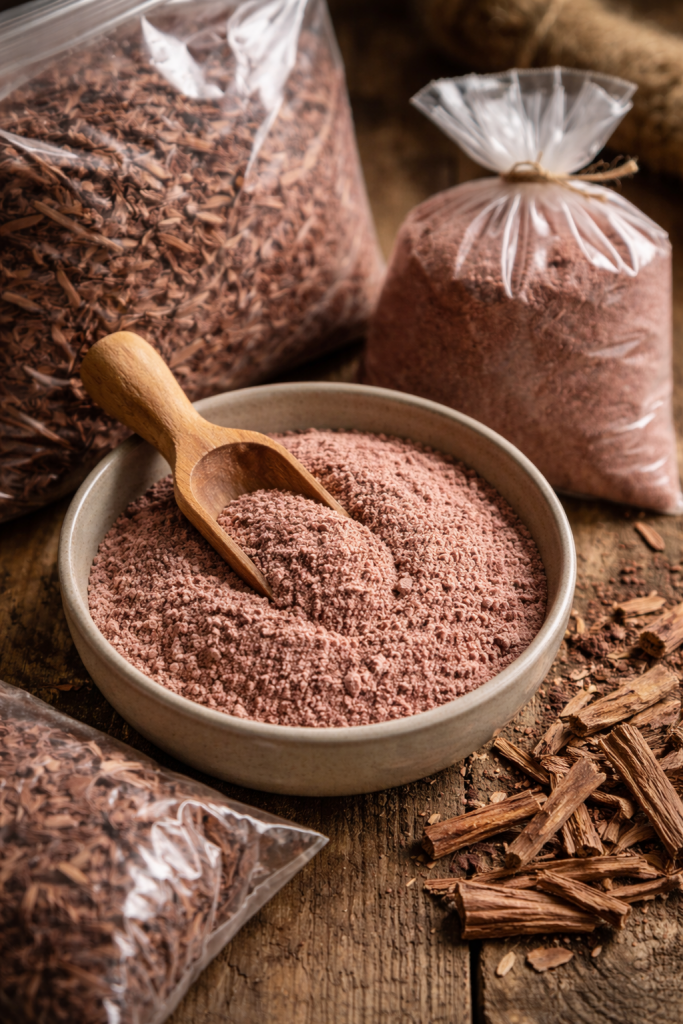
Powdered MHRB
- Higher surface area
- Faster extraction
- Stronger pigment release
- Often requires 10–20% less material
Shredded MHRB
- Slower extraction
- Cleaner straining
- More consistent tone
- May require slightly more bark
So if you’re calculating how much mimosa hostilis root bark do I need to dye fabric, powder is generally more efficient per gram.
How Color Depth Changes Bark Quantity
Here’s a practical breakdown:
| Desired Shade | Fabric Weight | Bark Needed |
|---|---|---|
| Pale blush | 500g | 125–250g |
| Medium rose | 500g | 250–375g |
| Deep burgundy | 500g | 500–750g |
| Very dark / layered | 500g | 750g–1kg |
Layered dyeing (multiple dips) allows you to reuse dye baths efficiently while deepening color gradually.
Does Dye Method Change How Much Bark You Need?
Absolutely.
Immersion dyeing
- Most common
- Uses standard ratios
- Requires full coverage
Bundle dyeing
- Uses less liquid
- Requires less bark overall
- Concentrated contact areas
Painted or thickened dye
- Highly concentrated
- Requires less bark per square inch
- Common in tie-dye and textile art
If you’re experimenting beyond immersion, how much mimosa hostilis root bark do I need to dye fabric becomes more flexible.
What If My Dye Looks Weak?
If results appear pale, it usually means:
- Too much water
- Not enough bark
- Insufficient simmering
- Fabric not prepped properly
Before adding more bark, try:
- Reducing the dye bath
- Reboiling the bark
- Letting fabric soak longer
This is covered in more detail here:
👉 https://tenuiflorashop.com/why-is-my-mimosa-hostilis-dye-brown/
Scaling Up: Bulk Dyeing Considerations
For larger projects, always calculate by total fabric weight.
Example:
- 5 kg of cotton fabric
- Deep color goal
- 5–7.5 kg of MHRB recommended
Bulk dyeing benefits from:
- Multiple extraction cycles
- Combining dye baths
- Reusing bark efficiently
This is where knowing how much mimosa hostilis root bark do I need to dye fabric saves significant time and cost.
Can You Reuse MHRB After Dyeing?
Yes — especially for lighter shades.
- First extraction = darkest tones
- Second extraction = medium tones
- Third extraction = pale tones
Reusing bark helps stretch material further while maintaining consistency.
Scientific Context: Why Ratios Matter
Tannins bind to fibers in proportion to concentration. According to research on tannin-based dyes, higher tannin availability improves color depth and fastness when balanced correctly with fiber weight.
You can explore the science behind tannin dye interactions here:
https://www.ncbi.nlm.nih.gov/pmc/articles/PMC8503083/
Final Answer: How Much Mimosa Hostilis Root Bark Do I Need to Dye Fabric?
The answer depends on:
- Fabric type
- Desired color depth
- Bark form
- Dye method
But as a safe, reliable starting point:
Use 100% of the fabric’s dry weight in MHRB for deep, saturated color.
From there, adjust based on your project goals.
Understanding how much mimosa hostilis root bark do I need to dye fabric gives you control, confidence, and consistency—key elements in successful natural dyeing.