Mimosa Hostilis Root Bark (also known as Mimosa tenuiflora or MHRB) has become one of the most respected botanical dyes among natural creators. Its pigments bind beautifully to fibers, and the tannin-rich chemistry allows for deep color without requiring harsh chemicals. But its performance varies dramatically depending on the type of fabric you use.
That’s why understanding the best fabrics to use with Mimosa Hostilis Root Bark dye is essential for predictable, strong, and long-lasting results. Some materials absorb the dye effortlessly, while others resist pigment or fade faster. A few even produce unexpectedly rich tones that beginners often miss.
This guide breaks down the top fabrics to use, how each one behaves in a dye bath, and the science behind why certain fibers bond better with botanical tannins. If you’re new to dyeing, already experimenting with MHRB, or troubleshooting inconsistent results, this is everything you need in one place.
Why Fabric Choice Matters With Natural Dyes
Natural dyes don’t behave like synthetic dyes. They rely on the relationship between:
- plant chemistry
- fiber structure
- temperature
- pH
- mordants
- tannins
MHRB contains powerful tannins, which act as natural bonding agents. But even with tannins, some fibers absorb pigment more efficiently than others.
Understanding the best fabrics to use with Mimosa Hostilis Root Bark dye helps you avoid weak color, patchiness, or fading — and it unlocks the full potential of MHRB’s deep pink, burgundy, plum, brown, and purple tones.
If you want a full breakdown of how MHRB behaves during extraction, you can also explore the chemistry behind natural dyeing here:
The Science Behind Natural Fabric Dyeing and How It Compares to Synthetic Methods
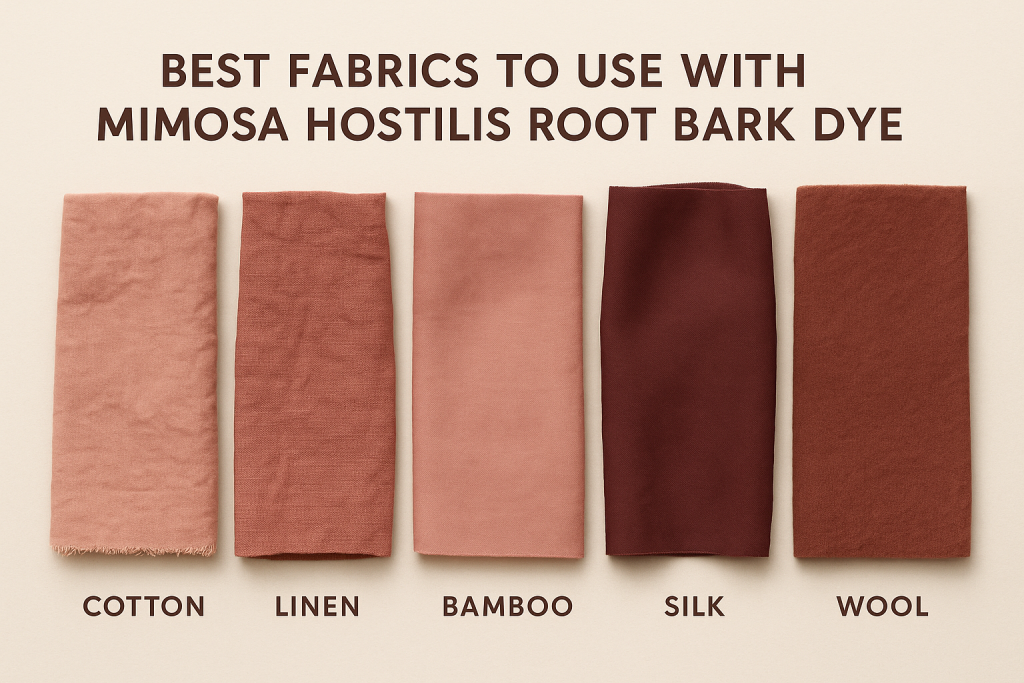
1. Cotton — A Top Performer for MHRB Dyeing
Cotton is one of the absolute best fabrics to use with Mimosa Hostilis Root Bark dye because:
- it’s highly absorbent
- it holds tannins well
- it produces balanced, even tones
- it’s easy to work with
- it doesn’t require delicate handling
With proper scouring and a tannin or alum pre-mordant, cotton can achieve:
- dusty rose
- rich mauve
- burgundy
- cocoa
- plum
Cotton is especially reliable for beginners because it responds predictably to MHRB.
If you’re new to dye extraction, this guide explains the process step-by-step:
https://tenuiflorashop.com/how-to-use-mimosa-hostilis-root-bark-for-natural-dyeing/
2. Linen — Strong, Earthy, and Absorbent
Linen is another excellent choice for natural dyeing with MHRB. Because it is made from flax fibers, it naturally absorbs tannins extremely well.
Results on linen tend to be:
- deeper
- earthier
- slightly textured (in a beautiful, organic way)
Linen also handles high-heat dye baths without weakening the fabric, making it perfect for long extraction or multiple dips.
If your tones are unexpectedly brown on linen or cotton, this guide helps troubleshoot why:
https://tenuiflorashop.com/why-is-my-mimosa-hostilis-dye-brown/
3. Bamboo & Rayon (Semi-Synthetics That Dye Beautifully)
These fibers are created from natural cellulose but processed to make them soft and silky. They absorb MHRB better than most people expect, often producing:
- deep reddish tones
- bright purples
- smooth gradient absorption
Bamboo and rayon behave similarly to cotton but with a softer, more fluid color outcome.
They are excellent choices when you want vivid, strong tones without losing softness.
4. Silk — Produces the Deepest, Richest Tones
Silk is one of the absolute best fabrics to use with Mimosa Hostilis Root Bark dye because its protein fibers bond directly with the tannins.
Silk produces:
- the deepest burgundy tones
- strong purple or wine shades
- dramatic color intensity
- incredible sheen
Because silk is sensitive to extreme heat, keep the temperature lower (160–180°F) to prevent damage.
5. Wool — Warm, Saturated, and Velvety
Wool, like silk, is a protein fiber, meaning it forms strong chemical bonds with MHRB pigments. It absorbs color extremely fast and produces:
- warm reds
- deep browns
- plum tones
- earthy purples
Wool must be handled gently, with low heat and no agitation, to avoid felting.
6. Fabrics to Avoid With MHRB (Save Yourself the Frustration)
Not all materials cooperate.
Here are the worst fabrics to use with Mimosa Hostilis Root Bark dye:
❌ Polyester
Completely resists natural dye and produces almost no color.
❌ Acrylic
Synthetic fibers don’t chemically bond with tannins or natural pigments.
❌ Nylon
Absorbs a little color but fades extremely fast.
❌ Spandex / Lycra
Doesn’t hold natural dye and can distort shades.
These fibers need synthetic dyes — not botanical ones.
How Mordants Affect Different Fabrics
Even though MHRB contains natural tannins, some fibers benefit from mordants:
Cotton / Linen / Bamboo / Rayon (Cellulose Fibers):
- alum improves brightness
- tannin pre-soaks deepen tone
- soy milk helps create smooth consistency
Silk / Wool (Protein Fibers):
- absorb dye without mordant
- alum can increase colorfastness
- avoid iron unless you want darker, cooler tones
If you want to deepen the color even further, you can explore thickening methods here:
https://tenuiflorashop.com/how-to-thicken-mimosa-hostilis-dye-for-stronger-fabric-absorption/
Why These Fabrics Perform So Differently
To understand why some materials excel at dyeing while others resist pigment, consider the chemistry:
Cellulose Fibers (Cotton, Linen, Bamboo, Rayon)
These fibers have porous structures that drink up tannins.
Protein Fibers (Silk, Wool)
These contain amino acids that form chemical bonds with pigment, resulting in stronger, more permanent color.
Synthetic Fibers
Made from petroleum-based polymers, they don’t bond with plant compounds at all.
That’s why choosing the best fabrics to use with Mimosa Hostilis Root Bark dye drastically affects your results.
Study on dye uptake differences between fiber types:
https://www.sciencedirect.com/science/article/pii/S0142941817303514
Conclusion
Understanding the best fabrics to use with Mimosa Hostilis Root Bark dye gives you more control over your dye results and helps you avoid inconsistent or disappointing outcomes. Natural fibers like cotton, linen, bamboo, rayon, silk, and wool respond beautifully to MHRB’s tannin-rich chemistry, producing deep, lasting, and vibrant tones.
Synthetic fabrics simply can’t bond with plant-based color — but natural fibers unlock the full beauty of Mimosa Hostilis.
Whether you’re dyeing scarves, fabrics, garments, or crafting natural pigments, choosing the right material is the first step toward achieving rich, professional-quality results.