
What Does Sifted Mean for Root Bark?
When shopping for mimosa hostilis shredded root bark, terms such as sifted and finely milled can be confusing. They describe how botanical material is processed or sorted, not different species of plant. Understanding the distinction helps buyers choose a texture that fits their craft projects, handling preferences, and storage needs.
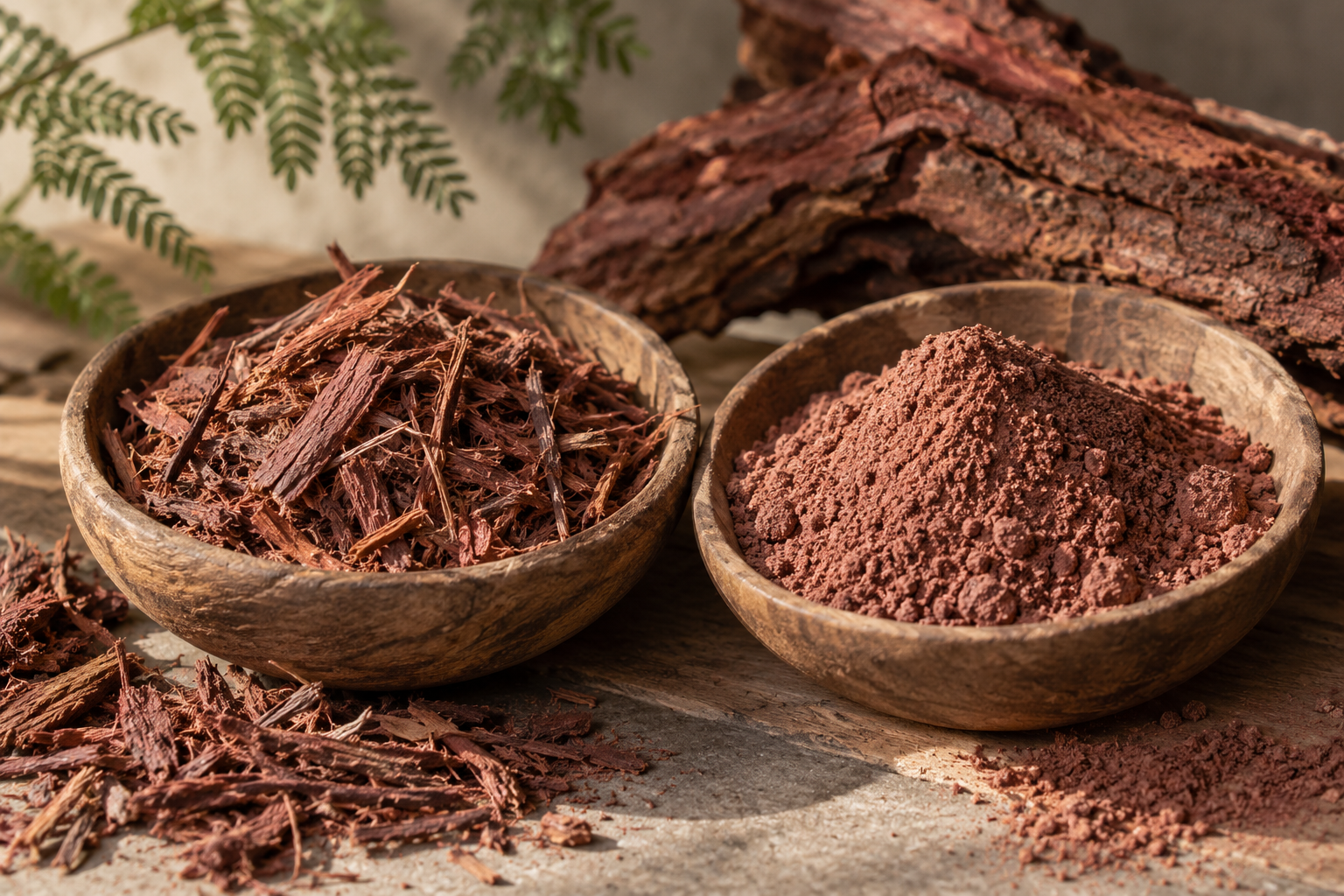
What Is Sifted Root Bark?
Sifting separates material by particle size using a mesh or screen. For mimosa hostilis shredded root bark, a supplier might sift a batch to remove loose dust and smaller fragments while keeping the larger fibrous pieces. The result depends on the mesh size and the starting material, so “sifted” is not a universal grade.
Sifted shredded bark may look more uniform, but it is still shredded bark. It has not necessarily been ground into a fine powder. Always check product photographs and descriptions rather than assuming that sifted means powdered.
What Does Finely Milled Mean?
Finely milled bark has been mechanically reduced to smaller particles. Milling describes the grinding process, while sifting describes separation by size. A supplier can mill a material and then sift it, meaning the two terms are not opposites.
Compared with mimosa hostilis shredded root bark, finely milled powder generally has a softer, more uniform appearance and requires less preparation for applications that call for a powder. The exact fineness still varies by equipment and producer.
Sifted vs. Finely Milled: Key Differences
- Processing: sifting sorts particles; milling reduces particle size.
- Appearance: sifted shredded bark retains visible fibers; finely milled bark resembles powder.
- Handling: larger pieces tend to create less airborne dust during transfer, while fine powders require more care.
- Storage: both forms benefit from dry, sealed containers protected from moisture and direct sunlight.
- Quality: particle size alone does not prove freshness, purity, pigment strength, or geographic origin.
Where Does Mimosa Hostilis Shredded Root Bark Fit?
Mimosa hostilis shredded root bark is a useful middle ground between intact chunks and ready-to-use powder. It retains recognizable bark fibers and can be handled without the extra grinding required for chunks. Some buyers prefer the visible texture when comparing batches or organizing botanical materials.
If a listing describes mimosa hostilis shredded root bark as sifted, ask whether the bark was screened to remove fines or whether it was milled first. Those processes can create very different textures even when sellers use similar wording.
Does Finer Texture Mean Better Quality?
Not necessarily. Smaller particles offer more surface area, but that does not automatically make one batch of bark superior. Source, drying, cleanliness, storage, and accurate labeling are important regardless of texture. A finely milled product and mimosa hostilis shredded root bark can originate from the same raw material.
Particle-size terminology is widely used across industries. For background on how screens separate material by size, see Encyclopaedia Britannica’s explanation of sieving. It is an educational reference, not a competing botanical retailer.
Which Texture Should You Choose?
Choose mimosa hostilis shredded root bark if you want a fibrous texture with minimal additional processing. Choose finely milled powder if your project calls for a consistent fine particle size. Choose chunks if you prefer larger, minimally processed pieces and want to control any later size reduction yourself.
The Tenuiflora Shop offers shredded root bark and powder options so you can compare forms before selecting a quantity. Review each product listing for the exact texture, weight, and current availability.
Frequently Asked Questions
Is sifted root bark the same as powder?
No. Sifting sorts particles by size; milling grinds material into smaller particles. Sifted mimosa hostilis shredded root bark can remain visibly fibrous.
Can shredded root bark contain fine particles?
Yes. Cutting, handling, and shipping can create small fragments or dust. The amount varies between batches, and some suppliers sift their shredded bark to reduce these fines.
Is finely milled bark a different botanical species?
No. Both finely milled powder and mimosa hostilis shredded root bark can come from Mimosa tenuiflora, also commonly called Mimosa hostilis. Processing changes the physical form, not the species.
Final Thoughts
The distinction is simple: sifted describes sorting, and finely milled describes grinding. When comparing mimosa hostilis shredded root bark with powder, focus on the finished particle size and the information the supplier provides. Clear product descriptions are more useful than assuming that one processing term always signals higher quality.