Professional dye artists require consistency, strength, and reliability from their materials. When working on large batches, commissioned pieces, or repeatable production runs, the quality of the dye source matters just as much as technique. This is why choosing the best Mimosa Hostilis root bark for professional dyeing is essential for predictable, high-quality results.
Mimosa Hostilis root bark is widely known for its high tannin content and rich pigment profile, making it a favorite among textile artists, fiber studios, and natural dye professionals. However, not all bark performs the same—especially at scale. Differences in cut size, processing method, and preparation can significantly impact color depth, extraction efficiency, and batch consistency.
This guide breaks down what professionals should look for when selecting Mimosa Hostilis root bark for serious dye work and how to get the most reliable results in larger dye projects.
What Makes Mimosa Hostilis Ideal for Professional Dyeing
Mimosa Hostilis stands out among natural dye materials due to its unusually high concentration of condensed tannins. These tannins bond strongly with both cellulose and protein fibers, producing colors that are rich, long-lasting, and highly responsive to modifiers.
For professionals, this means:
- Strong pigment yield per kilogram
- Reliable absorption across different fabric types
- Excellent results in large dye baths
- Compatibility with repeated extraction and reduction
When sourcing the best Mimosa Hostilis root bark for professional dyeing, consistency becomes just as important as color strength.
Choosing the Right Bark Size for Professional Use
One of the biggest decisions professionals face is selecting the correct bark size. Each form behaves differently in large dye baths.
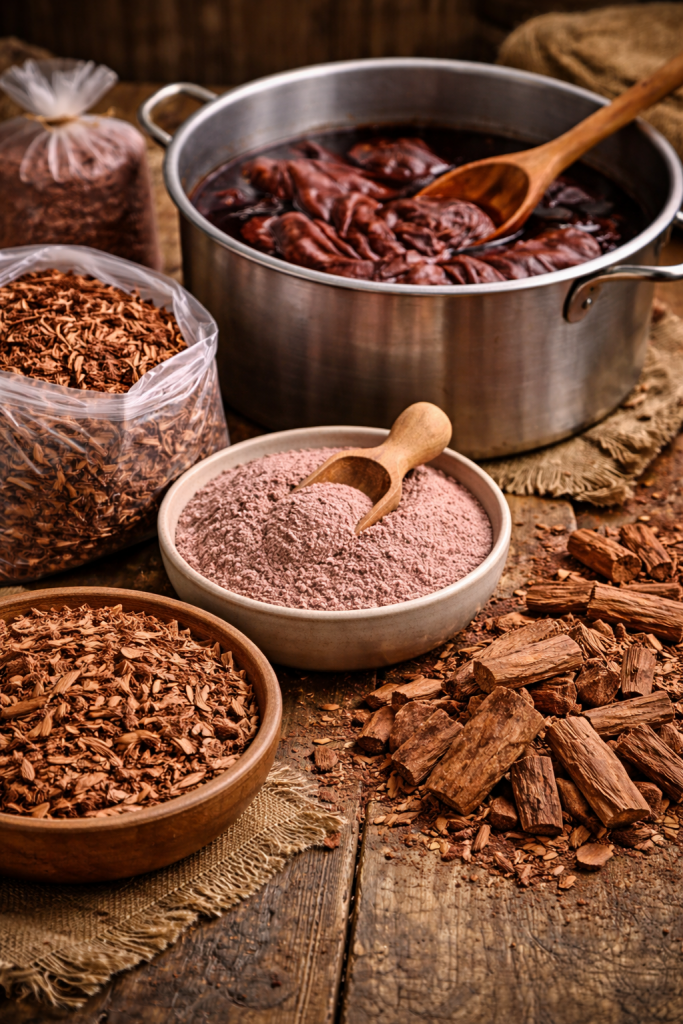
Powdered Root Bark
Powdered bark offers the fastest extraction and the highest immediate pigment release. It is ideal for professionals who need:
- Maximum color strength
- Shorter extraction times
- Dense, saturated tones
- Strong results in large dye vats
Powder is especially useful for studios producing deep reds, purples, and dark neutrals where intensity matters.
Shredded Root Bark
Shredded bark is often preferred by professionals working with repeated extractions or long simmer times. It provides:
- Cleaner dye baths
- Easier straining
- More controlled color buildup
- Less sediment in large vessels
Many professional dyers choose shredded bark when consistency across multiple batches is the priority.
Chunked Bark
Chunked bark is typically used for very long extractions or slow, traditional dye methods. While less efficient for fast production, it can work well for:
- Extended simmering
- Multiple re-boils
- Studios prioritizing low sediment
For most professional operations, powder or shredded bark delivers the best balance of efficiency and control.
Why Quality Matters at Scale
In professional dyeing, even small inconsistencies become amplified. Lower-quality bark can result in:
- Uneven color across large fabric runs
- Weak dye baths requiring more material
- Brown or muddy tones
- Reduced colorfastness
Using the best Mimosa Hostilis root bark for professional dyeing reduces waste, improves predictability, and saves time over the long run.
Professionals often evaluate bark quality based on:
- Color of the dry material
- Aroma (fresh bark has a stronger natural scent)
- Fineness and uniformity of processing
- Performance across multiple dye baths
High-quality bark produces consistent results even when scaled up.
Extraction Techniques for Professional Results
Professional dyeing typically involves larger volumes of water and material, which makes extraction technique especially important.
For strong results:
- Use higher bark-to-water ratios than beginner recipes
- Simmer rather than aggressively boil
- Allow sufficient time for full pigment release
- Re-boil bark when appropriate to maximize yield
Professionals often reduce their dye baths after extraction to concentrate pigment, especially when working with large fabric weights. For more information on tannin concentration, check out this article.
Consistency Across Large Dye Batches
One of the biggest advantages of using high-quality Mimosa Hostilis root bark is repeatability. Professional dye work depends on the ability to recreate the same tone across multiple sessions.
To maintain consistency:
- Weigh bark and fabric precisely
- Keep extraction times consistent
- Control temperature carefully
- Document ratios and modifiers
Using the best Mimosa Hostilis root bark for professional dyeing makes these variables easier to manage, especially when working on commissioned or commercial projects.
Who Benefits Most From Professional-Grade Bark
This level of quality is ideal for:
- Textile studios
- Fashion designers using natural dyes
- Fiber artists producing collections
- Natural dye workshops and educators
- Small-batch manufacturers
Professionals benefit from bark that performs reliably, scales well, and delivers predictable color outcomes.
Final Thoughts
Choosing the best Mimosa Hostilis root bark for professional dyeing isn’t just about color—it’s about control, efficiency, and confidence in your process. High-quality bark allows professionals to focus on technique and creativity rather than troubleshooting weak or inconsistent dye baths.
When dyeing at scale, quality materials become an investment rather than a cost. The right bark supports cleaner extractions, stronger color, and dependable results across every batch.
For information on what materials are best to use with MHRB, check out our other blog: Best Natural Fabrics to Dye With Mimosa Hostilis Root Bark