When working on large dye projects, choosing the correct form of Mimosa Hostilis Root Bark (MHRB) can make the difference between rich, even color and wasted material. Many dye artists focus on ratios, soaking times, or temperature control—but the size and cut of the bark itself is just as important, especially when dyeing at scale.
This guide breaks down the best Mimosa Hostilis Root Bark size for large dye projects, explaining how powder, shredded bark, and chunked bark behave in high-volume dye baths, which forms extract most efficiently, and how to match bark size to your workflow.
Whether you’re dyeing multiple yards of fabric, filling large vats, or preparing repeated dye baths, understanding bark size helps you maximize color strength, consistency, and cost efficiency.
Why Bark Size Matters in Large Dye Baths
Mimosa Hostilis Root Bark is rich in tannins and pigment-producing compounds, but those compounds must be released through extraction. In large dye projects, extraction efficiency becomes critical.
Bark size affects:
- surface area exposed to water
- extraction speed
- color saturation
- filtration ease
- ability to reuse material
- consistency between batches
Choosing the best Mimosa Hostilis Root Bark size for large dye projects ensures you’re not overusing material or fighting uneven results.
Overview of Mimosa Hostilis Root Bark Sizes
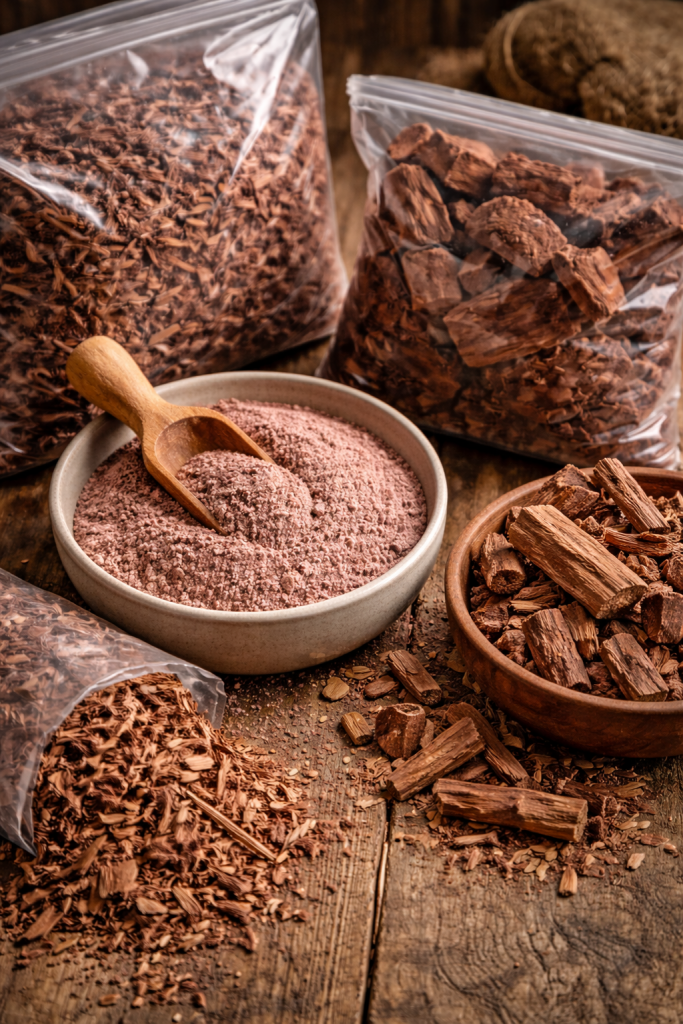
MHRB is typically available in three forms:
- Powder
- Shredded
- Chunks
Each behaves differently in large-scale dyeing.
Powdered Mimosa Hostilis Root Bark
Powder has the highest surface area, which means it extracts quickly and produces intense color.
Pros for large dye projects:
- fastest extraction time
- strongest immediate color
- excellent for deep, saturated tones
- ideal for short extraction windows
Cons:
- harder to strain
- creates sediment
- not ideal for repeated reboiling
- can be messy in large vats
Powder works well when:
- color intensity matters more than clarity
- filtration is not an issue
- dye baths are used once
While powerful, powder is not always the best Mimosa Hostilis Root Bark size for large dye projects if you need clean, reusable dye baths.
Shredded Mimosa Hostilis Root Bark (Most Versatile Option)
Shredded bark offers the best balance between extraction strength and usability.
Why shredded bark excels in large projects:
- high enough surface area for strong color
- easy to strain from large pots
- can be reboiled multiple times
- produces consistent results
- less sediment than powder
For artists managing large dye baths, shredded bark allows:
- longer simmering without breakdown
- predictable color from batch to batch
- efficient use of material
For most studios, workshops, and bulk projects, shredded bark is the best Mimosa Hostilis Root Bark size for large dye projects.
If you’re new to scaling up, shredded bark is the safest and most forgiving choice.
Chunked Mimosa Hostilis Root Bark
Chunked bark is the least processed form and extracts more slowly.
Pros:
- extremely clean dye baths
- minimal sediment
- excellent for slow extraction
- easy to remove from vats
Cons:
- slower pigment release
- requires longer simmering
- may produce lighter colors unless reduced
Chunks are useful when:
- clarity is essential
- dye baths will be reused multiple times
- slow extraction is preferred
However, chunks are usually not the best Mimosa Hostilis Root Bark size for large dye projects when deep color is required quickly.
Best Choice by Project Type
For large fabric vats:
Shredded bark
Provides strong color without filtration issues.
For production dyeing:
Shredded or powder (depending on workflow)
Powder for speed, shredded for repeatability.
For workshops or teaching:
Shredded bark
Cleaner, more predictable, easier to manage.
For pigment extraction:
Powder
Maximum pigment release.
Extraction Efficiency at Scale
In large dye baths, efficiency matters more than intensity alone.
Shredded bark allows:
- multiple extractions
- blending of first and second boils
- consistent results across vats
This makes it the most cost-effective option when calculating how much material you need. For guidance on quantity, you can reference how much mimosa hostilis root bark do I need to dye fabric, which pairs naturally with this topic.
Reusability and Cost Control
Large projects often involve:
- repeated dyeing
- staged batches
- extended timelines
Shredded bark can be simmered two or three times, allowing you to stretch material without losing quality. This is another reason it’s often considered the best Mimosa Hostilis Root Bark size for large dye projects.
How Bark Size Affects Color Consistency
Consistency is harder to maintain as dye baths get larger.
Powder:
- intense but variable if not stirred constantly
Chunks:
- consistent but slower
Shredded bark:
- consistent and controllable
For artists prioritizing repeatable results across yards of fabric, shredded bark offers the most control.
Storage Considerations for Bulk Dyeing
Larger projects usually involve storing extra bark.
Shredded bark stores well when kept:
- dry
- sealed
- away from heat and light
If you’re preparing for ongoing projects, proper storage helps maintain potency. You can reference how to store mimosa hostilis root bark for long-term use.
Environmental & Practical Benefits
Using the right bark size:
- reduces waste
- minimizes over-extraction
- improves efficiency
- supports sustainable dyeing practices
Choosing the best Mimosa Hostilis Root Bark size for large dye projects isn’t just practical—it’s responsible.
For further reading on tannin-based dye extraction and surface area effects:
https://www.ncbi.nlm.nih.gov/pmc/articles/PMC8503083/
Conclusion
Large dye projects demand materials that are efficient, consistent, and easy to manage. While powder and chunks each have their place, shredded Mimosa Hostilis Root Bark consistently proves to be the best option for large-scale dyeing.
By selecting the best Mimosa Hostilis Root Bark size for large dye projects, you improve color quality, reduce waste, and gain better control over your dye process—no matter the size of your batch.