As natural dyeing grows in popularity, more artisans are moving beyond small test swatches and into large dye baths for fabric yardage, bulk garments, workshops, and production runs. With that shift comes an important question many dyers ask before committing to larger quantities:
Is mimosa hostilis root bark strong enough for large dye baths?
The short answer is yes — but only if it’s used correctly.
This guide explains how Mimosa Hostilis Root Bark (MHRB) performs at scale, what factors influence dye strength in large batches, how much material is actually needed, and how to ensure consistent, saturated color when working with bigger dye baths.
If you’re planning to dye multiple yards of fabric, full garments, or large fiber lots, this article will help you scale with confidence.
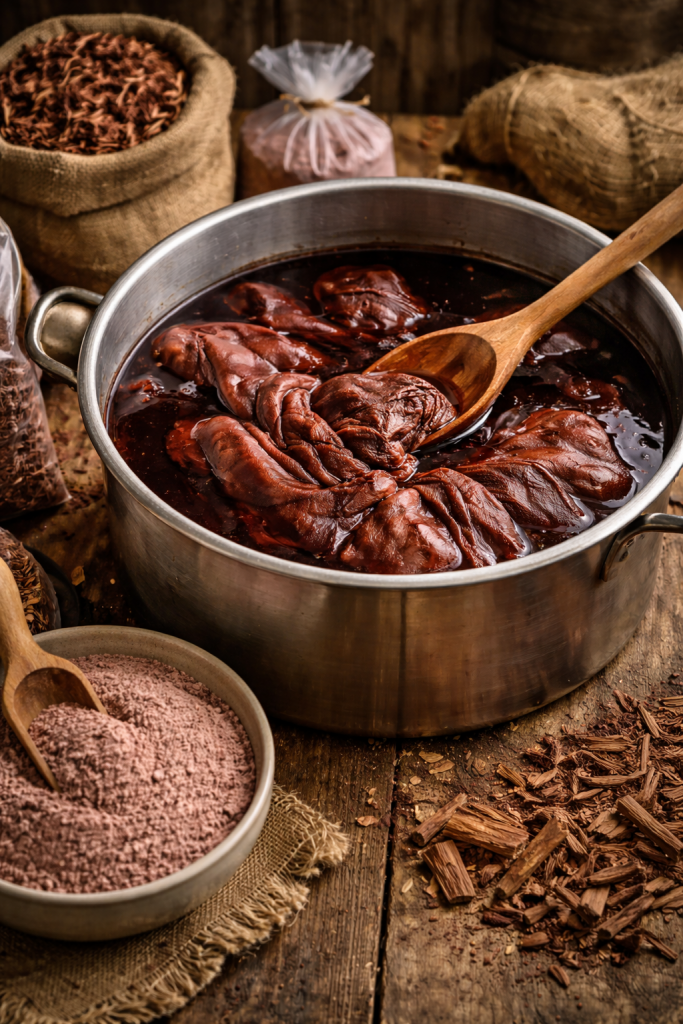
Why Large Dye Baths Behave Differently Than Small Ones
Before answering whether mimosa hostilis root bark is strong enough for large dye baths, it’s important to understand how scale affects dye chemistry.
When dyeing small pieces of fabric, saturation happens quickly because:
- pigment concentration is high relative to fabric weight
- heat is evenly distributed
- liquid volume is manageable
- agitation is easy
In large dye baths, however:
- pigment disperses across more water
- fabric competes for dye molecules
- heat loss occurs more quickly
- uneven absorption is more likely
This means that strength at scale depends less on the plant and more on technique.
What Makes Mimosa Hostilis Root Bark Suitable for Large Dye Baths
MHRB is uniquely well-suited for large dye projects because of its high tannin concentration. Tannins act as both a dye and a natural mordant, allowing pigment to bond strongly with fibers.
Key reasons mimosa hostilis root bark is strong enough for large dye baths include:
- exceptionally high tannin content
- ability to self-mordant protein and cellulose fibers
- deep pigment reserve that withstands dilution
- compatibility with extended simmering
- ability to be reboiled multiple times
Few natural dye materials maintain color strength when scaled — MHRB is one of them.
How Much Mimosa Hostilis Root Bark Is Needed for Large Dye Baths
The most common reason dyers believe their dye bath is “weak” is underestimating how much bark is required at scale.
A reliable starting ratio for large dye baths is:
- 1:1 ratio (by weight) for medium saturation
- 1.5:1 ratio for deep, rich tones
- 2:1 ratio for very dark or layered results
This means:
- 1 kg of dry fabric = 1–2 kg of MHRB, depending on desired depth
When dyers ask if mimosa hostilis root bark is strong enough for large dye baths, the answer often comes down to using enough material rather than questioning the plant’s potency.
Water Volume Matters More Than Pot Size
One mistake common in large dye baths is using too much water “just to be safe.”
Excess water:
- dilutes tannins
- reduces pigment contact
- slows absorption
- leads to pale or uneven results
Instead, use just enough water to fully submerge the fabric while allowing movement. Concentrated dye liquor is far more effective than oversized pots filled to the brim.
Extraction Method for Large Dye Baths
To ensure mimosa hostilis root bark is strong enough for large dye baths, extraction must be optimized.
Best practice:
- Pre-soak the bark for 8–12 hours
- Simmer gently (not a rolling boil) for 2–3 hours
- Strain and save the liquid
- Reboil the same bark at least once
- Combine extractions
This layered extraction pulls maximum pigment from the bark and prevents wasting usable color.
For a detailed walkthrough, see:
https://tenuiflorashop.com/how-to-use-mimosa-hostilis-root-bark-for-natural-dyeing/
Heat Control Is Critical at Scale
Large dye baths lose heat faster than small ones, especially in wide pots.
For consistent results:
- maintain temperatures between 160–190°F
- avoid aggressive boiling
- insulate pots if needed
- extend dye time rather than increasing heat
Lower, sustained heat allows tannins to continue bonding without breaking down pigments.
Fiber Type and Dye Strength in Large Batches
Whether mimosa hostilis root bark is strong enough for large dye baths also depends on the fiber being dyed.
- Cotton & linen: require tannin or alum pre-treatment for best results
- Silk & wool: absorb pigment readily and deepen quickly
- Rayon & bamboo: take color exceptionally well at scale
Cellulose fibers benefit the most from longer soak times in large baths.
Why Large Dye Baths Sometimes Look Lighter at First
Large dye baths often appear lighter initially because:
- pigment distribution takes longer
- fabric absorbs unevenly early on
- tannins continue bonding over time
Color deepens significantly after:
- extended soaking
- cooling in the dye bath
- oxidation during drying
Judging color too early is one of the biggest mistakes when scaling up.
Using Modifiers to Boost Large Dye Baths
If you want to push depth even further, modifiers can help.
- Iron deepens tones and increases contrast
- Acidic shifts enhance red and plum tones
- Layered dips intensify saturation
Modifiers should always be applied after the main dye bath to avoid overpowering the base color.
For troubleshooting color shifts, this article is helpful:
https://tenuiflorashop.com/why-is-my-mimosa-hostilis-dye-brown/
Consistency Tips for Bulk Dyeing
To maintain consistency across large batches:
- weigh fabric accurately
- measure bark by weight, not volume
- keep ratios consistent
- use the same extraction method each time
- dye similar fiber types together
This approach ensures mimosa hostilis root bark remains strong enough for large dye baths every time you scale.
Is MHRB Still Effective for Commercial-Scale Dyeing?
Yes — many professional dyers and workshops rely on MHRB specifically because it holds up under volume.
The key advantages at scale:
- predictable results
- repeatable color
- forgiving extraction process
- strong bonding even with dilution
When sourced and prepared correctly, mimosa hostilis root bark is absolutely strong enough for large dye baths, including production-level projects.
For a deeper look at tannin behavior in textile dyeing:
https://www.ncbi.nlm.nih.gov/pmc/articles/PMC8503083/
Final Thoughts
So, is mimosa hostilis root bark strong enough for large dye baths?
Yes — without question.
When used at proper ratios, extracted thoroughly, and paired with correct heat and fiber prep, MHRB performs exceptionally well at scale. Most issues attributed to “weak dye” are actually technique-related, not material-related.
For dyers ready to move into larger projects, mimosa hostilis root bark remains one of the most reliable, scalable natural dye materials available.