
One of the most common questions among natural dyers—especially those working with tannin-rich botanicals—is deceptively simple: How long should you soak fabric in a Mimosa Hostilis dye bath?
The answer isn’t one-size-fits-all. Soak time depends on several factors, including fabric type, dye concentration, temperature, mordanting method, and the shade you’re trying to achieve. Soaking too briefly can result in pale or uneven color, while soaking too long without proper conditions can lead to dull or muddy tones.
This guide breaks down exactly how long you should soak fabric in a Mimosa Hostilis dye bath, with clear recommendations for different fibers, techniques, and desired results—so you can stop guessing and start getting consistent, rich color.
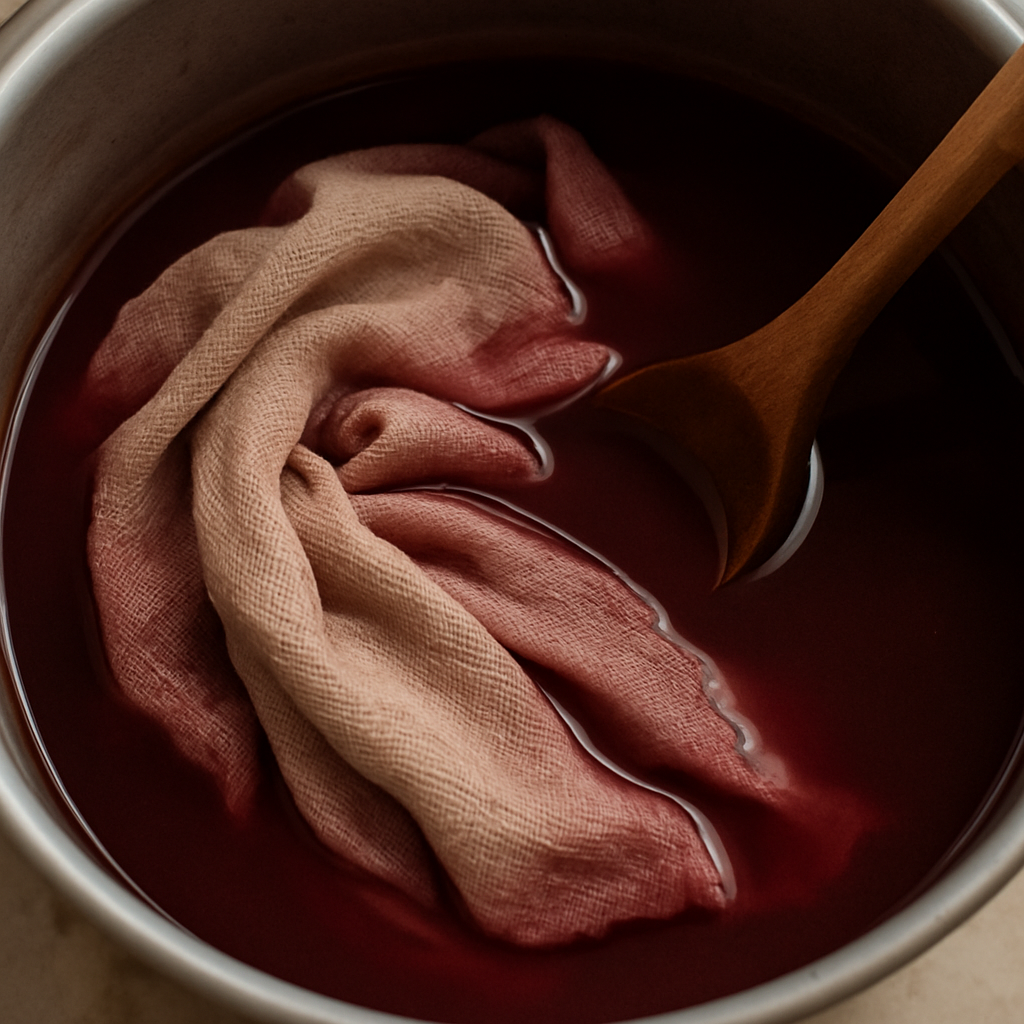
Why Soak Time Matters in Mimosa Hostilis Dyeing
Mimosa Hostilis Root Bark (MHRB) is rich in condensed tannins. Unlike some natural dyes that rely mostly on surface staining, tannin-based dyes need time to bond with fibers.
Soak time directly affects:
- Color depth
- Evenness
- Absorption
- Wash fastness
- Final tone (pink vs burgundy vs brown)
If you’ve ever wondered how long should you soak fabric in a Mimosa Hostilis dye bath after seeing wildly different results online, it’s because many dyers skip or rush this step.
Here is a scientific overview of tannin–fiber bonding:
https://www.ncbi.nlm.nih.gov/pmc/articles/PMC8503083/
General Soak Time Guidelines (Quick Reference)
If you want a fast answer before diving deeper, start here:
- Minimum soak time: 30 minutes
- Average soak time: 1–3 hours
- Deep color soak: 6–12 hours
- Maximum recommended soak: 24 hours
Anything beyond that usually doesn’t add more color unless heat or pH is adjusted.
But the correct soak time depends on fabric type—so let’s break that down properly.
How Long Should You Soak Fabric in a Mimosa Hostilis Dye Bath by Fabric Type
Cotton
Cotton is a cellulose fiber and requires more time to absorb tannins effectively.
Recommended soak time:
2–6 hours (minimum)
Up to 12 hours for deep shades
Cotton benefits greatly from:
- Tannin pre-treatment
- Warm dye baths
- Longer soak times
If cotton is removed too early, the dye often looks faded once dry.
Related guide:
https://tenuiflorashop.com/how-to-use-mimosa-hostilis-root-bark-for-natural-dyeing/
Linen
Linen behaves similarly to cotton but has a tighter fiber structure.
Recommended soak time:
3–8 hours
Linen rewards patience. Longer soaking allows the dye to penetrate evenly and reduces streaking.
If you’re asking how long should you soak fabric in a Mimosa Hostilis dye bath for linen specifically, err on the longer side.
Hemp
Hemp is dense and highly absorbent—but slow.
Recommended soak time:
6–12 hours
Hemp almost always benefits from:
- A long soak
- Warm temperature
- Occasional stirring
Short soaks usually result in uneven patches.
Silk
Silk is a protein fiber and absorbs Mimosa Hostilis dye very efficiently.
Recommended soak time:
30 minutes – 2 hours
Longer soaks can deepen color, but silk does not require the same extended timing as cotton.
If you’re dyeing silk, over-soaking is rarely necessary.
Wool
Wool absorbs quickly but is sensitive to heat and agitation.
Recommended soak time:
1–3 hours
Keep the temperature warm—not hot—and avoid sudden changes. Wool bonds well with tannins, so soak time is less critical than gentle handling.
Bamboo / Rayon / Viscose
These semi-synthetic fibers take dye extremely well.
Recommended soak time:
1–4 hours
They often appear darker while wet, so let them dry fully before judging color depth.
Does Dye Bath Temperature Change Soak Time?
Yes—significantly.
If you’re wondering how long should you soak fabric in a Mimosa Hostilis dye bath without considering temperature, you’re missing a major variable.
Cool Dye Bath
- Requires longer soak times
- Slower absorption
- Softer tones
Warm Dye Bath (120–160°F)
- Faster absorption
- Shorter soak times
- Deeper color
A warm bath can cut soak time in half compared to a cold bath.
Does Mordanting Affect Soak Time?
Absolutely.
With Proper Mordanting
Fabric absorbs dye more efficiently, reducing required soak time.
Without Mordanting
You’ll need:
- Longer soak times
- Higher dye concentration
- More patience
For cellulose fibers, tannin pre-mordanting is especially helpful.
If you’re consistently asking how long should you soak fabric in a Mimosa Hostilis dye bath and getting inconsistent results, mordanting is likely the missing piece.
How to Tell When Fabric Is Done Soaking
Instead of watching the clock obsessively, look for these signs:
- Color stops deepening noticeably
- Fabric looks evenly saturated
- Dye bath lightens slightly
- No new color uptake after 30–60 minutes
At that point, additional soaking usually won’t improve results.
What Happens If You Soak Fabric Too Long?
Over-soaking doesn’t usually ruin fabric—but it can cause:
- Dull or brownish tones
- Over-oxidation of tannins
- Slight loss of vibrancy
If fabric has soaked longer than 24 hours, rinse and dry before deciding whether to re-dye.
Layered Dyeing vs Single Long Soak
Instead of one very long soak, many dyers prefer multiple shorter soaks.
Example:
- Soak 2 hours
- Remove and oxidize
- Re-soak 2 hours
This technique often produces deeper, clearer color than one continuous soak.
Why Some Fabrics Look Darker Wet but Lighter Dry
This is completely normal with Mimosa Hostilis.
Wet tannins appear darker. Once dry, the true shade emerges.
Always let fabric dry fully before deciding whether to re-soak.
Common Mistakes That Affect Soak Time
If your results are disappointing, it’s often due to:
- Removing fabric too early
- Dye bath too diluted
- No mordant
- Cold dye bath
- Not stirring occasionally
- Judging color while wet
All of these lead people to ask how long should you soak fabric in a Mimosa Hostilis dye bath when the real issue is technique, not timing.
Final Answer: How Long Should You Soak Fabric in a Mimosa Hostilis Dye Bath?
Here’s the clean takeaway:
- Minimum: 30 minutes
- Average: 1–3 hours
- Deep color: 6–12 hours
- Maximum: 24 hours
Adjust based on:
- Fabric type
- Temperature
- Mordanting
- Desired shade
Once you understand this, Mimosa Hostilis becomes one of the most predictable and rewarding natural dyes to work with.