Natural pigments have become an essential part of modern botanical art, textile work, and handmade craft practices. As more creators shift toward plant-based colorants, one ingredient consistently stands out for its depth, versatility, and long-lasting tones: Mimosa Hostilis Root Bark, or Mimosa tenuiflora.
While this ingredient is widely recognized for its rich reddish-purple hues, many creators don’t realize how powerful it can be when integrated into a full natural pigment palette. Whether you create dye blends, botanical watercolor paints, natural inks, handmade soap colorants, or tinted skincare products, learning how to incorporate mimosa hostilis root bark into pigment palettes opens an entirely new world of color layering and botanical expression.
This guide walks you through exactly how MHRB behaves in pigment creation, how it interacts with other botanical dyes, how to use it in multi-tonal palettes, and why it has become one of the most flexible natural colorants available today.
Understanding the Color Properties of Mimosa Hostilis Root Bark
Before learning how to incorporate mimosa hostilis root bark into natural pigment palettes, you need to understand its inherent color behavior. MHRB contains deeply pigmented tannins that produce:
- Reddish maroon tones
- Purplish wine hues
- Brown undertones depending on pH
- Dark plum and berry shades in concentrated extractions
The bark’s pigment is extremely responsive to changes in heat, pH level, and extraction time. This makes it one of the most dynamic botanicals for creators who enjoy experimenting with color shifts.
Why Tannins Matter
MHRB is highly tannin-rich, which means it binds tightly to natural fibers and forms stable color bonds. For dye and pigment work, tannins contribute to:
- Strong adhesion
- Deeper saturation
- Longer-lasting tones
- Better blending with other botanicals
For more scientific information on tannins and their interaction with natural compounds, this peer-reviewed study is useful:
https://www.ncbi.nlm.nih.gov/pmc/articles/PMC8503083/
This foundational understanding will help you incorporate the bark more effectively into your pigment palettes.
How Mimosa Hostilis Performs in Different Extraction Methods
If you want to know how to incorporate mimosa hostilis root bark into natural pigment palettes, you must know how different extraction methods influence the final color. Each method produces a unique base that can be layered, mixed, or blended into a palette.
1. Water Extraction
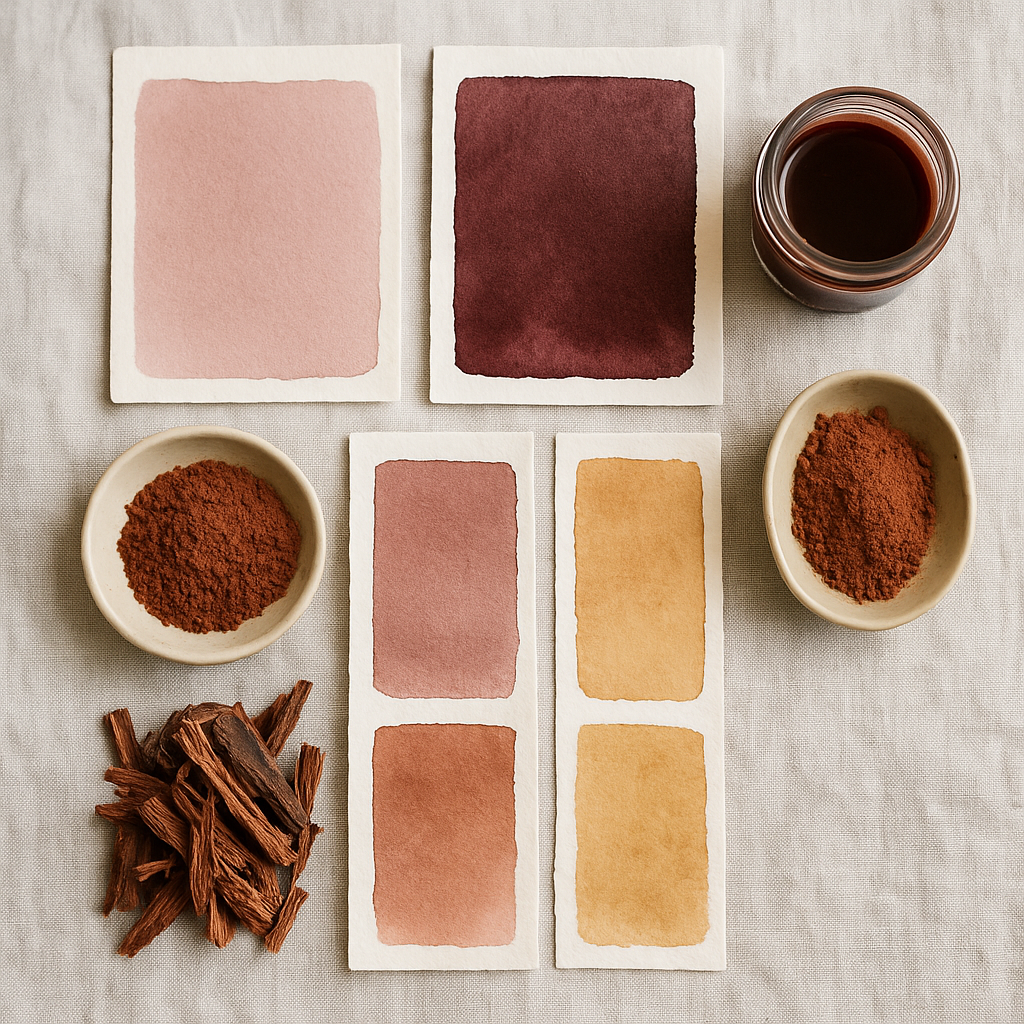
Water extraction is the most traditional method. The color can range from dusty rose to deep burgundy depending on simmering time and concentration.
This method creates pigment suitable for:
- Fabric dyes
- Watercolor bases
- Botanical ink foundations
- Dye baths for yarn and fibers
2. Oil Extraction
Infusing MHRB in oil unlocks earthy pigments with brown-red undertones. Oil-based extracts are ideal for:
- Skincare tints
- Soap colorants
- Oil-based paints
- Balms and salves
Oil extractions produce more muted, grounding tones.
3. Alcohol Extraction
Alcohol pulls tannins quickly, producing intensely vibrant, almost syrup-like hues. These are useful for:
- Ink concentrate
- Botanical watercolor enhancement
- Layering natural pigment palettes
- Tincture-based color foundations
Alcohol extracts are especially helpful when you want strong saturation in small amounts.
4. Powder Integration
Finely powdered MHRB can be blended directly into pigment recipes without prior extraction. Powder adds texture and produces a raw, earthy color profile that is excellent for:
- Handmade pastes
- Textured paints
- Rustic soap tints
- Natural clay blends
Each extraction method brings something different to your palette, which is why MHRB is one of the most flexible botanicals you can work with.
Building Natural Pigment Palettes With MHRB as a Core Component
Now we can get into the real purpose of this guide: how to incorporate mimosa hostilis root bark into natural pigment palettes so the bark becomes one part of a broader, layered color system.
Below are the most effective ways to integrate MHRB into natural pigment collections.
Blending Mimosa Hostilis With Other Botanical Dyes
One of the best ways to build natural color palettes is to pair MHRB with other plant dyes. Because its tones shift so easily, it serves as an anchor color that blends beautifully with lighter botanicals.
1. Pairing With Turmeric
MHRB mixed with turmeric produces warm coral and peach tones. This combination is ideal for watercolor paints, soap tints, and natural inks.
The secret is letting the turmeric lighten the depth of the MHRB without overpowering it.
2. Pairing With Indigo
Indigo shifts MHRB’s natural maroon into deep violets and plum shades. This is one of the most popular pairings for textile dyeing and botanical paint palettes.
The mixture gives a multidimensional color that’s difficult to achieve with a single botanical.
3. Pairing With Annatto
Annatto adds a rusty golden undertone to MHRB. When blended correctly, the results can resemble autumn tones or vintage copper shades.
4. Pairing With Hibiscus or Beetroot
These lighter crimson botanicals combine with MHRB to create softer berry hues. They’re excellent for watercolor palettes and paper-based botanical art.
5. Pairing With Activated Charcoal
Adding a small amount of charcoal creates cooler, deeper tones like blackberry, espresso, or shadowed plum.
This pairing is especially useful when you want subtle neutrals or moody tones in your pigment palette.
When learning how to incorporate mimosa hostilis root bark into natural pigment palettes, these cross-blends allow you to push beyond its default reddish-purple range and create a complete, nuanced spectrum.
Layering Techniques for MHRB-Based Pigments
Sometimes you don’t need to mix MHRB with another dye — layering alone can build a rich palette.
1. Layering in Watercolor Painting
MHRB-based watercolor can be applied in translucent layers to build:
- Dusty rose
- Deep wine
- Soft mauve
- Burgundy
- Eggplant
Each layer adds depth without muddying the tone.
2. Layering in Fabric Dyeing
Multiple dips produce tonal gradients:
- First dip: rose
- Second dip: berry
- Third dip: plum
- Fourth dip: maroon
This is how natural dyers create “ombre” palettes using only one plant.
3. Layering in Soapmaking
In soap, adding MHRB at different trace stages creates multi-tonal swirls. Early integration results in softer color, while later addition deepens the tone.
Learning how to incorporate mimosa hostilis root bark into natural pigment palettes through layering is an excellent way to avoid overmixing while still creating variety.
Creating Multi-Use Pigment Sets With MHRB
Pigment palettes don’t have to be limited to one craft. Here’s how to build cross-disciplinary palettes that use MHRB as a core color anchor.
1. Botanical Watercolor Palette
Ideal companions:
- Indigo
- Hibiscus
- Walnut hull
- Turmeric
- Madder root
MHRB becomes your maroon and plum anchor shade.
2. Soap Color Palette
Pair it with:
- Spirulina (green)
- French pink clay
- Turmeric
- Activated charcoal
This creates a beautifully earthy palette for artisan soapmakers.
3. Natural Ink Palette
Combining MHRB with iron modifiers shifts it into deeper gothic purples. Pair those with:
- Walnut ink
- Berry extracts
- Indigo ink
This produces a full spectrum of inks for handwriting or illustration.
Understanding pH as a Tool for Palette Expansion
One of the most powerful ways to explore how to incorporate mimosa hostilis root bark into natural pigment palettes is through pH manipulation.
Acidic Conditions
Using lemon juice, vinegar, or citric acid pulls pink, rose, and warm berry tones.
Neutral Conditions
Neutral pH yields classic reddish-maroon.
Alkaline Conditions
Baking soda or lye shifts MHRB toward purples, browns, and muted plum tones.
This means one ingredient can produce an entire palette without adding other botanicals at all.
Creating a Full Natural Palette Using Only MHRB
By adjusting:
- Concentration
- Extraction time
- pH
- Temperature
- Layer count
- Medium (water, alcohol, oil)
You can produce up to 20–30 individual hues from the same plant.
Some examples of your possible tones:
- Pale rose
- Antique pink
- Terra plum
- Vintage claret
- Mulberry
- Burnt mahogany
- Blackberry wine
- Deep maroon
- Neutral berry
- Eggplant
- Soft lavender brown
- Russet wine
This is one reason creators study how to incorporate mimosa hostilis root bark into natural pigment palettes so extensively — its complexity rivals synthetic pigments.
Stabilizing MHRB Pigments for Long-Term Use
To make your palette reliable and long-lasting, stabilization is key.
For Water-Based Pigments
- Use gum arabic
- Refrigerate or freeze
- Store in UV-protective containers
For Inks
- A small amount of alcohol
- Tannin boosters
- pH balancing agents
For Soap
- Pre-infuse in oil
- Blend at thin trace
- Cure for full 4–6 weeks
For Fabric
- Mordants such as alum or iron
- Proper washing and rinsing
- Avoid harsh detergents
These steps help ensure your MHRB palette maintains accuracy over time.